Can You Buy Solana Without a Wallet? Custody Fix Guidance

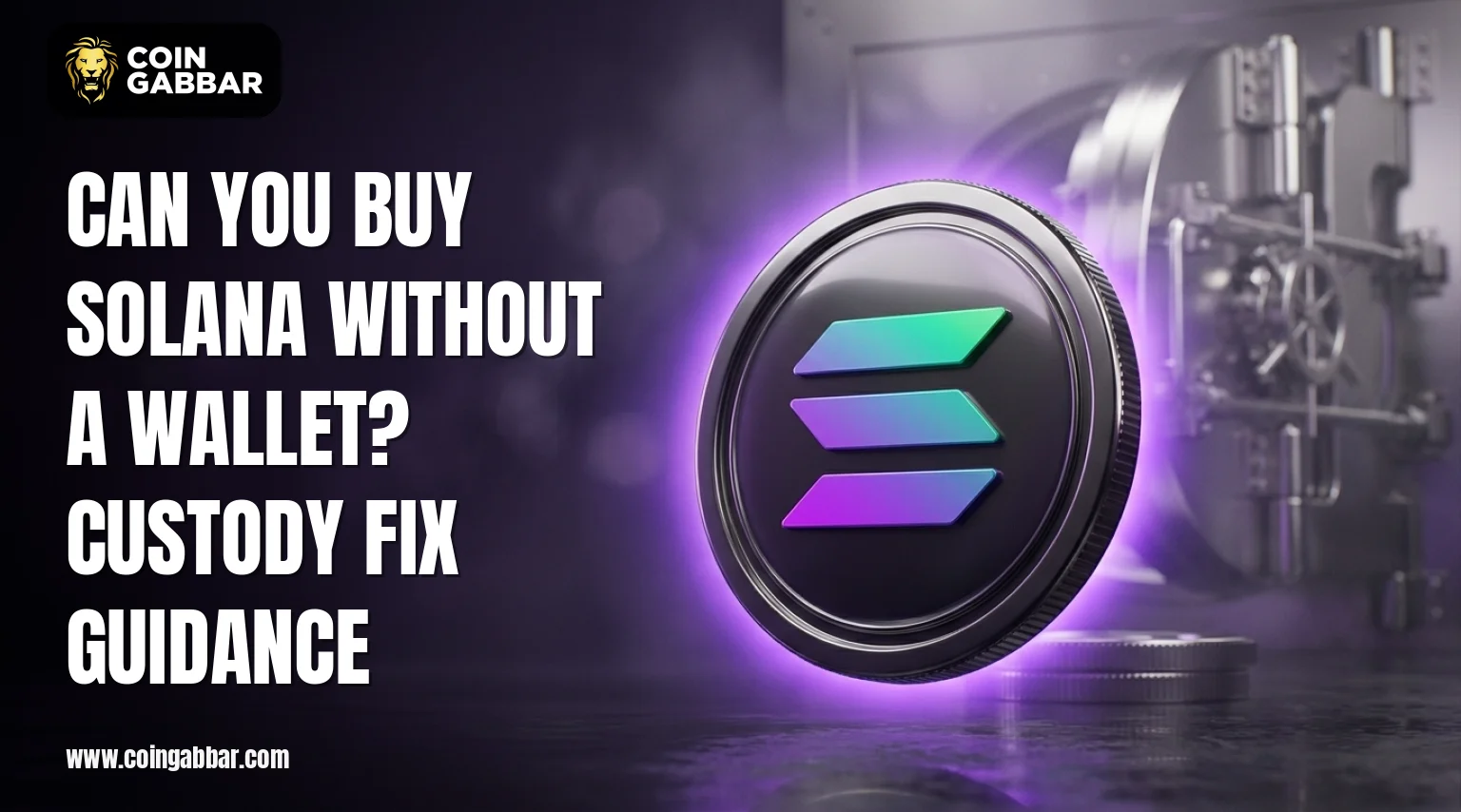
Yes, buyers can buy Solana without a wallet, and many already do. Most beginners start on an exchange that holds the coins for them. There is no seed phrase to write down and no browser extension to install.
This guide explains how the process works, what risks come with it, and how to move to a personal wallet later.
How Can You Buy Solana Without a Dedicated Web3 Wallet?
Many first-time investors believe a Web3 wallet is a must before owning any crypto. That is not true. This section shows how a new buyer can buy Solana without a wallet using a bank card or a simple transfer.
What Does a Custodial Exchange Do?
A custodial exchange works a lot like a bank for crypto. The company holds the private keys, and the buyer sees a balance inside an app. Login happens with an email and a password, not a long recovery phrase.
Custodial exchange accounts are the easiest starting point for most people. Platforms such as Coinbase, Kraken, and Binance let users sign up, verify their identity, and trade SOL within minutes.
Many analysts call this the simplest way to buy Solana without a wallet. Buyers can compare platforms in this exchange comparison guide.
How Does Paying With Fiat Money Work?
Fiat simply means regular money, such as dollars, euros, or rupees. Buyers link a bank account, debit card, or local payment app to the exchange. The platform then converts that money into SOL at the live market price.
A small fee usually applies, and the app shows it before the order is confirmed. Most exchanges also ask for a government ID and a selfie first. This step is called KYC, short for know your customer, and it often takes only a few minutes.
What Are the Main Ways to Buy Solana Without a Wallet?
Three routes let people buy Solana without a wallet or private keys. Each one trades some control for convenience. The sections below explain how each option works in plain terms.
Option One: Custodial Exchange Accounts
This is the most common route where the buyer deposits money, places an order, and the SOL appears in the account balance. The exchange stores the keys on its own systems.
Exchanges also offer extras like staking, price alerts, and easy selling back to cash. For a beginner who wants to buy Solana without a wallet and start small, this route keeps things simple.
Option Two: Solana Spot ETFs and Brokerage Accounts
Solana spot ETFs hold real SOL inside a regulated fund. Investors buy shares through a regular brokerage account, the same way they buy a stock. They never touch a wallet, a seed phrase, or a blockchain app.
The trade-off is clear, ETF shares give price exposure only, so holders cannot send SOL or use Solana apps.
Availability also depends on the country, so investors should check what their local broker offers.
Option Three: Fiat On-Ramp Services
Fiat on-ramp services are payment tools built into apps and websites. They let buyers pay with a card, bank transfer, or digital payment app. The processor handles the payment and the compliance checks.
One catch matters here: Many on-ramps send coins straight to a wallet address, so the buyer still needs one. Others credit a balance inside an app instead. Buyers who want to buy Solana without a wallet should confirm which type they are using before paying.
What Are the Real Risks of Leaving Solana on an Exchange?
Convenience comes with a price hence When an exchange holds the keys, the buyer depends on that company to stay online, stay solvent, and stay honest.
This section covers the main dangers for anyone who chooses to buy Solana without a wallet and leave coins on a platform.
What Is Counterparty Risk?
Counterparty risk means the other side of a deal may fail to keep its promise. With custodial exchange accounts, the exchange owes the user coins, but the user does not hold them directly. If the platform collapses, customers may become creditors in a long legal process.
Can Exchanges Freeze Accounts?
Yes, the Platforms may pause withdrawals during hacks, system upgrades, or heavy traffic. They may also lock an account while a compliance team reviews suspicious activity.
Regulators can order freezes too. A court request or a new rule can limit what a user can move.
These locks are rare, yet anyone who chooses to buy Solana without a wallet has no way to override them.
How Does Exchange Custody Differ From Wallet Ownership?
The core difference of Exchange Custody and Wallet Ownership is in control. With a personal wallet, the owner holds the keys and decides every move. On an exchange, the company holds the keys, and the user holds a claim.
Here is a quick side-by-side look:
-
Exchange custody: easy login, password reset, and a support team, but the platform controls the coins.
-
Self-custody wallet security: full control and no middleman, but the owner alone must protect the keys.
-
ETF shares: no key worries, but no way to withdraw actual SOL.
Many people who start out to buy Solana without a wallet later split their holdings. They keep small amounts on an exchange for trading and move larger sums to their own wallet.
Conclusion
Yes, buyers can buy Solana without a wallet. Exchanges, ETFs, and some payment apps make it easy for beginners. The trade-off is control, because someone else holds the keys.
Small amounts can sit on an exchange for trading.Larger holdings may be kept in a personal wallet or a hardware device, depending on the buyer's preference. Anyone who plans to buy Solana without a wallet should treat it as a first step, then learn the basics of self-custody at their own pace.
Disclaimer: This article is for education only. It is not financial, legal, or tax advice. Crypto prices swing fast, and investors can lose money. Readers should do their own research before making any decision. Exchange rules and ETF availability change by country and over time.