JAGENTUSDT Futures: How 20x Leverage and Fees Work

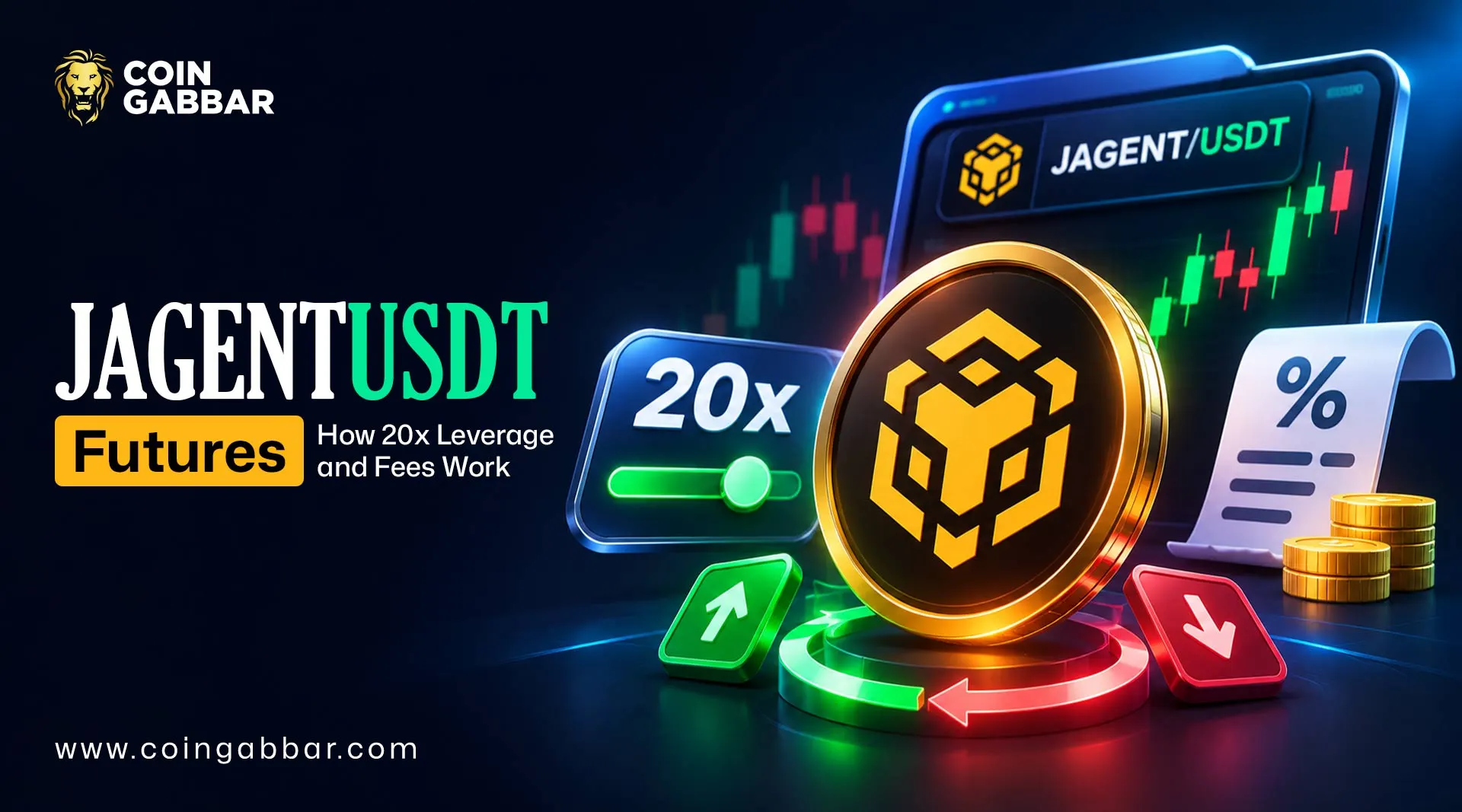
JAGENTUSDT Futures: 20x Leverage and Trading Fees
JAGENTUSDT futures are USDT-margined perpetual contracts tied to a new meme token, with leverage of up to 20x on the exchange's official contract page.
For JAGENTUSDT futures, official fee documentation lists a 0% maker-fee and a 0.02% taker fee for standard perpetual contracts, with tiers on some pairs.
The fee is the smallest cost here, because leverage, funding, and volatility can erase margin far faster.
New meme tokens attract derivatives quickly, and JAGENT USDT futures arrived as the token listed on spot venues in late October 2026.
This covers the contract, how 20x leverage works, what trading costs are, and where the dangers sit. For updates, see memecoin news.
What Is JAGENT? The Token Behind the Contract
JAGENT is a meme token on BNB Smart Chain, inspired by an exchange's AI agent identity ecosystem.
Background pages describe a fair-mint launch with no presale and no initial team allocation and say funds raised from minting were used mainly for liquidity pools.
For context on why JAGENTUSDT futures attract speculators, see Top Memecoins Explained.
JAGENTUSDT Futures at a Glance
Feature | Detail |
Contract type | USDT-margined perpetual |
Maximum leverage | Up to 20x, per the contract page |
Settlement and margin | USDT |
Maker fee | 0%, per official fee-materials |
Taker fee | 0.02%, per official fee-materials |
Funding | Periodic payments between traders, often every eight hours |
The official contract page lists live specifications for JAGENT USDT futures, and the official fee-schedule shows current rates. Rates vary by pair, tier, and region, so treat these numbers as a starting point.
How 20x Leverage Really Works
Leverage lets a trader control a larger position with less money. On JAGENTUSDT futures at 20x, a hypothetical $50 of margin controls a $1,000 position.
That also means a price move of about 5% against the position consumes the whole margin before fees and funding.
In practice, liquidation can trigger earlier, because exchanges require maintenance margin.
A meme token can move 5% in minutes, and the exchange's own token page showed a gain of several hundred percent in one day around the listing.
That volatility is why JAGENTUSDT futures at 20x are closer to a short-term gamble than a position that can be held calmly.
Trading Fees Explained: Maker, Taker, and Hidden Costs
Fees are charged on the full position value, not on the margin. A maker order adds liquidity to the order book, and a taker order removes it. Using the official rates in a hypothetical example on a $1,000 position:
Action | Fee |
Open as taker (0.02%) | $0.20 |
Close as taker (0.02%) | $0.20 |
Round trip as taker | $0.40, or 0.8% of the $50 margin |
Open and close as maker (0%) | $0 |
The percentages look tiny, yet at 20x, a taker round trip uses nearly one percent of the margin before any price move, and liquidation carries its own fee.
Outside trackers have shown wide spreads, an extra cost on every market order. For anyone trading JAGENTUSDT futures, the real fee is the sum of the trading fee, the spread, and the funding.
Funding Rates: The Cost of Holding Overnight
Perpetual contracts, including JAGENTUSDT futures, have no expiry, so funding payments keep the contract price close to the spot price.
When the contract trades above the spot, longs usually pay shorts, and the reverse when it trades below.
The official funding page describes a rate built from an interest component and a clamped premium index, with settlement typically every eight hours, though it varies by contract.
The exchange says it does not charge the funding fee itself, because traders pay each other. In a hypothetical case, a funding rate of 0.01% on a $1,000 position costs $0.10 per interval, or about $0.30 a day.
Funding on JAGENTUSDT futures can swing sharply when sentiment turns, so long holds can get expensive.
Liquidity and Volatility: Why This Contract Is Different
New listings tend to have thin order books, wide spreads, and sudden price gaps. In a thin market, a stop-loss can fill far from its trigger.
New tokens are also exposed to coordinated pumps, insider selling, and abrupt delistings, so the price can fall to near zero as fast as it rose.
Security and Risk Considerations
Leverage can liquidate a position within minutes, and losses can exceed expectations in fast markets
Fee and funding rates may change, and promotional rates can end
Fake trading groups and impersonation accounts target traders after a new listing, and AI crypto scams show how convincing they can look
Derivatives such as JAGENTUSDT futures may be restricted in some countries, so local rules need checking
Consumer guidance on crypto scams and an investor education site cover warning signs
No fee advantage makes JAGENT USDT futures safe.
Safer Ways to Approach It
Anyone using JAGENTUSDT futures can lower the damage with a few habits:
Use low leverage and small size, so a total loss changes nothing
Prefer limit orders to avoid the taker fee and wide spreads
Set a loss limit before opening the position
Conclusion
JAGENTUSDT futures offer cheap headline fees and high leverage on a brand-new meme token, and that combination favors speed over patience.
Fees are the least of the costs, since funding, spreads, and liquidation decide most outcomes. Anyone trading JAGENT USDT futures should use only funds that can be lost completely and read the live specifications first, along with the JAGENT white paper, to separate the token’s stated design from the hype.
Unfamiliar terms are explained in the crypto dictionary, and platform comparisons are available in crypto exchange coverage.
Disclaimer: This article is for information only and is not financial, investment, tax or legal advice. Leveraged products can lose more than expected, cryptocurrency prices are volatile, fee rates change, and readers should verify all details with official sources and consult a licensed professional before trading.