How Chainlink Oracle Nodes Earn LINK Rewards in Crypto

What Are Chainlink Oracle Nodes and How Do They Work
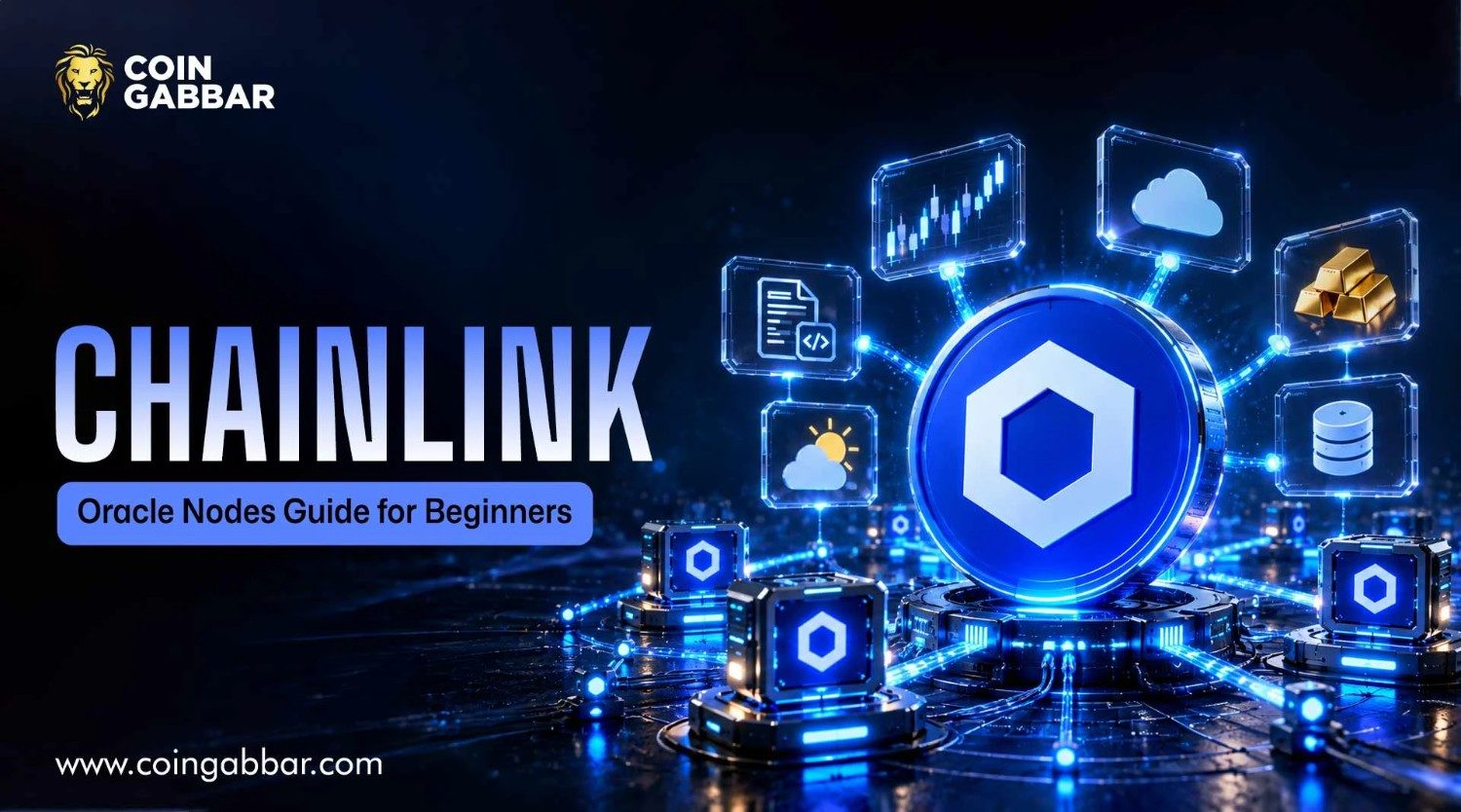
A smart contract is a program on a blockchain, and it has one big weakness. It cannot look up a price, a weather report, or a payment on its own. That job belongs to Chainlink Oracle Nodes.
Each node is a computer run by an independent operator. It watches the blockchain for data requests, gets the answer from outside sources, and sends it back on-chain.
Many readers who follow Chainlink News today see these terms without a clear explanation. This article explains in simple words how node operators earn money and LINK rewards, how chainlink network security works, and which risks need attention.
What Are Chainlink Oracle Nodes, and How Do They Work?
Blockchains are closed on purpose. That keeps them hard to tamper with, but it also blocks any outside information. This gap is called the oracle problem. An oracle is a bridge.
It picks up outside data, puts it in a form the chain can read, and hands it to the contract. One oracle alone is risky, because if it fails or lies, the contract fails too. For this reason, chainlink smart contracts usually rely on a decentralized oracle network, or DON.
A DON is a team of independent nodes. Each node collects data from several sources, and then the team agrees on one final answer. The project gives an example with 31 nodes.
Every node finds its own middle value, called the median, from many data providers, and the network then combines those values into a single report. Odd values are thrown out before the report is signed and posted on-chain.
Who Runs Chainlink Oracle Nodes, and What Do They Need?
Operators come from telecom companies, data firms, and Web3 infrastructure teams, such as Swisscom. To run a node, an operator needs the open-source Chainlink software, an onchain oracle contract, access to data sources, and monitoring tools that watch performance all day.
Trust is built in public. Every node signs its data from a public address, and its past work is stored onchain, so anyone can check how reliable it has been.
How Do Node Operators Earn Revenue and LINK Rewards?
The official ecosystem page says operators earn revenue by running the systems that deliver oracle data to smart contracts. In the standard API model, the operator and the data owner are different parties, and the operator pays for the data.
In the origin-signed data model, the data provider runs its own node and signs the data with a private key, so no middleman is needed. A second source of income is chainlink staking. Here, people lock LINK to back the quality of oracle services.
Community stakers can lock from 1 to 15,000 LINK, and node operator stakers can lock from 1,000 to 75,000 LINK. When version 0.2 launched in November 2023, the pool cap was 45,000,000 LINK. Of that, 40,875,000 LINK was set aside for the community, and the rest went to operators serving data feeds.
The base floor reward was 4.5% a year in LINK when the pool was full. Of the community rewards, 4% went to node operator stakers as a delegation reward, which left community stakers with an effective floor of 4.32%.
The rate changes over time, since a fixed amount of rewards is split among all stakers, so a less crowded pool pays more per person. Official pages do not say how much a single node earns, so no such figure should be assumed.
How Does Staking Protect the Network?
Staking puts real value at risk behind a service, which adds a layer of economic security. At launch, version 0.2 protected the ETH/USD data feed on Ethereum. If no valid report appeared for more than three hours, community stakers could raise an alert, while node operator stakers had a 20-minute head start.
A valid alert cut 700 LINK from every node operator staker on that feed and paid 7,000 LINK to the person who raised it. Community stakers could not be slashed in version 0.2.
Leaving the pool takes time. A 28-day cooldown comes first, then a seven-day window to unstake, and rewards unlock slowly over 90 days, so leaving early can cost locked rewards.
The contracts are non-custodial, were checked by several independent audit firms, and any key change must pass a timelock. Still, the project calls the protocol beta, and its page says the rewards program is not open in some regions, including the United States.
Where Do Chainlink Oracle Nodes Fit in the Wider Ecosystem?
The chainlink ecosystem covers much more than price data. Data feeds are push-based, so they update on a set schedule or when a price moves by a set amount, such as 0.5%.
Chainlink proof of reserve feeds show the reserve status of stablecoins and wrapped assets. The Chainlink interoperability protocol, also called Chainlink CCIP, moves messages and tokens between public and private blockchains, and the project says it reaches more than 60 networks.
The project also claims $27.6 trillion in enabled transaction value and says its price feeds secure over 70% of DeFi. Both numbers come from the project itself.
The Chainlink Runtime Environment is already live on the mainnet. It splits work into smaller jobs handled by dedicated DONs, and this design will shape the chainlink future for Chainlink Oracle Nodes.
Which Risks and Chainlink Scams Deserve Attention?
Chainlink scams can copy official websites, so the project tells users to bookmark staking.chain.link and check the address on each visit to avoid fake pages and phishing. Rewards are paid in LINK, so any move in the Chainlink price changes their cash value, whatever the stated rate is.
Expert Take: What Should Readers Watch?
The strongest point is the design. Chainlink Oracle Nodes work in groups, pull data from many providers, and face penalties where staking applies.
The main worry is limited space, because a capped pool decides how many holders can join and earn. The biggest unknown is what each node really earns, since official pages do not show it.
Conclusion
Chainlink Oracle Nodes bring trusted outside data to blockchains, earn fees for that work, and add LINK rewards through staking.
The setup looks carefully built, but reward rates change, pool space is limited, and most adoption numbers come from the project. Official documents and live staking data should be checked before any decision.
Disclaimer
This article is for informational purposes only and does not constitute financial or investment advice. Crypto assets are volatile and carry a high risk of loss, and staking rewards are not guaranteed. Readers should research independently and consult a qualified advisor.