CIFORUS Tokenomics: Supply, Allocation and Vesting Explained

How Are 100 Million CIFORUS Tokens Really Distributed?
One hundred million tokens. That is the fixed supply behind CIFORUS tokenomics, and the project's contract details say it cannot grow. But a supply number alone says little. Who holds the CIFORUS tokens, and when they can sell, shapes a token far more.
Allocation is how tokens are divided between groups. Vesting is the schedule that controls when a group can use its share. This guide covers both, from the project's documents checked on October 10, 2026.
What Is CIFORUS Tokenomics?
CIFORUS tokenomics describes how the token's supply is divided and released. Think of it as an ownership map. The project's published tokenomics split supply across five groups.
Total Supply and Token Specifications
-
Total supply: 100,000,000 CIFORUS
-
Network: Ethereum Mainnet, ERC-20 standard
-
Minting: none, according to official documentation
-
Inflation: none
ERC-20 is Ethereum's common token format, so standard wallets can hold it. A fixed supply means no new tokens appear later.
Why Token Allocation Matters
Allocation shows who could hold the most. A big insider share can concentrate ownership, and a large reserve can reach the market later. That makes CIFORUS tokenomics a set of trade-offs.
CIFORUS Token Allocation and Distribution Breakdown
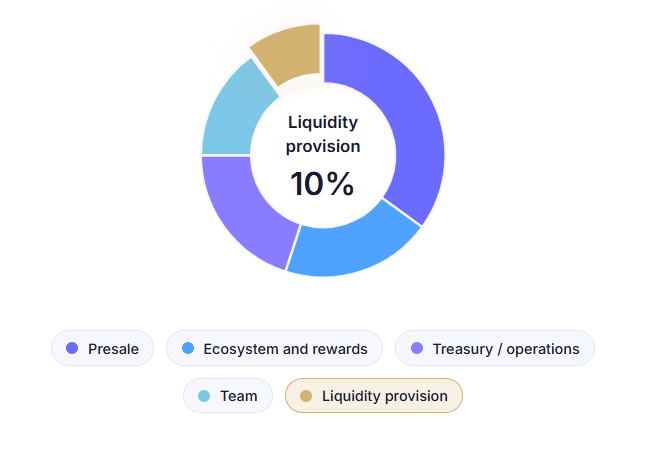
The official whitepaper lists this split:
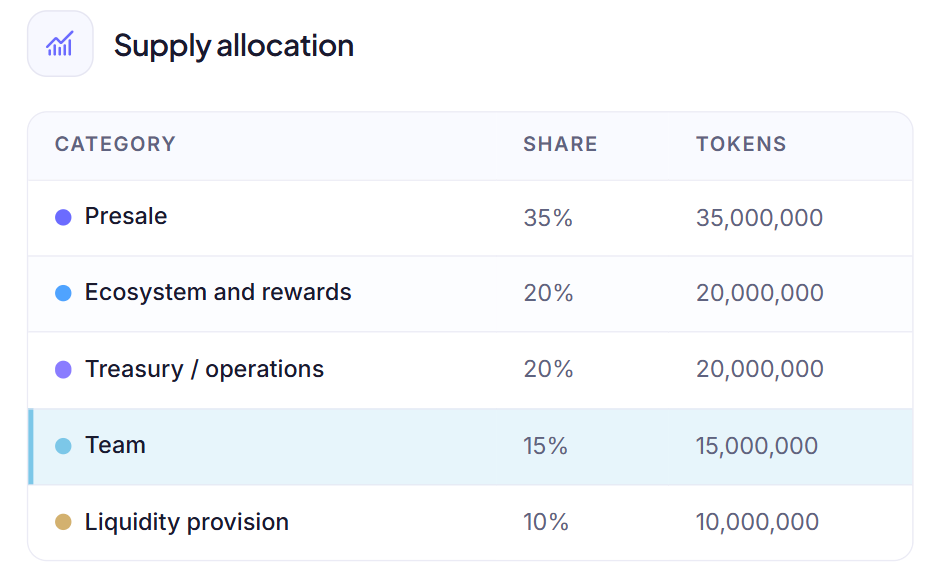
| Allocation category | Share | Tokens |
| Presale | 35% | 35,000,000 |
| Ecosystem and rewards | 20% | 20,000,000 |
| Treasury and operations | 20% | 20,000,000 |
| Team | 15% | 15,000,000 |
| Liquidity provision | 10% | 10,000,000 |
| Total | 100% | 100,000,000 |
Presale is the biggest slice. Team and treasury together also hold 35%. Add the 20% rewards pool, and project-controlled tokens make up a large share.
Presale Allocation: 35 Million Tokens
In CIFORUS tokenomics, buyers get these tokens across three stages of 8, 15 and 12 million. Prices run from $0.025 to $0.05, so the maximum raise is $1,325,000.
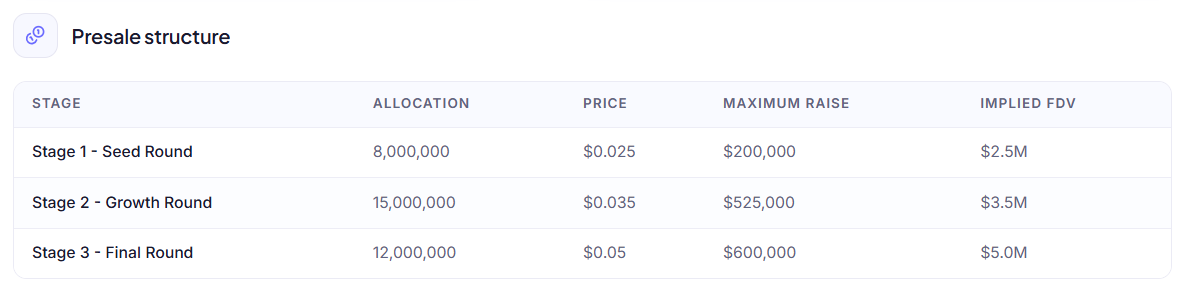
Stage 1 showed about 95.1% sold when checked, and the Stage 2 price is listed at $0.035. The share matters more than the price.
Ecosystem and Rewards Allocation: 20 Million CIFORUS
This pool covers early-user incentives, referrals, feature promotions and community growth. Of it, 2,000,000 CIFORUS form an early reserve. The whitepaper says rewards may arrive as upgrade credits, not liquid tokens.
Treasury and Operations Allocation: 20 Million CIFORUS
The stated uses are development, infrastructure, security audits and strategic initiatives. The whitepaper promises no predefined release schedule. That helps with pacing, but outsiders get nothing to track.
Team Allocation: 15 Million CIFORUS
CIFORUS tokenomics gives team tokens their own schedule. Delayed access is meant to keep contributors tied to long-term development.
Liquidity Allocation: 10 Million CIFORUS
Ten million CIFORUS are planned for decentralized exchange liquidity at TGE, the token generation event. Planned liquidity is not market depth. Depth only shows on-chain after launch.
CIFORUS Team Vesting Schedule and Token Unlocks
This is where CIFORUS tokenomics gets most specific. The whitepaper describes a six-month cliff, no team unlock at TGE, then linear vesting over 24 months.
How Does the Six-Month Cliff Work?
A cliff is an opening period when nothing unlocks. Once it ends, releases begin.
When Do CIFORUS Team Tokens Begin Unlocking?
-
No team allocation unlocks at TGE
-
A six-month cliff comes first
-
Release is linear over the next 24 months
-
That is roughly 625,000 CIFORUS a month, since 15 million divided by 24 is 625,000
This is the published schedule, not proof that any unlock has happened. TGE is still planned.
Why Does Team Vesting Matter to Token Holders?
Vesting limits how much of the team's 15% can be sold right away. Later unlocks add supply that could reach the market, so CIFORUS tokenomics also hints at future supply.
Does CIFORUS Presale Have a Vesting Period?
Presale buyers and the team follow different rules.
Presale Buyer Unlock and Claim Rules
The official token page says recognized buyers face no mandatory vesting.
As covered in the claim and staking update, eligible tokens can stay in the platform for voluntary staking or move to an external wallet with a 0% claim fee. A claim is final for that amount.
Presale Vesting vs Team Vesting
| Detail | Presale buyers | Team allocation |
| Mandatory vesting | None, according to current terms | Six-month cliff |
| TGE unlock | No mandatory TGE wait | No team unlock at TGE |
| Later release | Subject to available balance and applicable app rules | Linear vesting over 24 months after cliff |
CIFORUS Treasury, Rewards and Liquidity Unlocks
Parts of CIFORUS tokenomics have firm numbers. Others stay open.
Ecosystem Token Release Schedule
The whitepaper describes release over roughly three to four years, or about 5 million to 6.67 million tokens a year. No month-by-month calendar exists, so none is assumed.
Treasury Release and Management
Treasury has stated purposes and no fixed timetable. Per the project, 40% of eligible CIFORUS spent in the app also flows to treasury.
Liquidity Tokens and TGE Plans
An intended liquidity plan and an executed on-chain transaction are different. Until TGE, the 10 million CIFORUS remain a plan.
How Could CIFORUS Token Unlocks Affect Supply?
Total Supply vs Circulating Supply
In CIFORUS tokenomics, total supply is every token that exists, here 100 million. Circulating supply is what can trade. The full 100 million is not circulating, and no circulating figure appears in the materials reviewed. Market cap uses the circulating number, while FDV uses the total.
Potential Selling Pressure After Unlocks
Newly unlocked supply could add to market supply, depending on holder choices and demand, a risk the presale review also touches on.
Can Token Burns Offset New Circulating Supply?
Partly, if people spend the token. The model burns 40% of eligible CIFORUS used in the app, and the main CIFORUS guide covers it in full.
What Should Investors Check in CIFORUS Tokenomics?
Common checks in CIFORUS tokenomics include:
-
Whether allocation matches official documents
-
Team and treasury wallet disclosures
-
Real vesting and unlock transactions
-
Liquidity depth after TGE
-
Platform usage and token demand
-
Gaps between planned and implemented mechanisms
Is the CIFORUS Token Distribution Sustainable?
CIFORUS tokenomics has clear positives. Supply is fixed, ownership is spread over five groups, and team tokens unlock late.
The open questions matter too. Treasury has no timetable, liquidity is a plan, and burns count only if usage grows. A fuller project analysis looks at these from another angle. Sustainability depends on adoption and execution that remain untested.
Conclusion
CIFORUS tokenomics rests on a fixed 100 million supply split into presale, ecosystem, treasury, team and liquidity. The team's six-month cliff and 24-month release stand out, as does the lack of a presale lock.
Treasury timing, liquidity depth and the burn's real impact remain uncertain. On-chain wallet activity after TGE will show how the plan holds up.
Disclaimer: This article on CIFORUS tokenomics is for information only and is not financial, legal or tax advice. Crypto presales carry high risk, including total loss. Terms can change, so rely on official project pages.