Best Crypto Exchange With P2P Trading in 2026

Best Crypto Exchange With P2P Trading: Global Guide
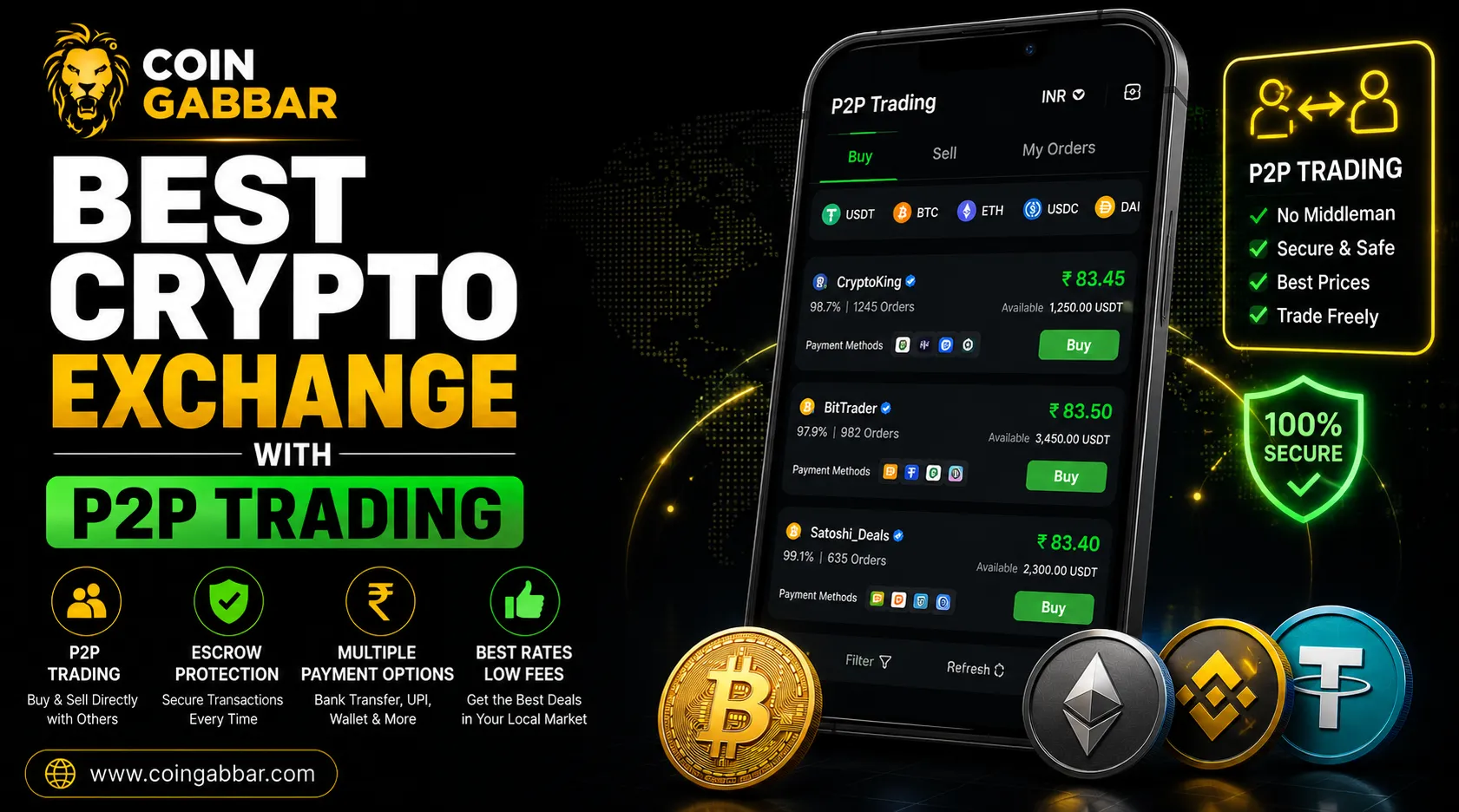
best crypto exchange with p2p trading should be selected by escrow protection, settlement options, seller reputation, buyer rating, spread, release speed, dispute handling, supported fiat currencies, available crypto assets, order limits, fee structure, country access, and platform security. Peer marketplaces let buyers and sellers deal directly, while the platform holds crypto in escrow until fiat settlement is confirmed.
best crypto exchange with p2p trading is useful when an investor wants local banking flexibility, e-wallet support, cash-style settlement, or access to fiat routes not available through normal card or bank deposits. However, direct peer deals also carry counterparty, reversal, fake receipt, account-freeze, and dispute risks.
This global guide compares 12 platforms and marketplaces that support peer-to-peer crypto activity or direct buyer-seller deals: Binance, Bybit, OKX, Bitget, KuCoin, MEXC, Gate.io, HTX, Paxful, NoOnes, LocalCoinSwap, and Hodl Hodl. The guide avoids India-only assumptions and focuses on global escrow, fiat routes, spreads, safety, and marketplace quality.
Readers comparing broader platforms can review CoinGabbar’s best crypto guide. New investors should also read CoinGabbar’s beginner exchange guide before using direct buyer-seller markets.
How Peer-to-Peer Crypto Trading Works
best crypto exchange with p2p trading research should start with the transaction flow. A buyer selects an offer, checks the seller’s rate, settlement route, order limit, completion rate, and terms. The platform locks the seller’s crypto in escrow. The buyer sends fiat through the selected method. After confirmation, the seller releases crypto from escrow.
This model gives flexibility, but the process is not the same as instant order-book trading. Each deal depends on seller response time, bank speed, local rail rules, buyer accuracy, and platform dispute support. A low price is not always the safest offer if the seller has poor history or unclear terms.
| Step | What Happens | What To Check |
|---|---|---|
| Select offer | Buyer chooses seller and fiat route | Rate, limit, completion rate, terms |
| Crypto locked | Platform holds seller’s crypto in escrow | Escrow must be inside the platform |
| Fiat sent | Buyer transfers money through bank, wallet, or local rail | Account name and transaction reference |
| Transfer confirmed | Seller verifies receipt | Bank balance, not screenshots only |
| Crypto released | Escrowed asset moves to buyer | Release only after confirmed receipt |
| Dispute if needed | Platform reviews evidence | Receipt, statement, chat record |
For fiat access comparison, readers can review CoinGabbar’s fiat support guide. For card-based routes, CoinGabbar’s credit card guide is also useful.
Escrow Protection: The Core Safety Feature
best crypto exchange with p2p trading should provide strong escrow protection. Escrow means the platform temporarily locks the seller’s crypto during the deal. The seller cannot withdraw or move that crypto while the order is active. This reduces the risk that a buyer sends money but receives nothing.
Escrow does not remove every risk. The buyer can send funds to the wrong account. The seller may claim funds were not received. A bank transfer may be delayed. Some wallet routes may allow reversal. This is why proof, chat history, account-name matching, and appeal support matter.
Escrow Safety Checklist
- Use only the platform’s official order page.
- Never trade outside escrow to save fees or time.
- Check that the crypto is locked before sending funds.
- Send money only to the account listed in the order terms.
- Confirm receipt from the bank or wallet app, not from screenshots.
- Never release crypto before funds are received.
- Keep all chat and proof inside the platform.
- Open an appeal quickly if the counterparty becomes unresponsive.
- Avoid orders with confusing or unusual terms.
- Do not accept third-party accounts unless platform rules allow them.
For exchange safety research, readers can use CoinGabbar’s proof reserve section. For scam-risk awareness, CoinGabbar’s crypto scam updates can help.
Best Crypto Exchange With P2P Trading: Comparison
| Platform | Best For | Marketplace Strength | Key Benefit | Main Limitation |
|---|---|---|---|---|
| Binance | Large global marketplace | Many regions, assets and fiat routes | Deep peer liquidity | Regional restrictions |
| Bybit | USDT peer deals | Escrow, zero-fee messaging and many local rails | Strong settlement flexibility | Availability varies by country |
| OKX | Secure direct crypto deals | Escrow, bank and e-wallet methods | Good buyer-seller workflow | Not every region is supported |
| Bitget | Flexible local routes | Escrow, zero fees and many local options | Simple peer marketplace | Merchant quality still varies |
| KuCoin | Altcoin-friendly users | Direct fiat-crypto marketplace where available | Useful for existing KuCoin users | Liquidity varies by currency |
| MEXC | New asset users | Peer access plus broader trading ecosystem | Useful for active altcoin traders | Peer depth may vary |
| Gate.io | Global altcoin users | Peer and fiat marketplace options | Broad exchange ecosystem | Interface may feel complex |
| HTX | International fiat routes | Peer marketplace for selected regions | Global exchange access | Country support varies |
| Paxful | Bitcoin peer marketplace | Many local routes and escrow | Strong direct buyer-seller focus | Higher spread risk |
| NoOnes | Global settlement flexibility | Peer marketplace with many local routes | Useful for emerging markets | Counterparty quality varies |
| LocalCoinSwap | Multi-asset direct deals | Escrow marketplace and local options | Flexible peer offers | Liquidity depends on region |
| Hodl Hodl | Bitcoin-focused non-custodial users | Contract-based escrow model | Less custodial exposure | Not beginner-focused |
1. Binance: Large Global Peer Marketplace
best crypto exchange with p2p trading searches often include Binance because it offers a large peer marketplace, many fiat routes, USDT and other asset access, merchant filters, escrow, dispute support, and strong exchange liquidity. It is useful for buyers and sellers who want high offer availability.
Escrow angle: Binance holds the seller’s crypto during the order. This helps reduce delivery risk when the buyer sends funds through a local rail.
Settlement angle: Binance peer deals may support bank transfers, e-wallets and local methods depending on country. Available routes change by region and currency.
Spread angle: High liquidity can reduce price gaps, but the best offer is not always the safest. A buyer should compare price after filtering for verified merchants, strong completion history and clear terms.
Best fit: Binance suits global users who want a large marketplace, deep offer list and strong exchange ecosystem.
For official platform context, readers can review Binance escrow guide.
2. Bybit: Strong USDT Marketplace and Local Route Flexibility
Bybit is useful for buyers and sellers who want direct USDT deals, escrow protection, zero-fee peer orders in supported cases, advertiser profiles, local settlement variety, and strong support for active crypto users.
Escrow angle: Bybit’s marketplace locks crypto until receipt is confirmed. This helps both sides reduce fraud risk when dealing with unknown counterparties.
Settlement angle: Bybit highlights wide local-route support in many regions. Buyers should still check whether a method is supported in their country and whether the receiving account name matches KYC details.
Spread angle: Bybit can be competitive for USDT deals, but prices vary by currency, seller, transaction size and settlement urgency.
Best fit: Bybit suits users who want a modern peer marketplace with flexible local options and escrow-based settlement.
For official platform context, readers can review Bybit P2P details.
3. OKX: Escrow-Based Direct Crypto Marketplace
best crypto exchange with p2p trading may include OKX because it provides a structured peer marketplace with escrow protection, buyer-seller order flow, fiat-route filtering, direct settlement and strong platform security tools.
Escrow angle: OKX holds crypto in escrow until the buyer completes fiat transfer and the seller verifies receipt. This protects buyers from non-delivery and sellers from premature release pressure.
Settlement angle: OKX supports bank transfers, e-wallets and other local routes depending on currency and region. Account holders can add allowed methods from their profile section.
Spread angle: Buyers should compare several offers after filtering by settlement route and seller reliability. The lowest price may come with slower response or stricter terms.
Best fit: OKX suits users who want a secure peer workflow, clean interface and escrow-backed fiat-to-crypto access.
4. Bitget: Zero-Fee Peer Deals and Escrow Support
Bitget is useful for investors who want direct USDT or crypto purchases with escrow support, flexible local options, advertiser terms, live chat, and zero-fee peer marketplace features in supported regions.
Escrow angle: Bitget uses escrow to protect transactions until receipt is verified. This is critical when buyers and sellers do not know each other.
Settlement angle: Bitget supports multiple local routes, including bank transfer and e-wallet options in many markets. Account details should match the verified profile.
Spread angle: Bitget’s marketplace may offer competitive quotes, but spreads can widen during volatility, banking delays or high demand for stablecoins.
Best fit: Bitget suits users who want a simple peer marketplace with escrow, local route flexibility and exchange-linked trading access.
5. KuCoin: Peer Access for Existing Altcoin Users
best crypto exchange with p2p trading comparisons can include KuCoin for users who already use the exchange for altcoins, bots, Earn tools and portfolio tracking. Peer availability may vary by currency and country.
Escrow angle: Where available, KuCoin-style direct deals should always be completed inside the official platform flow. External settlement outside the marketplace raises fraud risk.
Settlement angle: Local rails may include bank methods and digital wallets depending on region. Buyers should compare seller limits and verification quality.
Spread angle: KuCoin may be useful for fiat entry before moving into altcoin markets, but peer liquidity can differ strongly by location.
Best fit: KuCoin suits existing users who want exchange access plus local fiat routes where supported.
6. MEXC: Peer Access for Active Altcoin Traders
MEXC can be relevant for traders who use the platform for new listings, futures, small-cap coins and high-volatility sectors. Peer access can help bridge fiat into the exchange ecosystem where available.
Escrow angle: Buyers should use only official marketplace order pages and avoid direct Telegram, WhatsApp or social-media settlement.
Settlement angle: Local options depend on region and merchant availability. Always match the receiving account name with the verified exchange profile.
Spread angle: MEXC users should compare fiat entry cost with direct card, bank and stablecoin routes. The peer rate may be cheaper in some regions and expensive in others.
Best fit: MEXC suits active altcoin users who need flexible fiat entry before trading broader markets.
For small-cap research, readers can review CoinGabbar’s small cap guide.
7. Gate.io: Fiat Marketplace for Broad Exchange Users
best crypto exchange with p2p trading may include Gate.io for users who want access to a large exchange ecosystem, new listings, altcoins, startup markets and fiat marketplace routes in supported regions.
Escrow angle: Escrow-backed settlement is important because Gate.io users often move funds into many asset categories. Secure fiat entry reduces operational risk.
Settlement angle: Local methods may include bank transfers, e-wallets or region-specific routes. Buyers should read seller terms carefully before sending funds.
Spread angle: Gate.io’s peer rates should be compared with normal exchange deposit options. Large spreads can remove the benefit of zero platform fees.
Best fit: Gate.io suits research-driven users who want fiat access and broad crypto market coverage.
For listing-focused research, readers can check CoinGabbar’s Gate listing guide.
8. HTX: International Fiat and Peer Marketplace Access
HTX can suit users who want global exchange access, local settlement options and direct buyer-seller crypto routes where supported. It may appeal to traders who already use HTX for spot or futures markets.
Escrow angle: The safest approach is to complete every order inside the official platform and preserve all evidence until the crypto is released.
Settlement angle: Availability differs by region. A user should not assume that every global method is available in every currency pair.
Spread angle: HTX peer rates may be useful in markets where stablecoin demand is high, but spreads must be compared before placing large orders.
Best fit: HTX suits international users who want peer-market access alongside a full trading platform.
9. Paxful: Bitcoin-Focused Peer Marketplace
best crypto exchange with p2p trading research can include Paxful because it is known as a direct buyer-seller marketplace, especially for Bitcoin and local settlement routes. It is not the same as a full exchange order-book platform.
Escrow angle: Paxful-style markets rely heavily on escrow, trade terms and counterparty reputation. A buyer should avoid any seller asking to move conversation or settlement outside the platform.
Settlement angle: Many local routes can create convenience, but some carry reversal, chargeback or fraud risk. Bank transfer is usually clearer than gift-card-style methods.
Spread angle: The more unusual the fiat route, the wider the spread may become. Convenience often costs more.
Best fit: Paxful suits users who need broad settlement flexibility and understand counterparty risk.
10. NoOnes: Global Local Route Flexibility
NoOnes can be useful for users in regions where bank-card or centralized exchange access is limited. It focuses on direct buyer-seller deals and local settlement flexibility.
Escrow angle: Escrow and reputation checks are essential. Buyers should prefer experienced sellers with clear terms, high completion history and fast response time.
Settlement angle: NoOnes may appeal to users who need local e-wallets, bank routes or region-specific options. Every method should be evaluated for reversal risk.
Spread angle: Flexible fiat access may come with wider price gaps. Compare several sellers before committing.
Best fit: NoOnes suits users who prioritize local route flexibility and are willing to perform careful seller checks.
11. LocalCoinSwap: Multi-Asset Peer Marketplace
best crypto exchange with p2p trading comparisons can include LocalCoinSwap because it supports direct crypto deals, escrow-based marketplace features, multiple assets and various local options depending on location.
Escrow angle: A peer marketplace should be used only through official order flows. Account holders should keep evidence until the transaction is fully complete.
Settlement angle: LocalCoinSwap may be useful for users who want more flexible routes than standard exchange deposits.
Spread angle: Liquidity may differ by country, asset and fiat method. A wide spread can make a deal expensive even if platform fees are low.
Best fit: LocalCoinSwap suits users who want a flexible peer marketplace with multiple assets and local fiat routes.
12. Hodl Hodl: Bitcoin-Focused Non-Custodial Marketplace
Hodl Hodl can be relevant for Bitcoin-focused users who want a non-custodial peer marketplace model. It differs from large centralized exchanges because it uses contract-based escrow mechanics rather than normal exchange custody.
Escrow angle: Hodl Hodl’s model is more suitable for users who understand Bitcoin transactions, wallet management and peer settlement rules.
Settlement angle: Available fiat routes depend on seller terms and region. Buyers should select clear, traceable options when possible.
Spread angle: Non-custodial peer markets may have lower or higher spreads depending on local liquidity. Always compare with major exchange rates before trading.
Best fit: Hodl Hodl suits Bitcoin users who prefer non-custodial marketplace design and are comfortable managing transaction details.
How to Compare Fiat Routes
best crypto exchange with p2p trading should be evaluated by settlement quality, not only number of methods. Bank transfer, instant transfer, local e-wallet, cash deposit, mobile wallet, card-linked transfer and other routes carry different speed, proof quality and reversal risk.
| Fiat Route | Speed | Proof Quality | Main Risk |
|---|---|---|---|
| Bank transfer | Medium to fast | Strong | Bank delay or wrong reference |
| Instant local transfer | Fast | Strong | Account-name mismatch |
| E-wallet | Fast | Medium | Reversal or wallet restrictions |
| Cash deposit | Medium | Medium | Harder dispute proof |
| Third-party transfer | Varies | Weak | High fraud risk |
| Gift card route | Varies | Weak | Very high dispute risk |
How P2P Spreads Work
best crypto exchange with p2p trading should also be judged by spread. The spread is the difference between the peer offer price and the broader market reference price. A platform may advertise zero trading fees, but the seller may build profit into the quoted rate.
For example, if USDT trades near 1.00 USD on a reference market but a peer seller quotes 1.025 USD equivalent, the buyer pays a 2.5% premium. This may still be acceptable if local fiat access is limited, but it is expensive for large orders.
Spread Checklist
- Compare the offer with live USDT or BTC market price.
- Check at least five sellers before placing a large order.
- Compare buy and sell rates to understand the marketplace gap.
- Filter by reputation first, then compare price.
- Do not choose the cheapest seller if history is weak.
- Check whether the price is fixed or floating.
- Read order limits before sending funds.
- Check settlement time during volatile markets.
- Use smaller test orders before large deals.
- Include bank or wallet charges in total cost.
For fee comparison, readers can review CoinGabbar’s lowest fee guide. For stablecoin-focused trading, CoinGabbar’s USDT exchange guide can help.
Merchant Selection Checklist
best crypto exchange with p2p trading should help users compare counterparties clearly. A strong seller profile is often more important than a slightly cheaper price. New sellers are not always unsafe, but they have less transaction history.
Seller Quality Signals
- Completion rate: Higher completion suggests better reliability.
- Completed orders: A larger history gives more confidence.
- Average release time: Faster release improves settlement experience.
- Feedback score: Reviews can reveal repeated problems.
- Account age: Older accounts may have more reliable history.
- Verification badge: Verified merchants may follow stricter rules.
- Clear terms: Avoid sellers with confusing instructions.
- Reasonable limits: Very high limits from new sellers need caution.
- Name match: Sender and receiver names should follow platform rules.
- Chat response: Slow response can delay settlement.
Peer Trading Risk and Fraud Prevention
best crypto exchange with p2p trading cannot remove counterparty risk completely. Buyers and sellers must follow platform rules, preserve evidence and avoid shortcuts. Most fraud occurs when one side trusts screenshots, accepts third-party transfers, leaves escrow or ignores mismatched account names.
Common Fraud Patterns
- Fake transfer screenshots.
- Buyer marks order as paid without actual transfer.
- Seller asks buyer to trade outside the platform.
- Funds arrive from a third-party account.
- Counterparty pressures early crypto release.
- Seller changes account details inside chat.
- Buyer sends partial amount and demands release.
- Counterparty delays until appeal time expires.
- Reversible e-wallet transfer is disputed later.
- Fake support account contacts the buyer or seller.
Safety Rules
- Never release crypto before confirmed receipt.
- Never rely only on screenshots.
- Use only account details shown in the order.
- Keep all messages inside the marketplace chat.
- Do not accept third-party transfers without platform approval.
- Open an appeal when the counterparty breaks terms.
- Cancel suspicious orders before sending funds.
- Use smaller orders with new counterparties.
- Check seller history before comparing price.
- Save receipts and statements for disputes.
P2P vs Normal Exchange Trading
| Factor | Peer Marketplace | Normal Exchange |
|---|---|---|
| Counterparty | Another buyer or seller | Order book or platform liquidity |
| Fiat route | Local bank, wallet, cash-style routes | Bank, card, deposit rail |
| Fee visibility | Often built into spread | Shown as trading fee or spread |
| Speed | Depends on counterparty | Usually faster after deposit |
| Safety | Escrow and dispute process | Platform-controlled execution |
| Best use | Local fiat access and route flexibility | Fast trading and clean records |
For order-book trading comparisons, readers can review CoinGabbar’s spot trading guide. Active traders can also check CoinGabbar’s day trading guide.
Best Platform by User Profile
| User Profile | Better Options | Why It Fits |
|---|---|---|
| Large global exchange user | Binance, OKX, Bybit | Broad liquidity and structured escrow flow |
| Local route seeker | Bitget, Paxful, NoOnes | Many settlement options |
| Altcoin ecosystem user | KuCoin, Gate.io, MEXC | Fiat entry plus broad exchange markets |
| Bitcoin-focused buyer | Paxful, Hodl Hodl, LocalCoinSwap | Direct peer Bitcoin routes |
| Security-conscious seller | OKX, Binance, Bybit | Escrow, profile data and appeal support |
| Non-custodial preference | Hodl Hodl | Contract-based marketplace model |
| Beginner buyer | Binance, OKX, Bitget | Clearer interface and stronger guides |
Checklist Before Using a Peer Marketplace
best crypto exchange with p2p trading should pass a practical checklist before a buyer or seller places a large order. The marketplace should be secure, active, easy to understand and strong enough to handle disputes.
Platform Checklist
- Does the platform use escrow?
- Are fiat routes clearly listed?
- Can users filter by currency and method?
- Are seller ratings visible?
- Is completion history shown?
- Is appeal support available?
- Are order terms visible before trade?
- Can users chat inside the platform?
- Are fees and spreads easy to compare?
- Is the product available in your country?
Transaction Checklist
- Check the seller’s order history.
- Read all terms before placing the order.
- Confirm the receiving account name.
- Use only platform-approved account details.
- Send the exact amount required.
- Keep transaction proof.
- Do not release crypto early.
- Do not leave escrow.
- Use smaller test deals first.
- Open a dispute if the counterparty violates terms.
Additional Resources for Investors
Investors comparing exchange access routes can review CoinGabbar’s debit card guide, mobile app guide, and portfolio tracking guide. These guides help compare direct peer deals with card, app, fiat and portfolio workflows.
Glossary
best crypto exchange with p2p trading
A platform that allows eligible buyers and sellers to trade crypto directly with each other through escrow, fiat-route filters, seller ratings and marketplace rules.
Peer-to-Peer Trading
A direct buyer-seller transaction where crypto is transferred after fiat settlement is confirmed.
Escrow
A safety mechanism where the platform temporarily locks crypto until fiat settlement is completed and verified.
Spread
The difference between the peer offer price and the reference market price.
Verified Merchant
A seller or advertiser that has passed additional platform checks and usually has stronger transaction history.
Completion Rate
The percentage of orders a counterparty completes successfully.
Fiat Route
The settlement method used to complete the deal, such as bank transfer, e-wallet or local rail.
Appeal
A dispute process where the platform reviews evidence if a transaction is not completed correctly.
Release Time
The time taken by the seller to release crypto after receipt confirmation.
Third-Party Transfer
A transfer sent from an account that does not match the verified buyer’s name, often treated as higher risk.
Conclusion
best crypto exchange with p2p trading depends on country access, local fiat needs, escrow quality, counterparty history, spread, supported assets, settlement speed and dispute handling. Binance, Bybit, OKX and Bitget are strong for structured exchange-linked peer marketplaces. KuCoin, MEXC, Gate.io and HTX suit users who want fiat access plus broader trading ecosystems. Paxful, NoOnes, LocalCoinSwap and Hodl Hodl suit users who need more direct peer-market flexibility.
best crypto exchange with p2p trading should not be selected only by the lowest offer price. Buyers and sellers should compare escrow rules, seller ratings, completion history, fiat routes, order limits, spread, response time, appeal support and platform availability.
The safer approach is to start with small orders, use only official escrow, verify receipt directly, avoid third-party transfers, keep all evidence, compare several offers, and never move the deal outside the platform to save time or cost.
Disclaimer
This article is for informational and educational purposes only. It is not financial, investment, legal, tax or trading advice. Peer-to-peer crypto deals, escrow marketplaces, fiat settlement, e-wallet transfers, bank transfers, Bitcoin, USDT, and other crypto assets involve risk. Rules, fees, spreads, availability, dispute procedures and local regulations can change without notice. Always verify official platform terms and consult qualified professionals before trading with real funds.