Best Layer 2 Tokens September 2026: Top 5 Picks Compared

What Are the Best Layer 2 Tokens for September 2026?
Picking the best layer 2 tokens September 2026 has to offer means looking past hype and checking what each network actually does. Layer 2 blockchains sit on top of a base chain like Ethereum or Bitcoin and process transactions faster and cheaper, then settle back to the main chain for security.
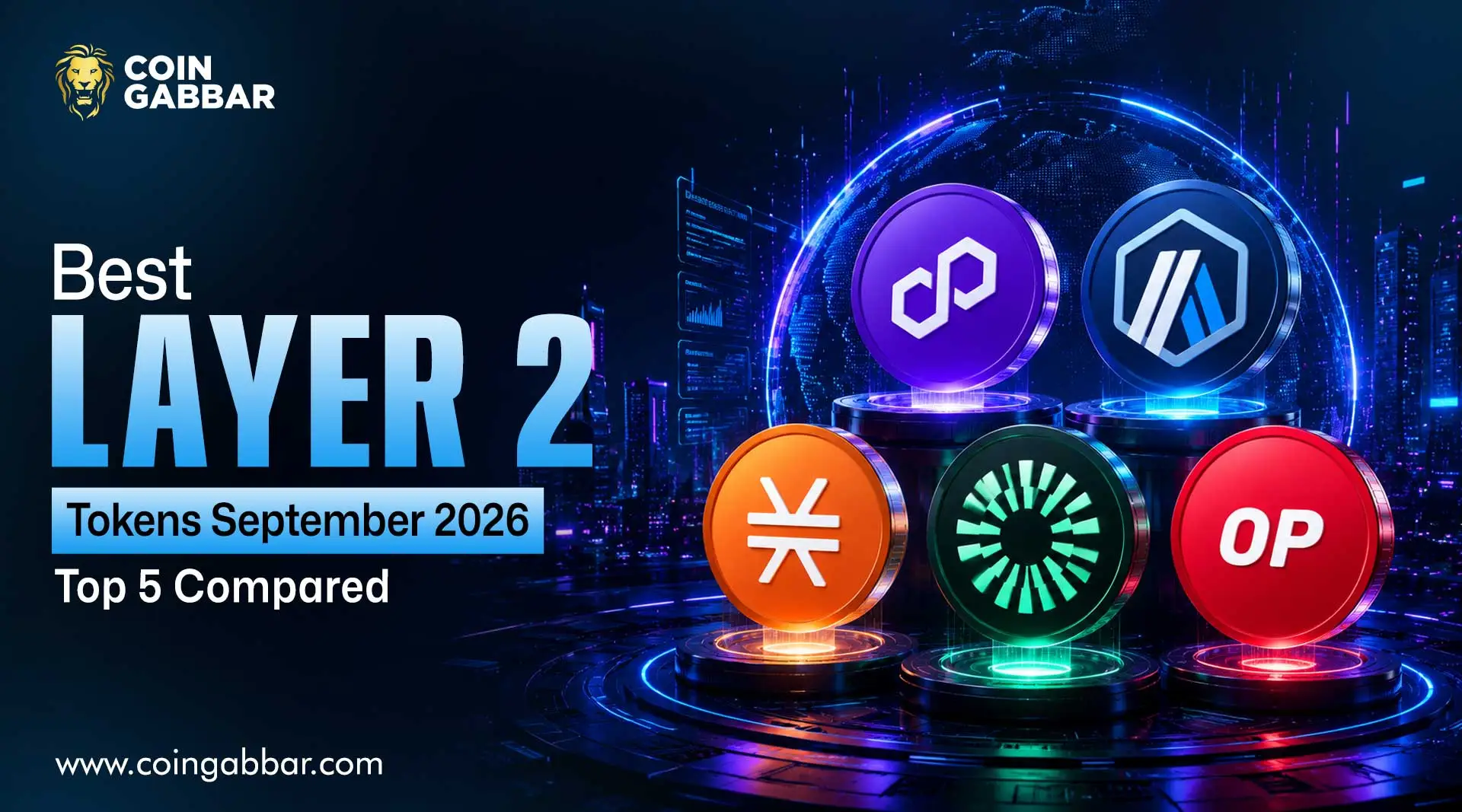
This comparison looks at five names that keep showing up in that conversation: Polygon, Arbitrum, Stacks, Mantle, and Optimism. Each one takes a different approach to scaling, and each has a different story behind its token.
Price and market data below come from CoinMarketCap, checked as of August 25, 2026. Treat this as a snapshot heading into September, not a fixed ranking.
Key Takeaways
Polygon and Mantle carry the two largest market caps here, but they get there through very different token designs — one leans on payments adoption, the other on a large DAO treasury.
Arbitrum and Optimism are both governance tokens that don't collect gas fees directly, which is the biggest thing to understand before treating either as a pure "network growth" bet.
Stacks is the only Bitcoin-based pick on this list, and its story depends almost entirely on sBTC adoption rather than general-purpose DeFi activity.
What Makes These Five Layer 2 Tokens Stand Out
This list covers Layer 2 tokens with real, live networks and public tokenomics data, not presale or concept-stage projects. The selection leans on current CoinMarketCap rankings inside the Layer 2 category, confirmed project documentation, and recent, dated network updates rather than price momentum alone.
1. Polygon (POL)
Current Price: $0.1166 | Market Cap: $1.24B
Polygon is an Ethereum-scaling network built around low fees and fast confirmation. POL replaced the older MATIC token on a 1:1 basis and now pays gas on Polygon PoS. According to Polygon's own developer docs, POL launched with an initial supply of 10 billion tokens and carries an ongoing 2% annual emission, split between validator rewards and a community treasury.
Key Features
Native gas and staking token on Polygon PoS.
Emission is offset by fee burns during high network usage, per Polygon's published mechanics.
Focused on the "Gigagas" roadmap, targeting over 100,000 transactions per second.
Why watch now: Polygon's Ithaca upgrade went live on July 30, 2026, adding automatic failover to keep transactions processing during network stress. The project has also leaned hard into real-world payments, including a POS-integrated stablecoin settlement at a Lawson store in Japan and a loyalty-points-to-JPYC conversion tied to Kansai Electric Power.
Source: Polygon Developer Docs
Risk: POL trades roughly 90% below its all-time high of $0.7662 from December 2024. The 2% annual emission adds new supply every year, and that pressure only eases when transaction-fee burns outpace it.
2. Arbitrum (ARB)
Current Price: $0.09878 | Market Cap: $659.73M
Arbitrum is an optimistic rollup that batches transactions off Ethereum, then settles them back with fraud proofs. It has long been one of the most-used Ethereum Layer 2 networks by total value locked. ARB is the governance token for the Arbitrum DAO, according to Arbitrum Foundation documentation.
Key Features
Governance token only — Arbitrum One charges gas in ETH, not ARB.
Total supply capped at 10 billion, with roughly 66% unlocked as of August 2026, per Tokenomist.
Holders vote on treasury spending, protocol upgrades, and Security Council elections.
Why watch now: Arbitrum's vesting schedule runs into 2027, and monthly unlocks have added steady supply pressure throughout 2026. Because ARB doesn't capture gas revenue directly, its value depends on the DAO eventually building a mechanism that ties network growth back to the token — something governance has discussed but not fully implemented yet.
Source: Arbitrum DAO Governance Docs
Risk: The token's biggest structural issue is what analysts call a "value-capture problem" — more Arbitrum usage doesn't automatically mean more ARB demand, since transactions are paid in ETH.
3. Stacks (STX)
Current Price: $0.2642 | Market Cap: $478.97M
Stacks takes a different route from the other four. It's a Bitcoin Layer 2 that brings smart contracts to Bitcoin without changing Bitcoin's own base layer. It uses Proof of Transfer consensus and a purpose-built language called Clarity.
Key Features
sBTC, a non-custodial, 1:1 Bitcoin-backed programmable asset, launched for mainnet deposits on December 17, 2024.
The Nakamoto upgrade (October 2024) cut block times to roughly 5 seconds and gave transactions Bitcoin-level finality.
STX holders can lock tokens through Stacking to earn Bitcoin rewards.
Why watch now: Stacks' Q2 2026 ecosystem report noted network wallets passing 1.6 million and a self-custodial Bitcoin Staking product moving to public testnet, with mainnet audits underway. The project's entire 2026 pitch centers on growing Bitcoin-native DeFi rather than competing directly with Ethereum L2s.
Source: Stacks Q2 2026 Ecosystem Report
Risk: STX trades far below its April 2024 all-time high of $3.84. Its newer Bitcoin Staking product also requires bonding BTC for around six months, which limits liquidity for participants chasing yield.
4. Mantle (MNT)
Current Price: $0.5242 | Market Cap: $1.73B
Mantle is a modular Ethereum Layer 2 that emerged from a 2023 Bit DAO governance vote. MNT works as both the network's gas token and its governance token, according to Mantle's own site, with a fixed maximum supply of roughly 6.219 billion tokens and no ongoing emission schedule.
Key Features
Fixed max supply — no continuous inflation, unlike Polygon or Arbitrum.
DAO-controlled Mantle Treasury, which the project's own dashboard shows holding a mix of MNT, BTC, ETH, and stablecoins.
Powers a broader "Banking Chain" product stack that includes mETH liquid staking, FBTC, and the Mantle Index Four institutional product.
Why watch now: Mantle has pushed further into institutional products than most Layer 2 tokens on this list, including tokenized active strategies the project says are the largest across all L2s as of mid-July 2026. Its treasury size, in the billions of dollars by the project's own figures, is a differentiator few competitors can match.
Source: Mantle Official Site
Risk: A large share of the Mantle Treasury is denominated in MNT itself, according to the project's own live breakdown. That creates circular exposure — if MNT's price falls, the treasury's stated value falls with it.
5. Optimism (OP)
Current Price: $0.1088 | Market Cap: $248.88M
Optimism built the OP Stack, the software framework behind the Superchain — a group of Layer 2 chains that share security and infrastructure. OP is the governance token, with a total supply of 4.29 billion and a planned 2% annual inflation rate, according to Superchain ecosystem documentation.
Key Features
Governs the Optimism Collective through Token House and Citizens' House voting.
Funds Retroactive Public Goods Funding (RetroPGF) for ecosystem builders.
As of January 2026, governance approved directing 50% of net Superchain sequencer revenue toward OP buybacks over a 12-month pilot.
Why watch now: The buyback program is the clearest attempt yet to connect OP's price to actual Superchain usage. That said, Base — historically the largest contributor to Superchain activity — announced in February 2026 that it would migrate off the OP Stack, which raises real questions about how concentrated future Superchain revenue will be.
Source: Optimism Superchain
Risk: Recent analysis shows OP buybacks have been modest compared to new token unlocks, with roughly 343 million OP scheduled to unlock between May 2026 and April 2027.
Best Layer 2 Tokens September 2026: Price and Market Cap Comparison
Token | Price | 7d Change | Market Cap | Circulating Supply |
Polygon (POL) | $0.1166 | +10.03% | $1.24B | ~10.69B POL |
Arbitrum (ARB) | $0.09878 | +20.83% | $659.73M | ~6.67B ARB |
Stacks (STX) | $0.2642 | +5.15% | $478.97M | ~1.81B STX |
Mantle (MNT) | $0.5242 | +0.79% | $1.73B | ~3.3B MNT |
Optimism (OP) | $0.1088 | +5.36% | $248.88M | ~2.28B OP |
Source: CoinMarketCap, data as of August 25, 2026. Prices and percentages change quickly and should be independently verified before making any decisions.
What Does the Data Say About These Five Tokens?
The stronger signal across this group is real product activity — Polygon's payments integrations, Mantle's treasury products, and Stacks' sBTC growth are backed by dated, sourced updates rather than price speculation alone.
The main concern is supply. Polygon, Arbitrum, and Optimism all have ongoing emissions or multi-year unlock schedules, which means new tokens keep entering circulation regardless of demand. Mantle is the outlier with a fixed cap, though its treasury math depends heavily on its own token price.
The biggest unknown is Optimism's Superchain concentration risk following Base's February 2026 move away from the OP Stack. Readers should verify current Superchain chain participation and each project's latest unlock calendar before treating any of these five as a long-term hold.
Final Words
These five layer 2 tokens solve different problems in different ways. Polygon and Mantle both function as gas tokens tied to active payment and institutional-product ecosystems. Arbitrum and Optimism are governance-first tokens still working out how to connect price to network growth. Stacks stands apart as the only Bitcoin-anchored option, with a story that lives or dies on sBTC adoption.
None of this makes any single token a safe bet. Layer 2 tokenomics differ enough that comparing raw price or market cap alone can be misleading — the token's actual job inside its network matters just as much.
Disclaimer
This article is for informational purposes only and is not financial advice. Cryptocurrency markets are highly volatile, and layer 2 token prices can change rapidly. Always do your own research and consult a qualified financial advisor before making any investment decisions.
Also read: