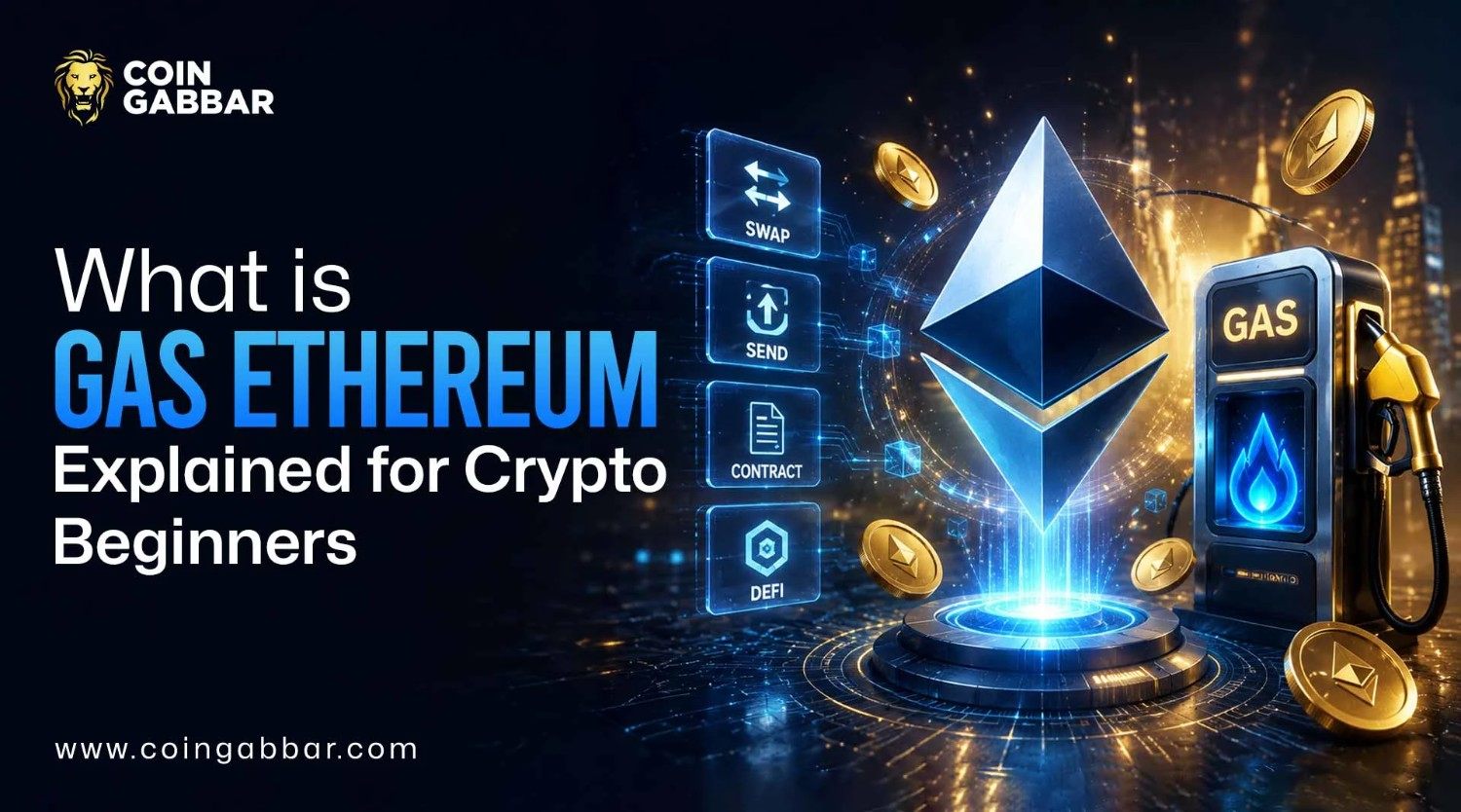
What Is Gas Ethereum? How Gas Fees Power the Ethereum Network

What Is Gas Ethereum? How Gas Fees Work, Cost & Importance
That fee has a name: gas. Put simply, this is what you pay to get the network to actually process and confirm whatever you are trying to do, whether that is sending ETH to a friend or clicking "swap" on a decentralized exchange. It is the fuel that makes anything happen on Ethereum.
And honestly, if you are just getting into crypto, wrapping your head around transaction cost is one of the more useful things you can do early on, because it quietly shapes how much every single action on the network ends up costing you.
Breaking Down What Gas Actually Means
Let us slow down for a second and get into the mechanics of what is Gas Ethereum.
Every single thing you do on Ethereum, sending a token, minting an NFT, or executing a trade, needs to be processed by thousands of nodes spread across the network, and that processing takes real computing power.
It is simply the unit used to measure how much of that computing power a given action eats up. A useful way to picture it is electricity: the more complicated the job, the more units it burns through. You are not paying in "gas" itself, though.
You are paying in ETH, and that amount comes from multiplying the network cost units your transaction used by the price at that particular moment.
Key Features of Ethereum Gas
A handful of details make transaction cost work the way it does, and knowing them puts you in a better position to use the network without getting caught off guard.
Priced in Gwei: This is almost always quoted in Gwei, a tiny slice of ETH, where one ETH equals one billion Gwei.
Prices move constantly: It is not fixed. It shifts with demand, so a crowded network means higher costs and a quiet one means cheaper transactions.
Gas limit and its used are not the same thing: You set an upper cap you are willing to pay, but you only ever get charged for what the transaction actually consumes.
Base fee plus tip: Since the London upgrade, every transaction carries a base fee that gets burned outright, and you can add an optional tip to push validators to prioritize your transaction.
Even failed transactions cost you: If your transaction fails partway through, you still pay for whatever computational work already happened before it gave up.
Why Does Gas Exist in the First Place?
It is easy to assume that what is Gas Ethereum just Ethereum's way of charging fees, but there is more to it than that. The real job netwrok fee does is keep the network secure and stop it from being flooded with junk.
Imagine if computation were free: anyone could spam the chain with meaningless transactions and grind everything to a halt. By putting an actual cost on every unit of computing power, it discourages that kind of abuse while also compensating the validators who keep the whole system running.
How Gas Actually Works
Once a transaction leaves your wallet, the wallet software estimates roughly how much network fee it will need and lets you set both a computational cost limit and a maximum fee you are okay paying.
From there, the network sorts transactions by priority, and generally speaking, the ones offering a bigger tip get picked up faster. When your transaction finally goes through, the base fee portion disappears permanently through burning, while the tip goes to whichever validator processed it.
And if it turns out your transaction used less transaction fee than the limit you set, you get the difference back automatically. You are never charged more than what was actually used.
Why Should You Actually Care About This?
Fair question. The honest answer is that what is Gas Ethereum often the single biggest factor determining how expensive it is to do anything on Ethereum.
During busy stretches, think of a hyped NFT drop or a DeFi frenzy; it prices can climb high enough that a basic transfer costs more than the amount you are even sending.
Once you understand how it behaves, you can time your transactions more sensibly, avoid getting stuck overpaying, and understand exactly why Layer 2 networks like Arbitrum or Optimism feel so much cheaper than doing everything directly on Ethereum mainnet.
Gas Fees Vs Transaction Value
These two get mixed up constantly, so here is the distinction in plain terms.
The fee is the cost of the computational work involved, and it has nothing to do with how much money is being moved.
Transaction value is simply the amount of ETH or tokens being sent, and it lives entirely separate from the fee.
A tiny transfer and a massive transfer of the same token can end up costing the exact same fee, because what determines the fee is complexity, not the size of the computational cost.
A Few Real-World Examples
Talking about what is Gas Ethereum in the abstract only gets you so far, so here is what it looks like in practice:
A basic ETH transfer usually needs around 21,000 units, making it about as cheap as transactions get.
Minting an NFT tends to require significantly more gas, since it involves running smart contract logic, and that cost climbs further during high-demand drops.
Swapping on a DEX typically costs more than a plain transfer too, because it involves more complex contract calls behind the scenes.
Each of these examples really just comes down to the same idea: the fee tracks the amount of work the network is actually being asked to do.
Tips for Managing Gas Fees
If you find yourself transacting on Ethereum regularly, a few small habits go a long way. Keep an eye on network congestion using a transaction fee tracker and try to time transactions for quieter hours when you can.
For smaller, more frequent transactions, Layer 2 solutions are usually the smarter move rather than doing everything on mainnet.
And before you hit confirm, double-check your limit, because setting it too low can cause the transaction to fail while you still get charged for the work already attempted.
Wrapping It Up
So what is gas Ethereum, in the end? It is the mechanism that keeps the network fair, secure, and resistant to spam, and it is calculated based on how much real computational effort your transaction demands.
Whether it is a simple transfer or a more involved DeFi swap, it is baked into how Ethereum functions every single day. Once you get comfortable with pricing, limits, and burning fitting together, you will be in a much better spot to time your transactions and keep unnecessary costs to a minimum.
Conclusion
In short, what is gas Ethereum? It's the fee that keeps the network fair, secure, and spam-free, based on how much computational work your transaction needs. Understanding it helps you time transactions better and avoid overpaying.
Disclaimer
This article is for educational purposes only and isn't financial or technical advice. Its fees change rapidly, so always check real-time rates and consult a professional before making decisions.