Cardano Upgrade 2026: New CIPs, Price Recovery and Ecosystem So Far

Cardano Upgrade 2026: Focus on Security As ADA Gains Over $0.2 Mark
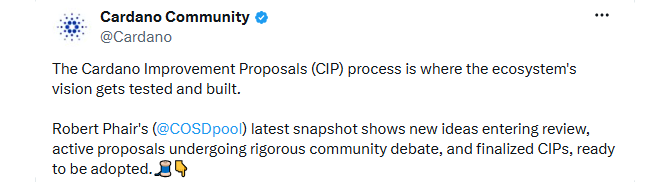
Cardano ADA news today centers on the Cardano Improvement Proposal (CIP) system. Two fresh proposals just entered review, three are under active debate, and five have been finalized. Together, they sketch the shape of Cardano Upgrade 2026 and the years just after it.
Source: Official Community Channel
Here, a CIP is a formal write-up that suggests a technical change to the network. A CPS (Cardano Problem Statement) comes earlier in the process — it defines a problem before anyone proposes a fix. Both move through open community review before adoption, based on tracking shared by researcher Robert Phair.
New Cardano CIPs: Aim to Strengthen Quantum Security and Dev Tooling
Two submissions on the Cardano Upgrade 2026 roadmap just opened for feedback. Both point toward long-term network resilience.
-
CIP-0197 – Post-Quantum ZK Signatures for HD Wallets: Adds zero-knowledge proofs of wallet seed phrases on top of existing signatures, an intermediate step toward quantum security ahead of a full cryptographic migration. Details: pull request #1242.
-
CPS-0034 – Extending Plutus Core Conformance Testing: Outlines a shared framework for testing Plutus behavior consistently across node types, aimed at fewer bugs for developers building smart contracts. Details: pull request #1244.
Active Proposals: Under Deep Community Review in the ADA Ecosystem
Three items are further along, sitting in open feedback rounds:
-
CIP-0196 – Handle Provider Registry & Resolver, aimed at standardizing human-readable wallet handles. (Pull request #1229).
-
CIP-0178 – Merkle Root of Transactions in Block Header, which would let light clients and bridges verify a transaction without downloading a full block. (Pull request #964).
-
CPS-0030 – Quantum-secure settlement layer, an early research track for defending the base layer against future quantum attacks. (Pull request #1175).
Completed CIPs: Ready to Join the Cardano Upgrade 2026 Rollout
Five proposals have cleared review and are ready for engineering work ahead of a future protocol upgrade, or hard fork:
-
CIP-0168 – More BuiltinValue Functions
-
CIP-0172 – Self-Usable Transaction Outputs
-
CIP-0183 – Conflict-Based Fee Priority in Mempool
-
CPS-0028 – Approaches to Non-Strict UPLC Evaluation
-
CPS-0033 – DRep Voting Power Concentration
CIP-0183 changes how fees rise inside the mempool, so charges climb mainly for contested transactions rather than across the whole network.
CPS-0033 looks at concentration risk among DReps, the delegated representatives who vote in the on-chain governance.
Cardano ADA Price Today: The Recovery Above $0.20 Level
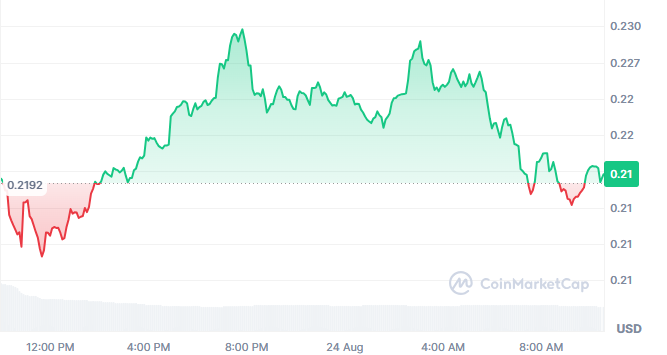
$ADA price today sits near $0.2192, with train volume of $610 million over 24 hours. What matters here most is that the asset is now holding above the $0.20 level after many failed attempts this year. According to CoinMarketCap, the current stats:
-
Price: $0.2192, neutral in -0.31% to +1.78% range
-
Market cap: $8.04 billion
-
24-hour volume: $610 million, down 44.23%
-
Fully diluted valuation: $9.86 billion
-
Circulating supply: 36.69 billion ADA
By August 23, ADA was trading right around the $0.23 mark, a level it had not held cleanly in months. That climb from a $0.20 benchmark to $0.23 marks one of the token's stronger stretches of the year and adds fresh weight to the recovery case for 2026.
Cardano ADA Ecosystem 2026: Deals, Partnerships, and On-Chain Growth
The network side of the story has been just as active as the price chart.
$ADA Blockchain Milestones: It passed 120 million total transactions in April 2026, tied to steady dApp and DeFi use. That momentum showed up again in late August, when daily transactions climbed to roughly 32,800, up sharply from around 16,700 just two days earlier, alongside a similar jump in active wallet addresses.
Ecosystem Partnerships: On the partnership front, Cardano added regulated futures trading through CME in February, followed by a Brazilian Olympic Committee tie-up and a multi-year education and enterprise blockchain partnership between the $ADA Foundation and Brazil's SENAI network in June.
$ADA Institution Moves: Institutional interest has moved in mixed directions this year. Grayscale filed to withdraw its ADA ETF registration with the SEC on August 7, pulling a product it had been pursuing since early 2025. Just weeks later, T. Rowe Price added ADA to its Active Crypto ETF at a 0.43% weighting, a notable vote of confidence from a traditional asset manager.
What's Ahead: Dijkstra, Regulation, and the Cardano Roadmap 2026
Finalized CIPs move next into implementation and testing, then bundle into a hard fork once DReps, stake pool operators, and the Constitutional Committee grant approval.
The $ADA network roadmap 2026 centers on the Dijkstra upgrade, built around Linear Leios for higher throughput, with Peras expected afterward to speed up transaction finality.
Post-quantum research continues alongside this work, covering signatures and key structures ahead of any future migration.
Regulation remains part of the backdrop too. Hoskinson recently said, "Crypto money is coming in, and that keeps things like the Clarity Act alive," pointing to a possible September 15 deadline for the bill to pass in the U.S. Senate — a development he has linked directly to how much room $ADA network and other Layer 1 networks will have to operate without added legal friction.
Disclaimer: This article is for informational purposes only and does not constitute financial or investment advice. Crypto markets carry significant risk. Always do your own research before making any investment decisions.









