Clarity Act Update: Did Sheriffs Just Clear the Path for the Senate?

Clarity Act Update: Sheriffs Association Shifts Position
This Clarity Act Update covers a policy shift dated September 3, 2026. The National Sheriffs Association moved its stance on the CLARITY Act from opposed to neutral. The change removes one obstacle ahead of a key Senate vote.
The group sent a letter to Senate Majority Leader John Thune and Minority Leader Chuck Schumer. Sheriff Troy Wellman, the association's president, and Justin Smith, its executive director and CEO, signed it. The letter addressed H.R. 3633, the CLARITY-Act.
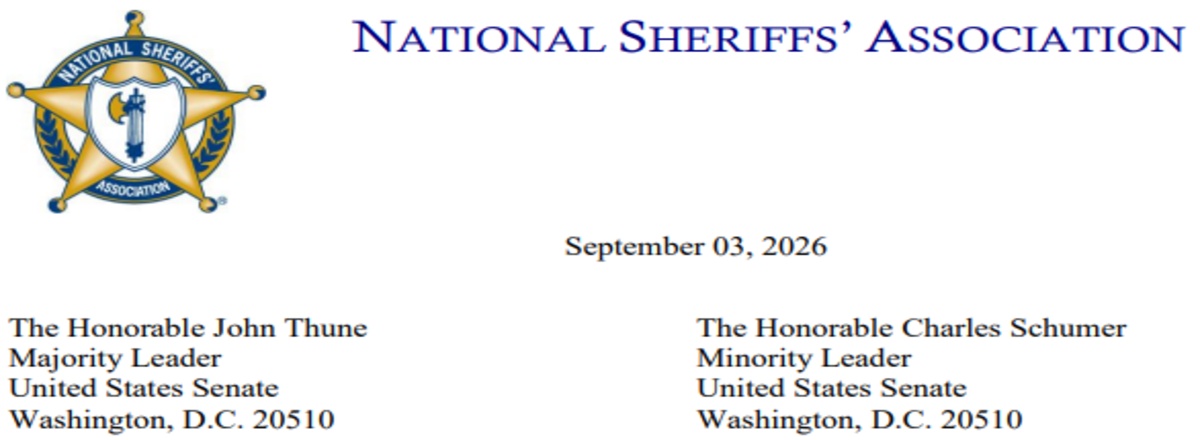
Source: Official Letter
Sheriffs Association Sends Neutral Letter to Senate Leaders
The National Sheriffs Association had raised objections since July 2026. Its concerns centered on anti-money laundering compliance and law enforcement access to blockchain transaction data.
In the letter, the group wrote that the NSA is changing its position on the CLARITY Act to neutral. It also said the bill addresses a complex policy area that Congress and stakeholders have worked to navigate.
The letter did not endorse the bill. Instead, it said the association would step back and let the legislative process continue.
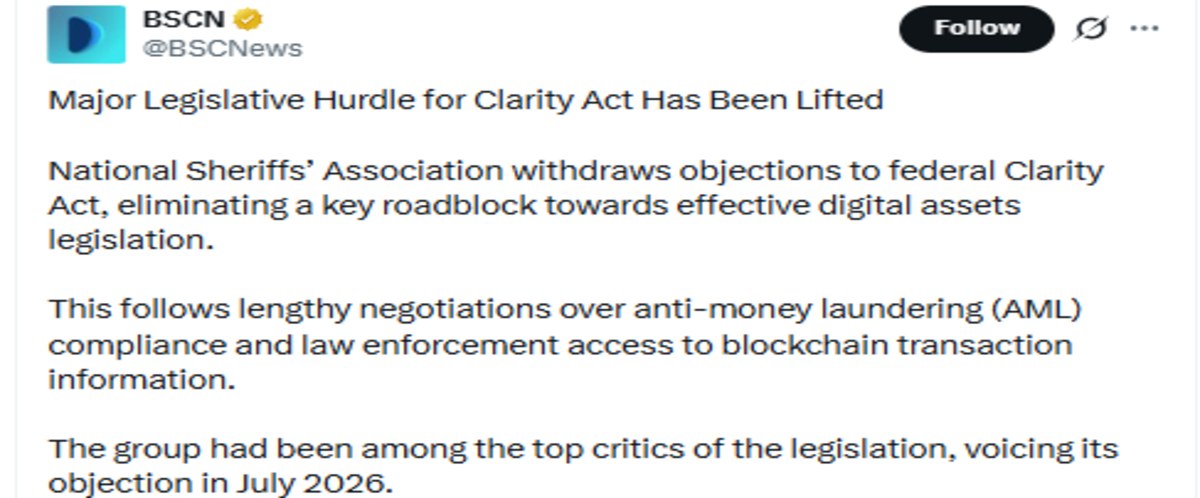
Source: Official BSCN X Post
What This Means for Crypto Policy Going Forward
Law enforcement input has shaped digital asset rules for years, and one major voice stepping back gives lawmakers more room to negotiate remaining details
Exchanges and token issuers have watched this fight closely, since a clearer regulatory path could ease compliance planning going forward
The shift may also influence how other advocacy groups position themselves in the coming weeks
Analysts caution against reading too much into a single move, as several disputes remain unresolved, including how presidential financial interests should be handled
Those talks could still stretch past the midterms, so this development signals momentum, not resolution
Traders and policy watchers should track the coming weeks closely
Why This Update Matters
This Clarity Act Update carries weight because law enforcement objections had become a sticking point for some senators. Sen. Catherine Cortez Masto, D-Nev., is among the Democrats whose support is needed to advance the bill.
With the sheriff's group stepping back, that pressure point eases. It does not guarantee passage, but it removes a talking point that opponents had used against the-bill in recent months.
What Still Stands Between the Bill and Passage
A cloture vote, a Senate procedure to end debate and move a bill forward, is set for September 15, 2026. It needs 60 votes to succeed. Republicans hold 53-Senate seats, so at least seven Democrats must join them.
Other issues remain unresolved. Reporting notes that limits on the president's ability to profit from digital assets are still an open question in the Senate. This Clarity Act update does not change that part of the debate.
The House already passed its version of the bill by a wide bipartisan margin, according to ongoing coverage of the Senate timeline.
Clarity Act Timeline: Key Dates to Watch
Date | Development |
July 2026 | NSA raises formal objections to the bill. |
September 3, 2026 | NSA shifts position to neutral. |
September 15, 2026 | |
September 17, 2026 | Republicans expected to leave for recess |
Conclusion
The NSA's move is a procedural win for supporters, not a resolved outcome. Analysts point out that a neutral stance removes a vocal critic but does not add a new vote in favor.
The remaining sticking points, including presidential conflict-of-interest rules, appear more difficult to resolve. Market watchers should treat this Clarity Act Update as one step in a longer process, not confirmation that the bill will pass.
This Clarity Act Update shows one law enforcement group stepping aside, not signing on. The real test comes September 15, when the Senate decides whether to advance the-bill at all.
YMYL Disclaimer: This article is for informational purposes only and does not constitute financial or legal advice. Readers should verify legislative developments through official sources before making decisions.






