When Is the Little Pepe Launch Date for the New Layer 2?


Investors Eye Little Pepe Launch Date as Presale Hits 98%
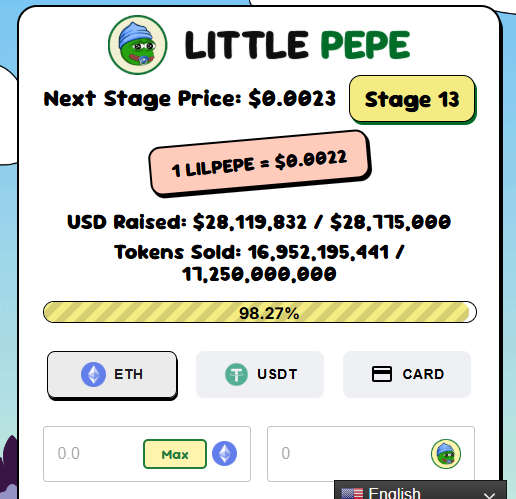
When does a presale page turn into a real market story? For readers tracking the little pepe launch date, that question now sits at the center of attention because the timeline is no longer just meme chatter. The official website shows Stage 13 pricing at $0.0022 and the next stage at $0.0023, while search-indexed posts from the project X account point to 30 April 2026 as the go-live date. That mix of public timing and published token terms is what gives this update its weight.
 Source: X(formerly Twitter)
Little Pepe Launch Date Finds Support on X Post
The clearest calendar marker for the little pepe launch date appears to come from X rather than from the presale table itself. Search results tied to the official project X account show a post saying the token is going live on 30 April 2026. On the project website, the presale page fills in the economic side of that story by listing a listing price of $0.003 and a market cap of $300 million at market entry. In the screenshot supplied with the request, the sale panel also showed Stage 13 at 98.27% complete, which helps explain why timing has become the main question for readers following the project.
 Source: Official website
Little Pepe Launch Date Story Meets Vesting Math
The little pepe launch date matters because the project documents are detailed on supply, even if they are lighter on formal disclosure. The whitepaper describes the token as a planned Layer 2 meme-focused ecosystem with a 100 billion total supply on Ethereum ERC20. Its token split allocates 26.5 billion to presale, 30 billion to chain reserves, 13.5 billion to staking and rewards, and 10 billion each to marketing, liquidity, and CEX reserves. The vesting page adds a more useful reader detail: presale tokens start with 0% unlocked at go-live, face a three month cliff, and then unlock at 5% every 30 days. The same page lists the initial circulating supply at 20 billion tokens, or 20% of the total.
The website also hosts an audit page, but the visible summary text does not name the auditor directly in the page copy. That does not cancel the little pepe launch date narrative, but it does add an important diligence point for readers who want more than countdown graphics and roadmap slogans.
Little Pepe Launch Date Faces the Real Supply Test
Because $LILPEPE is still in presale, there is no open market chart yet to measure real trader sentiment. What can be measured instead is the structured pricing path around the project: Stage 13 at $0.0022, Stage 14 at $0.0023, and a stated listing price of $0.003. That step-by-step setup may support interest before trading begins, but the real test will come later. Search interest is also building around the end date, listing date, listing price, and listing price prediction, though the published materials mainly confirm the sale progress, price path, and vesting schedule. Readers will likely focus on whether the project matches its stated date, keeps vesting terms unchanged, and moves from presale into live distribution without confusion over supply or unlock timing.
Future Outlook
The next phase for the little pepe launch date story is simple to define and hard to execute. The X timeline gives a date. The website gives token economics. The whitepaper gives the project narrative. If those three pieces stay aligned through go-live, attention may hold. If they drift apart, readers will notice quickly.
For now, the little pepe launch date is less about hype and more about verification. A nearly full Stage 13, a published vesting model, and a stated 30 April 2026 go-live message create a clear watchlist. What matters next is whether those published terms remain consistent when the trading window actually arrives.
YMYL Disclaimer: This article is for informational purposes only and is not financial advice. Crypto assets are volatile and high risk. Project dates, vesting terms, listing details, and disclosures can change. Readers should verify official sources and consider independent professional advice before making financial decisions.






