Orla Gives AI Agents Budgets With Defined Dollar Risk

Latin Link Launches Non-Custodial Multichain Crypto Swaps
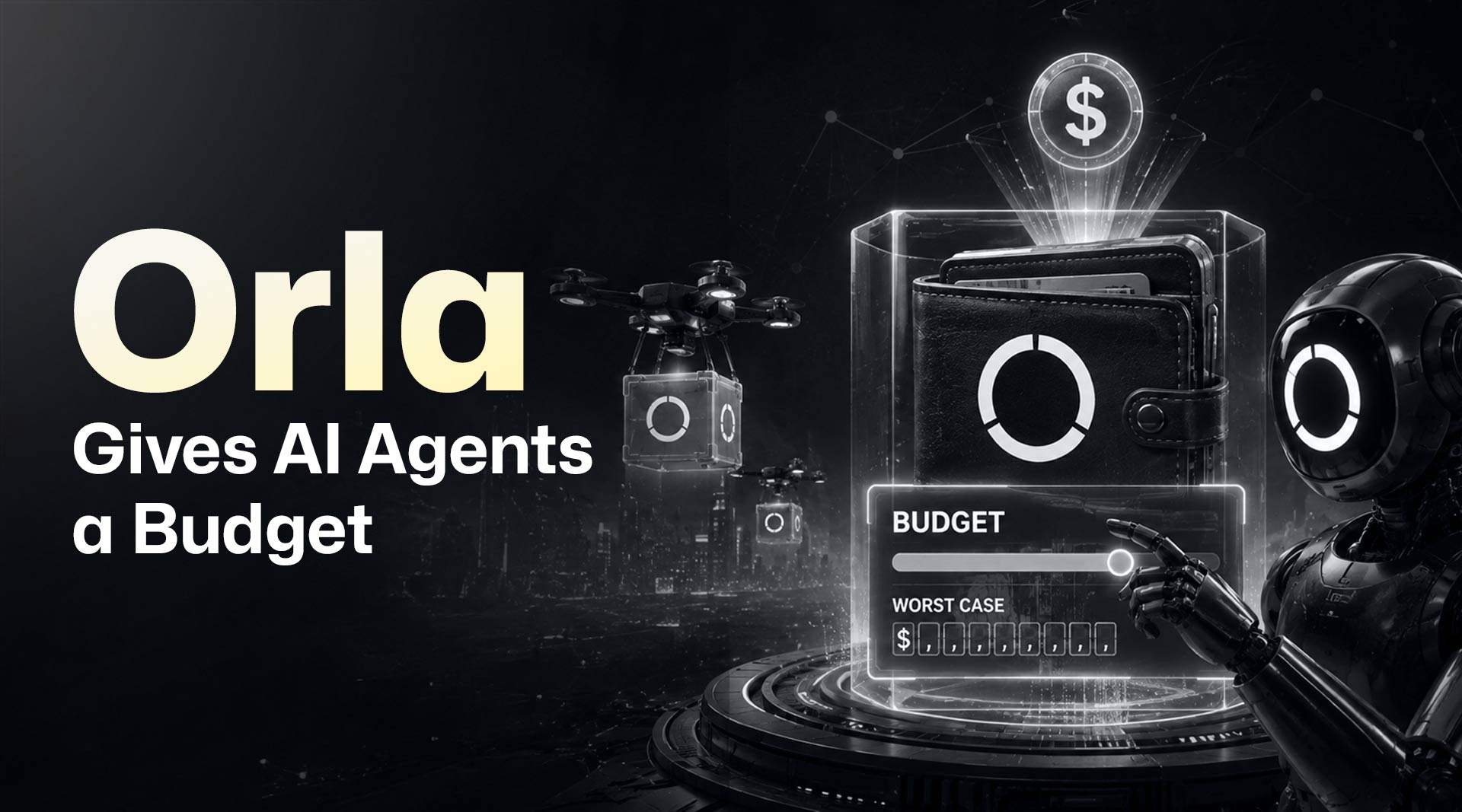
The budgeting app now lets a connected AI agent spend from its own stablecoin wallet, where the deposit is the entire possible loss, and lets Orla invoices accept payment from other people's agents over x402.
SINGAPORE, August 10, 2026. Orla (orla.finance), a budgeting app for money that lives in banks, exchanges and crypto wallets, today announced agent payments. An AI agent connected to Orla can now hold its own stablecoin wallet and pay for services within limits its owner sets. In the other direction, any Orla invoice or pay link priced in USDC can accept payment from someone else's agent over x402, the web's payment-required standard.
The agent wallet answers the question owners ask first: what is the most this can cost me. Each agent gets its own address on Base, Ethereum and Tron, funded with USDC or USDT on Base and Ethereum, or USDT on Tron. That deposit is the agent's entire budget. Nothing stands behind the balance, so no bug, no prompt injection and no bad day can spend more than what was put in. Sends go only to addresses the owner's space already trusts, inside a daily cap.
A payment outside those limits is not refused. It becomes an approval request: the owner reads who gets paid and how much, then signs or rejects, and a signed payment goes out from the same balance. Every payment the agent makes on its own sends the owner a notification, and Orla's reports show agent spending in two columns that are deliberately never added together: what the machine decided, and what a person signed.
The same release turns Orla documents into something machines can pay. An invoice or pay link priced in USDC on Base or Ethereum answers a human with a payment page and a machine with a price, at the same URL. The paying agent gets a receipt in under a second, and the document is marked paid once the transfer is confirmed on chain. The payee receives the full amount the document states; the network gas is Orla's cost. There is nothing for the seller to switch on: accepting machine payments is part of Orla's paid plans and works on any document already priced in USDC.
"Before you let software spend money, you should be able to say what the worst case costs," said Anton Butser, founder of Orla. "With an agent wallet, that number is the deposit. Not a policy or a promise. A balance. And every payment the agent makes lands in the owner's books, marked as the machine's decision, permanently separate from anything a person signed."
Agents connect to Orla with an API key, or as an MCP connector in clients such as Claude and ChatGPT. Every new agent starts in observation mode, where everything it wants to do waits for a person to accept.
About Orla: Orla is a budgeting app for people whose money lives in banks, crypto exchanges and crypto wallets at once: one balance, category budgets, invoicing and pay links, and a year-end capital gains report drawn from the same ledger. Connections are read-only and the keys to users' own wallets never leave the browser. Orla is a product of Digital Flow PTE. LTD., Singapore, and is available in English, Spanish, Portuguese and Russian at orla.finance.
Media contact: support@orla.finance