How cryptocurrency exchange works in the apps

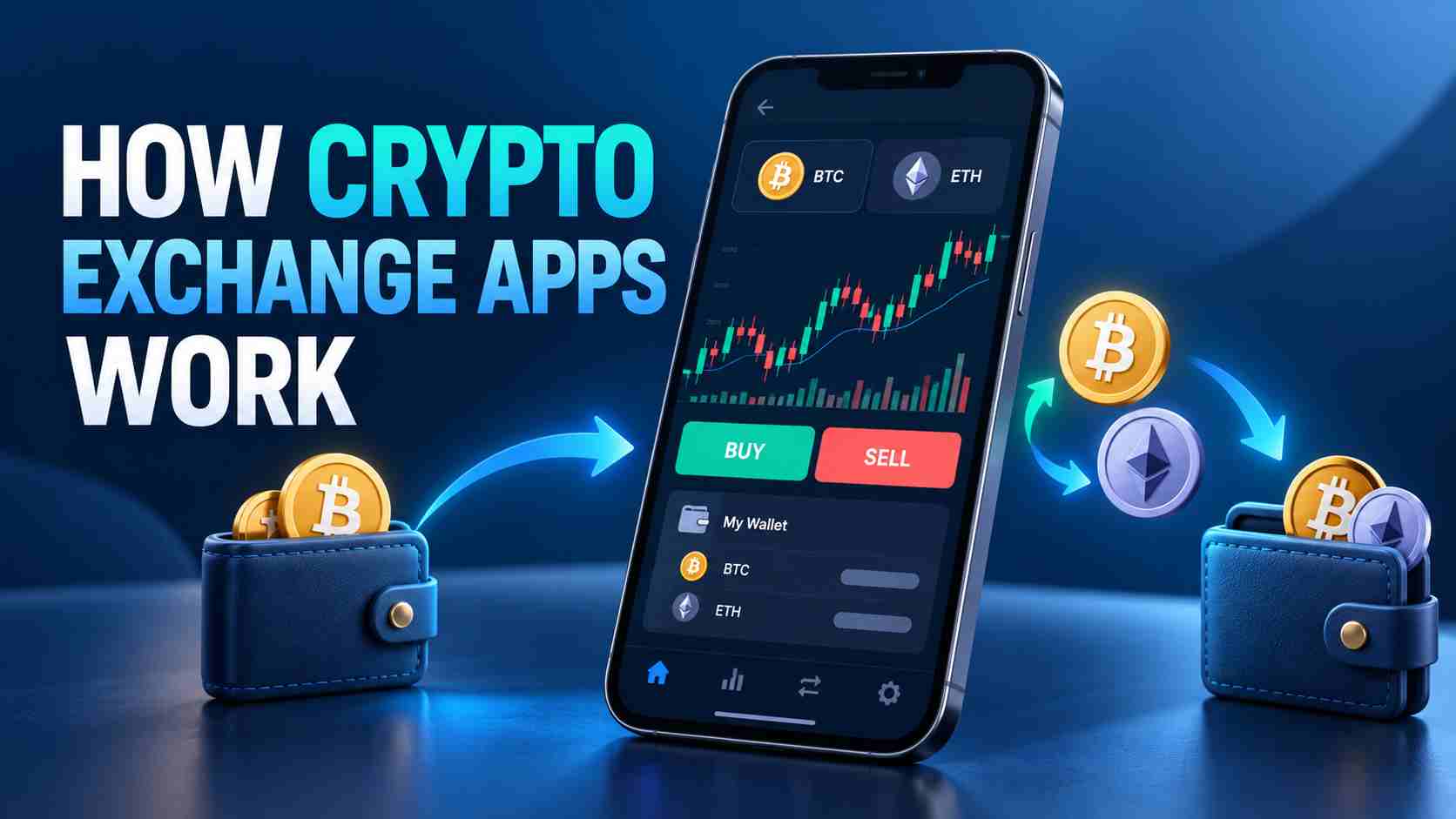
Exchanging cryptocurrency in the app seems like a single button, but behind it lies achain of checks, calculations, access to liquidity, and, in some cases, blockchain transactions. Understanding this process helps the user better assess the rate, fees, deposit time, and risks.
Rate calculation
When the user selects a pair — for example, BTC to USDT or ETH to SOL — the app doesn’t just display a random number. It requests current quotes from liquidity sources: the internal trading system, an external exchange, a market maker, or an aggregator.
At this point, the system takes several parameters into account:
● the current market price of the asset;
● the available liquidity for the selected pair;
● the size of the user’s order;
● the spread between the buy and sell prices;
● the service fee;
● network costs if the exchange takes place on the blockchain
Therefore, the final amount almost never matches the “pure” market price from the news feed or aggregator. The user sees the final estimate: how much they will give and how much they are expected to receive.
Many applications do not create all the infrastructure them selves but connect to third‑party services. For example, using a crypto exchanger with API , an application can obtain exchange rates, create orders, and track the exchange status without holding clients’ funds on its own balance. Such APIs allow you to add an exchange function to a wallet, fintech application, or marketplace without developing your own order book.
Checking limits, accounts, and risks
After entering the amount, the application performs a series of automatic checks. It makes surethat the user has sufficient funds, that the selected pair is available in their region, and that the transaction does not exceed the limits.
If the service works with fiat money or is a regulated platform, KYC and AML procedures may be applied. They are needed to identify the client and verify that transactions comply with anti‑money laundering requirements. In non‑custodial wallets, wherethe user stores the private keys themselves, such checks may be absent, but other restrictions may apply: the available network, gas balance, and addressvalidity.
The app can also warn about volatility. If a user is exchanging an asset with high volatility, the rate may change even before the transaction is confirmed. Therefore, many services display not only the amount but also the acceptable price deviation —the so‑called slippage.
Fixing the rate and creating an order
When the user clicks“Exchange,” the app records the terms of the transaction. In a centralized app, this may involve an instant update of the internal balance: the service deducts one asset and credits another at the agreed rate.
In this case, a blockchain transaction may not be created for the user at all: the exchange takes place within the platform’s accounting system. That is why such operations are often completed in seconds and do not require a separate gas fee. However, the user trusts the platform with their assets, which means they depend on its security, reserves, and operational reliability.
If the service operates through a third‑party exchanger, a request with a unique identifier is created. The application transmits the operation parameters: the pair, the amount, the recipient’s address, the network, and the allowed rate deviation.Next, the user can see the following statuses: “a waiting deposit,”“confirming,” “exchange in progress,” “sent,” “completed.”
What happens when exchanging via DEX
In a decentralized application, the mechanics are different. Here, the user usually connects a non‑custodial wallet, and the funds remain under their control until the transaction is signed.
First, the interface searches for an exchange route. For liquid pairs, it can be direct, while for rare tokens, it may go through several pools or intermediate assets. Then the user confirms the transaction in the wallet, and the smart contract executes the exchange.
In automated market makers, the price is not formed by the order book, but by the ratio of assets in the liquidity pool. The larger the trade relative to the depth of the pool, the more the price may move against the user. This is what slippage is.
After signing, the transaction is sent to the blockchain. Validators include it in a block, thenetwork verifies the correct ness of the transaction, and then the balances inthe wallet are updated. If the price goes beyond the set slippage limit, the transaction may be cancelled, but the network fee is still charged.
Why is the credit sometimes delayed?
A delay in the exchange does not always mean there is an error. Several factors affect the speed:
● the load on the blockchain network;
● the number of confirmations required by the service;
● the selected size of the network fee;
● the type of asset and the network;
● internal platform checks;
● the cross‑chain route if assets are moved between different blockchains.
For example, an exchange within a single network can be completed quickly, whereas a transfer between Bitcoin and Ethereum requires additional infrastructure: bridges , liquidity, confirmations, and processing by the service. Cross‑chain operationsare usually more complex because blockchains do not “see” each other’s state directly.
It is important forthe user to verify not only the amount but also the network. Sending USDT overthe wrong network or to an address that does not support the selected token standard can result in the loss of funds.
How fees are calculated
The interface often displays a single fee, but in reality, the costs may consist of several components:
● the app or exchanger fee;
● the spread between the market price and the transaction rate;
● the blockchain network fee;
● the conversion fee via an intermediate asset;
● possible slippage during execution.
Therefore, comparing services based solely on the stated fee is not enough. A more accurate indicator is how many tokens the user will actually receive after all deductions. A good interface shows the final amount, rate, limits, and estimated processing time in advance.
Importance for the market
Convenient exchange is one of the key elements of the mass adoption of cryptocurrencies. When auser doesn’t need to manually search for a counterparty, figure out orders, and connect to an exchange, the entry barrier is lowered. The crypto industry is gradually transforming from a niche market into an infrastructure for payments, savings, tokenized assets, and new financial products. Blockchains open up access to new types of markets where assets and risks can be created and distributed globally.
That is why in‑app exchanges are becoming not just an additional feature, but an important pointof user interaction with the crypto ecosystem. The more transparently the rate, fees, route, and transaction status are displayed, the higher the trust in the service.
What to check before exchanging
Before clicking the“Exchange” button, you should make sure of a few things:
● the final amount matches your expectations;
● the correct network and recipient address are specified;
● the fees, spread, and possible slippage are clear;
● the app shows the operation status and transaction history.
● The service has a clear security and fund storage policy;
● for large amounts, a testtransaction is carried out first.
Exchanging cryptocurrency in the app is not magic, but a combination of the user interface, market data, liquidity, and execution infrastructure. One button launches a process in which every detail — from the pool depth to the net workload — affects the final result.