How to Buy PENGU: Pudgy Penguins Token Buying Guide for Beginners

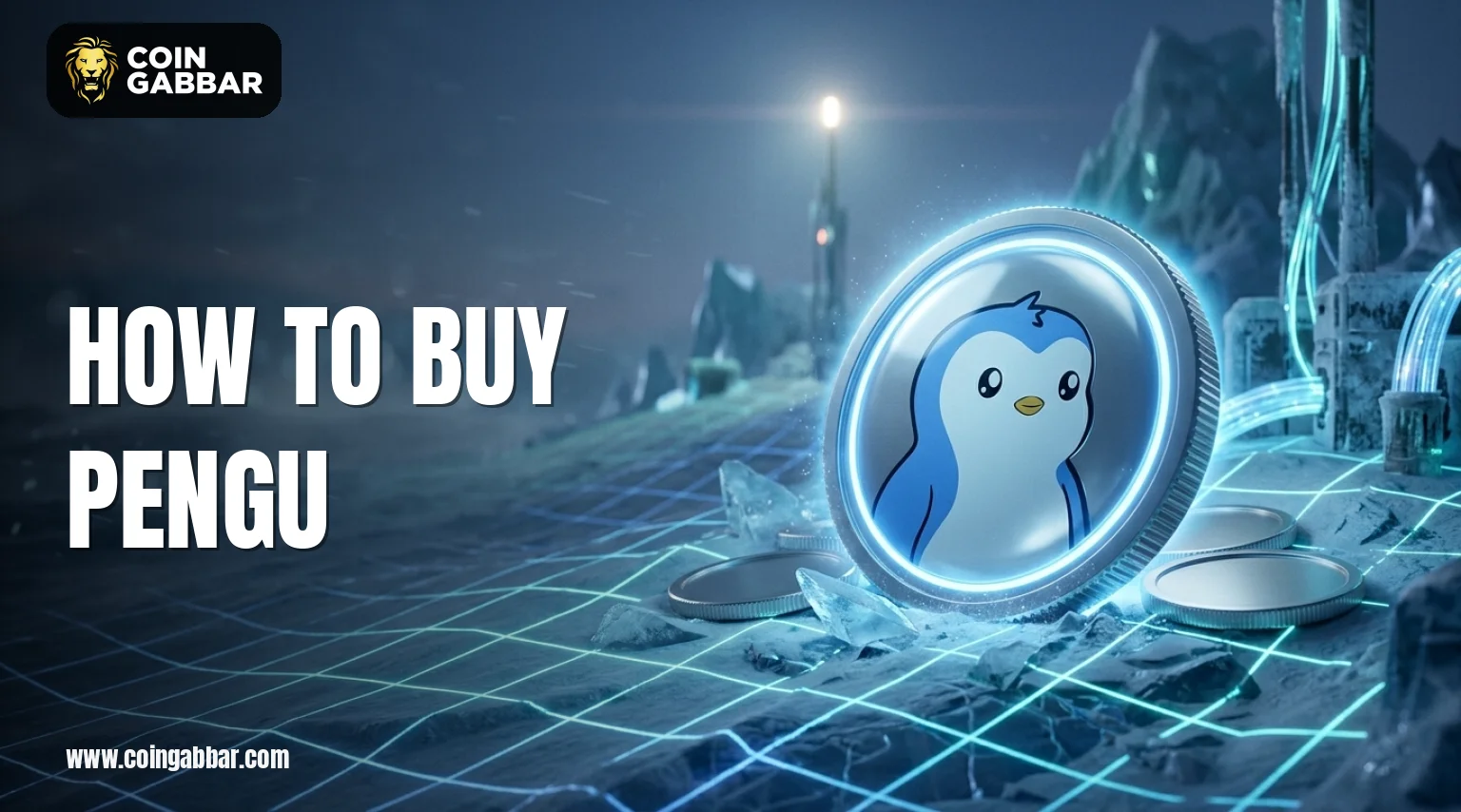
How to Buy PENGU Safely: A Beginner Guide for Solana Users
PENGU is climbing CoinGecko's most-searched list right now, and it recently ranked third. Whenever a coin gets this much attention, fake tokens and copycat links tend to appear within hours.
That makes buying it a little risky for newcomers. So how do users buy PENGU without landing on the wrong token? Use a trusted exchange, or swap for it in a Solana wallet after checking the official contract address.
This guide on how to buy PENGU covers exchanges, Solana wallets and fees. It also explains the main risks before any money is spend anything. First, here is a short look at what Pudgy Penguins is and why people are searching for it.
Key Takeaways
PENGU is the official Pudgy Penguins token, and it runs on Solana.
It can be bought on a major exchange or swap for it in a Solana wallet.
Match the contract address before paying anything.
Memecoin prices swing hard, so only risk money users can afford to lose.
What Is PENGU?
PENGU is the official token of Pudgy Penguins. The brand began as an NFT collection and now sells toys and produces online content. The token is a memecoin, so its value rests largely on community and culture.
PENGU launched in December 2024 with a maximum supply of 88,888,888,888 tokens. CoinGecko data shows about 62.86 billion in circulation at the time of writing.
Its market cap sits near $310 million, ranking around #123. Our note on what market capitalization means explains that figure.
Is PENGU on Solana or Ethereum?
PENGU runs on Solana. The original Pudgy Penguins NFT collection lives on Ethereum, and that's where most of the confusion starts.
PENGU's official token address on Solana is 2zMMhcVQEXDtdE6vsFS7S7D5oUodfJHE8vd1gnBouauv. Many people call it the contract address. Think of it as the token's unique ID on the blockchain. Always check it on a block explorer like Solscan before buying. New to the network? Our primer on the Solana blockchain explains how it works.
Coinbase listed PENGU in February 2025. It confirmed support only for the SPL version. Sending PENGU to Coinbase over any other network can lead to lost funds.
Where Can Users Buy PENGU?
CoinGecko names Binance as the most active venue, led by the PENGU/USDT pair. OKX and Toobit appear among other popular options. Coinbase's price page also lists the token.
Route | Where | What to check |
Exchange | Binance, OKX, Toobit | Confirm it serves the buyer's country |
Exchange | Coinbase | Solana network only |
Wallet swap | Phantom or another Solana wallet | Needs SOL for fees |
Availability depends on the buyer's country, so check each listing page first. Rules and supported coins can change.
How to Buy PENGU on an Exchange
This route suits most beginners. The steps look similar on every platform.
Pick an exchange that lists PENGU and serves the buyer's region. region. Our guide to beginner-friendly exchanges can help.
Create an account and finish identity checks, often called KYC.
Deposit cash or a stablecoin such as USDT.
Search for PENGU and open a pair like PENGU/USDT.
Choose a market or limit order. A limit order lets users set their own price.
Review the total cost, including fees, then confirm.
To self-custody, withdraw to a personal wallet on the Solana network. Double-check the address.
What Fees Should I Expect?
Exchanges charge a trading fee on each order. Many add deposit or withdrawal fees, and the gap between buy and sell prices adds a hidden cost. That gap is called the spread. CoinGecko shows spreads of 0.01% to 0.06% on its top PENGU venues.
Our guide to crypto trading fees breaks each cost down. In a wallet swap, the quote shows fees before confirmation. A small Solana network fee also pays a small Solana network fee, so keep some SOL on hand.
Buy Pudgy Penguins Token With a Solana Wallet
The wallet route gives users self-custody. Phantom is a popular Solana wallet, and the steps are similar in others.
Install the wallet from its official site and create an account. Write the recovery phrase down offline and never share it. Our explainer on the crypto wallet covers the basics.
Add SOL. It pays network fees and can also be the token being swapped.
Open the Swap screen. Choose payment token, then PENGU as the one received.
Paste the contract address to find the token. Make sure it matches the one above.
Enter the amount, read the quote and fees, then confirm.
Quotes come from third-party providers. Memecoins can have thin liquidity, so the final price may differ from the quote.
What Risks Come With Buying PENGU?
The first risk is the price itself. CoinGecko shows PENGU trading nearly 94% below its all-time high of $0.06845. A coin that has fallen that far can also bounce hard, and either move can happen within days.
Then there's the supply. Roughly 62.86 billion tokens circulate today, but the original maximum was about 88.89 billion. Team and company tokens came with a one-year cliff and three-year vesting. So unlocks started trickling out after December 2025, and more tokens can reach the market as time goes on.
Futures trading is the third factor. Perpetual open interest sits near $85 million, about 27% of market cap. When that much money is tied up in futures positions, sharp moves can get even bigger.
Brand Strength vs Memecoin Risk
Supporters point to brand reach. According to the project's description on CoinGecko, the penguin has drawn over 100 billion views. A major exchange listing adds to the case that the token is easy to trade.
Skeptics see a memecoin priced far below its peak. Nothing in the sources reviewed says the token gives users ownership rights in the company.
Our read: a strong brand is an asset, but it doesn't make a token's price safe.
Final Thoughts
Buying PENGU is simple. Buying the right token takes care. Check the contract address, use official links and keep any position small enough that a loss wouldn't hurt.
Watch trading volume and brand news, since both can move the price quickly.
Disclaimer
This article is for educational and informational purposes only and should not be considered financial or investment advice. Readers are advised to conduct their own research before making investment decisions.