Can Mutuum Finance Revenue Back MUTM After the Presale Ends?


Can Mutuum Finance Revenue Support MUTM After Listing?
Mutuum Finance plans to use part of its protocol income to buy MUTM on the open market.
This report asks whether that buyback plan can support the token after launch. It also checks which roadmap steps must finish first.
Presale Status as of 17 November
As of November 17, 2026, the dashboard shows:
Total raised: $26,538,022.42
Phase progress: 98%
Current rate: $0.04
Holders listed: 19,464
Countdown timer: 14h 03m 13s
Phases 8 to 11 still lie ahead, so the roadmap item for concluding the presale remains open.
Each completed phase moves launch closer, and with it the first real test of the buyback plan. A slower pace would push launch, and any such support, further out.
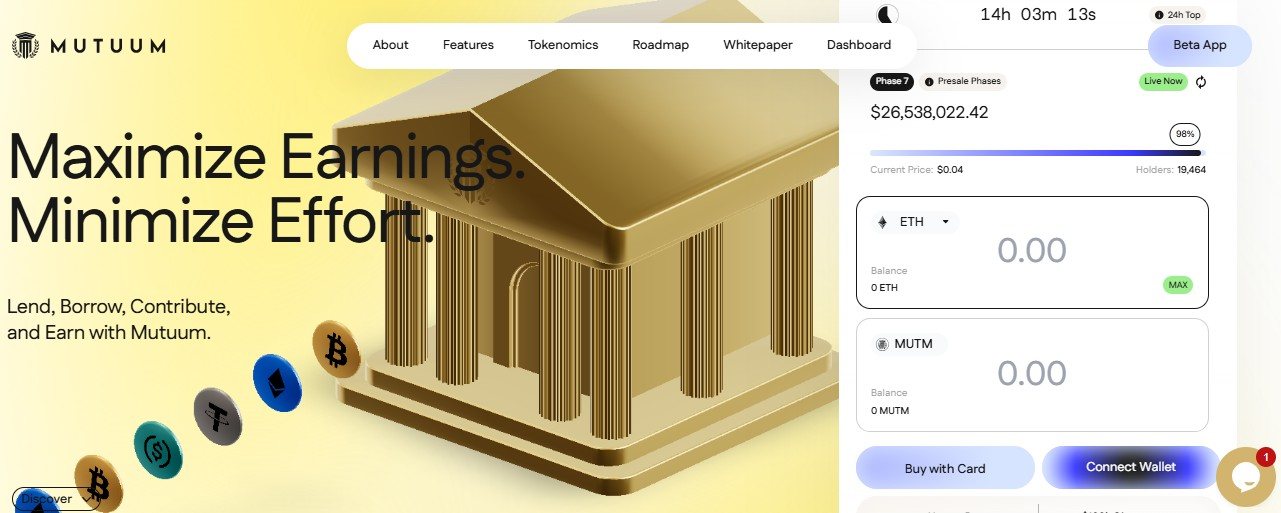
Source: Official Dashboard
How Would the Buyback Loop Work?
The dividends page describes a four step loop:
The platform earns income from interest, liquidation fees and stablecoin minting
A portion of that income buys MUTM on the open market
The bought tokens go to safety module stakers as dividends
Buying pressure rises as platform earnings grow
Under the Mutuum Finance design, token demand depends on platform use. No lending activity means no earnings, and no earnings means no buybacks.
Which Roadmap Gates Come Before Any Revenue?
The roadmap page marks 5 of 11 items complete in its third stage and none of the 10 in the fourth. Several open items control when income can start.
Gate | Status | Why it matters |
Live platform launch | Open | No fees before it |
Exchange listing | Open | Sets the first market rate |
Final security audits | Open | Affects willingness to deposit |
Until these gates close, buyback support stays theoretical. The forecast then depends on timing, not on a revenue record.
What Could Buyback Support Mean for the MUTM Rate?
Support from purchases is the key variable. The table links three activity levels to a possible trading range. It uses the $0.06 listing figure on the token page as the central reference.
Activity level | Market support | MUTM outlook range |
Weak | Low revenue, small buybacks | $0.04 to $0.055 |
Moderate | Steady revenue, regular buybacks | $0.055 to $0.07 |
Strong | Fast growth in deposits and loans | $0.07 to $0.09 |
Each level rests on a simple logic:
Weak: the token trades on listing interest alone, and buyers lack a fee-based reason to hold
Moderate: buybacks offset part of the selling and keep trading near the listed level
Strong: fee growth lets buybacks outpace new supply, though that needs months of activity
These are scenarios, not targets. The Mutuum Finance token has no trading history, and the protocol has no live record of earnings.
The moderate level is the central case because it matches the documented listing figure.
The gap between ranges is wide on purpose. The weak range starts at today’s presale rate, while the strong range tops out 50% above the listing figure.
Will Activity Arrive Before Selling Pressure Does?
Timing may matter more than size. Buybacks follow earnings, but selling can start on day one. Five timing risks stand out:
An exchange debut may come before the live platform, leaving buyers without earnings data
Early earnings may be small, so buybacks may be too small to move trading
Safety module stakers accept slashing risk, which may limit how many join
A strong market may lift trading before any buyback takes place
A thin market may let a small purchase move the rate more than expected
If the exchange debut comes first, trading would rest on sentiment. The Mutuum Finance outlook would then lean toward the weak level until deposits grow. A live launch before listing would shift weight toward the moderate level.
Closing Outlook for Mutuum Finance and MUTM
The roadmap shows that earnings have not started, yet the plan ties part of MUTM demand to it. The moderate level, between $0.055 and $0.07, fits the documented listing figure best.
Weak and strong levels stay possible, and each depends on how soon the platform goes live. The Mutuum Finance presale outlook may change as roadmap items close.
Neither buybacks nor an exchange debut guarantee a rate, so each range is a possibility and not a promise. Readers should track roadmap changes and live trading data to see which level is forming.
YMYL Disclaimer: This article is for educational and informational purposes only. It is not financial advice, and the scenario ranges are not guarantees of price or returns. Crypto assets carry high risk, so readers should do their own research.