PepeHood Blockchain: How the Presale and Token Model Work


Why PepeHood Blockchain Is Gaining Attention in the Meme Coin Space
The name PepeHood Blockchain keeps showing up in crypto news because a new frog-themed meme token called PEPEHOOD started its crypto presale on 5 September 2026.
The entry price is low, and the plan has clear dates. This article explains what the crypto project says it is building, how the token is set up, what the numbers mean, and which risks buyers should think about. All figures come from the project’s own website, so each one stays a claim until checked independently.
What Is PepeHood, and How Does the Project Work?
Pepe Hood is a meme token that puts the frog character into a Sherwood Forest story, where the hero takes from the rich and helps the poor. The project calls itself a second chance for people who missed the original Pepe on Ethereum.
It says PEPEHOOD is made for quick retail trading on networks that work like Ethereum, such as Robinhood Chain. So PepeHood Blockchain is better seen as a search phrase than as a separate network, since the project describes only a token, not a chain of its own.
Buying happens through a box on the official website. A buyer types in an amount of USDT, with a minimum of $10, and the page shows how many PEPEHOOD tokens will arrive. The site says many coins and networks are accepted and that tokens go to the buyer’s wallet, but it gives no detail on how that works.
Key Features Listed on the Presale Page
The presale page lists four selling points:
365-day liquidity lock: The project says the trading liquidity is locked for one year, but the company handling the lock is not named.
No mint function: A mint function lets a developer create new tokens. Having none would be a good sign if true.
No freeze function: A freeze function lets a developer stop wallets from trading. Having none would also be a good sign if true.
Audit link: The link opens a token explorer page and not a security report.
These claims sound reasonable, but nothing confirms them yet.
What Is the PEPEHOOD Token Used For?
The project describes no use for the token beyond trading and community fun.
The official pages show no staking, no voting rights, no payment use, and no product, so PEPEHOOD sits in the meme token group where the crypto price mostly follows attention and trading volume.
No crypto airdrop has been announced, and the team has not been named. That is common for a new token, but it means the value will probably follow market mood and not real use.
PepeHood Blockchain Tokenomics: How the Billion Tokens Are Split
Allocation | Tokens | Share | Purpose |
Presale | 500,000,000 | 50% | Public token sale |
Liquidity pool | 400,000,000 | 40% | Trading liquidity at launch |
Marketing | 100,000,000 | 10% | Promotion and community growth |
Total supply | 1,000,000,000 | 100% | Fixed supply |
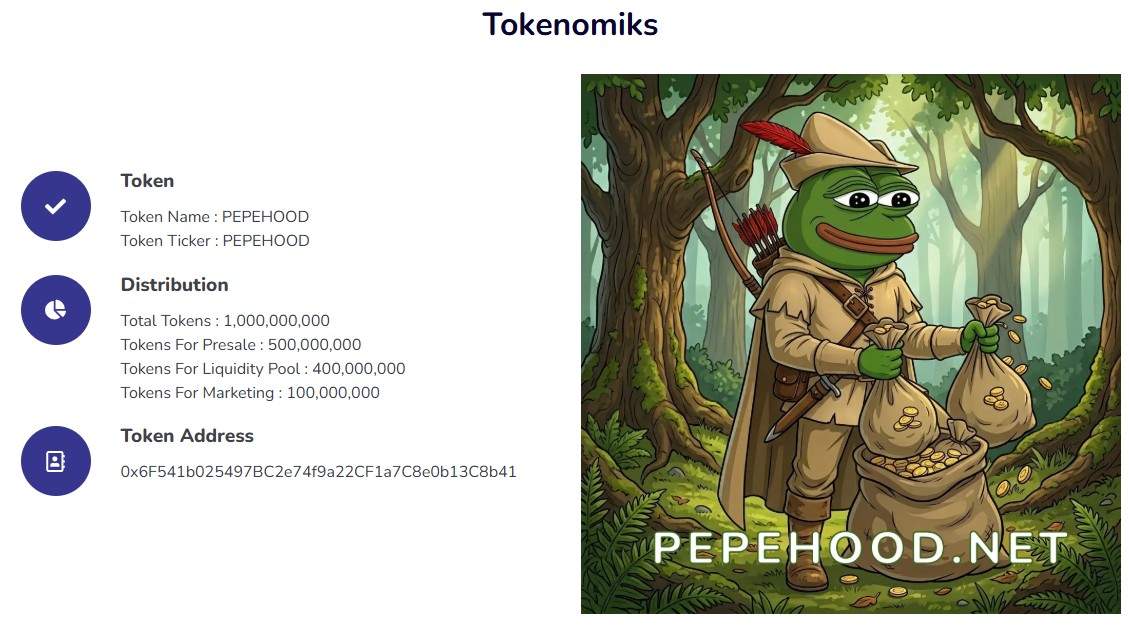
The split is simple, but no team, treasury, or advisor share appears in the published numbers, so it stays unclear who holds what and when tokens unlock. Market cap means the number of circulating tokens times the current price, while fully diluted value uses the total supply instead, so the two differ until every token is out.
At the presale price of $0.0001, the full supply is worth $100,000, and at the stated listing price of $0.0005, it is worth $500,000. Those are only simple sums, not forecasts.
How Does the PepeHood Presale Pricing Work?
The presale runs from 5 September 2026 to 5 December 2026 at $0.0001 per token. The next price on the page is $0.00015, which is 50% higher, and the stated listing price is $0.0005. Only these price points are shown, so no stage schedule exists.
The website promotes a 500% increase, but going from $0.0001 to $0.0005 is five times the price, which is a 400% gain, so the promoted figure does not match the site’s own numbers.
The raise bar showed 205 USDT on 19 October 2026. If all 500,000,000 presale tokens sold at $0.0001, the most it could bring in is about $50,000, so the raise so far is about 0.4% of that. A presale price is not a future market price, and a planned listing price is not a confirmed one.
PepeHood Roadmap: What Comes After the Presale Ends
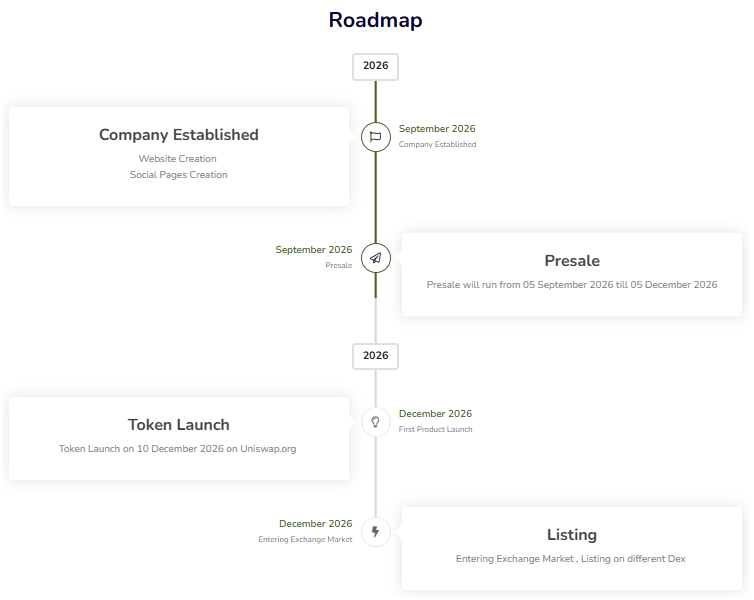
The roadmap has four steps, and the first two are already behind the project.
Step 1, September 2026: company setup, with website and social pages created as groundwork.
Step 2, 5 September to 5 December 2026: the public presale runs at $0.0001, with a price step up to $0.00015.
Step 3, 10 December 2026: the token launches, and the roadmap names Uniswap for this, even though the same site names Robinhood Chain as the network, a mismatch.
Step 4, December 2026: a crypto listing on more decentralized exchanges, with no centralized exchange named and no dates beyond the month.
The site hints that big exchange listings could bring growth of 10x to 50x and a market cap between $500 million and $1 billion. With 1 billion tokens in supply, a $500 million market cap needs a price of $0.50, which is 5,000 times the presale price, so that talk is marketing and not analysis.
Is PepeHood Blockchain Safe? Liquidity Lock and Risk Factors
The biggest concern is that with those, nearly every security statement is unverifiable, from liquidity lock to missing mint and freeze statements, and the audit link does not even go to an audit.
This increase in the valuation of USDT is extremely small, indicating demand is relatively weak, and there is no team information that provides an answer to accountability. The frog-themed corner of the market is crowded with older and better-funded rivals, so a new token can face thin trading and sharp price swings after launch.
A listing date is only a plan, and presale buyers can end up holding tokens that trade below the price they paid or that lose all value.
Final Take on the PepeHood Presale
PepeHood Blockchain offers a clear setup, with a fixed supply of 1 billion tokens, a dated presale, and a simple three-part split. Still, the key questions stay open, such as who runs the project, how the lock works, and why the promoted return clashes with the published prices.
Checking the contract, the lock, and the audit independently is the next step for anyone researching it.
Disclaimer
This article is for informational purposes only and is not financial advice. Crypto assets and presales carry a high risk of loss, and figures may change. Readers should verify details and consult a licensed advisor before any decision.