Tangem Pay Physical Card: CEO Konstantin Shulga on Self-Custody

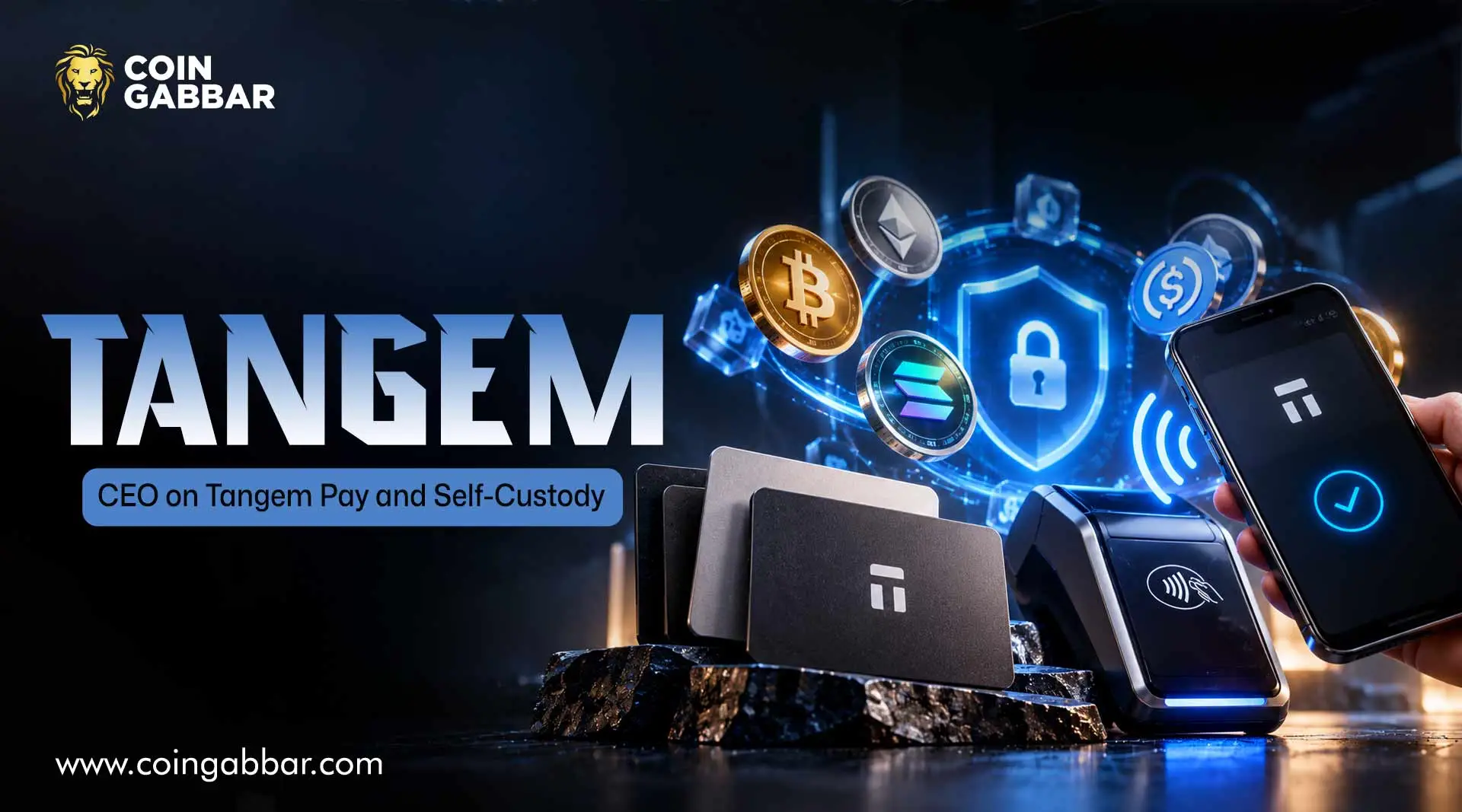
Tangem Pay Physical Card: How Do Cashback and Self-Custody Work?
Would you rather hold your crypto in an exchange account or spend it from a card while keeping your own keys? Tangem CEO Konstantin Shulga says the second option is now real.
In a written interview with CoinGabbar in October 2026, Shulga explained why Tangem Pay is moving from a virtual card to a physical Visa card and how the wallet maker wants to become a full financial app.
Quick answer: Tangem Pay is a crypto spending card program inside the Tangem app. The new physical card lets users pay anywhere Visa is accepted and withdraw cash at ATMs. Cashback is paid in USDC, 1% on the Basic plan and 2% on the Plus plan.
Key Takeaways
-
Tangem Pay now has a physical Visa card, with an initial release capped at 5,000 cards, according to The Paypers.
-
Cashback is 1% on Basic and 2% on Plus, paid in USDC on eligible purchases of $30 or more.
-
Monthly cashback caps are $100 on Basic and $300 on Plus, described by Shulga as launch parameters.
-
Tangem Pay balances sit in a separate smart contract, not directly in the self-custody wallet.
-
Shulga says the 2027 goal is a single app for storing, spending, and growing money.
Who Is Konstantin Shulga, the CEO of Tangem?
Konstantin Shulga leads Tangem, the Swiss hardware wallet company behind the Tangem card and ring. He told CoinGabbar he has spent almost 20 years in capital markets across institutional and consumer businesses.
Before Tangem, he founded Finery Markets. Shulga said CNBC ranked it among the world’s top 300 fintechs in 2025 and 2026. He also said he built one of Europe’s largest retail investment brokerage businesses earlier in his career.
He first met Tangem as a board member. “Tangem has some of the greatest potential I’ve seen in my career,” Shulga said, pointing to the product’s simplicity and its enthusiastic community.
Why Is Tangem Pay Adding a Physical Visa Card?
Shulga said the virtual card launched in late 2025 and works with Apple Pay and Google Pay. Some situations still need plastic, though, including ATMs, travel, and merchants that do not accept mobile wallets.
“The physical card closes this gap,” he said. If a user leaves a phone behind, the card still works for shopping and cash withdrawals.
The Paypers reported on October 7, 2026, that the first release is limited to 5,000 cards. It reported ATM withdrawals of $250 per transaction, with up to three withdrawals in 24 hours.
How Does Tangem Pay Change Everyday Crypto Spending?
Shulga described the idea simply. A user can send Bitcoin or even Dogecoin to a Tangem Pay account within a minute and then buy a coffee before work.
He tied the launch to a wider trend. Citing industry reports, he said crypto card spending more than tripled year over year to $1.04 billion in July 2026.
That figure traces to Paymentscan data cited by a16z and reported by IDNFinancials in August 2026. The same reports said stablecoins funded about 70% of card transactions.
What Cashback Does Tangem Pay Offer, and Why in USDC?
Tangem Pay pays 1% cashback on the Basic plan and 2% on the Plus plan. It applies to eligible purchases of $30 or more and is paid in USDC at the end of each billing cycle. Eligibility varies by region and merchant category.
Shulga explained the USDC choice directly. Cashback “should be cash you can actually use, not another balance of points to manage like frequent flyer miles.”
Monthly caps are $100 on Basic and $300 on Plus. He called them launch parameters set to keep the program sustainable. Any change will follow real usage data, and he would not promise new numbers today.
How Is Tangem Pay Different From the Tangem Wallet?
Shulga drew a clear line between the two. The wallet is self-custodial, with private keys held in a secure environment that cannot be extracted.
Tangem Pay, in his words, is “simply a card program in the app.” Its balances are held in a dedicated smart contract, not directly in the wallet. Users choose how much to move into the Pay balance, and the rest stays in the wallet.
His summary was that self-custody protects what sits in the wallet, while the Pay balance follows the card program’s rules. Readers should note that distinction before moving funds.
What Do EAL6+ and the Security Audits Actually Protect Against?
Tangem builds on a seedless design. Shulga said the private key is generated inside the secure element and never exposed to the phone or Tangem’s servers. There is no seed phrase to write down, store, or share by accident.
He explained EAL6+ as a Common Criteria rating, meaning a high level of independent verification that a product’s security claims hold up. He said Kudelski Security and Riscure audited the firmware for vulnerabilities and backdoors.
According to Shulga, the audits support confidence that the wallet can resist well-resourced attackers with time, skill, and specialized equipment. CoinGabbar has not independently verified these audit claims.
Why Does Tangem Say Seedless Self-Custody Appeals to Exchange Users?
The NFC design makes that control practical. Users tap a Tangem card or ring to their phone instead of managing a written seed phrase. Tangem supports around 100 blockchains, and Shulga said the team prioritizes user demand and promising new ecosystems.
He also said more users are arriving from exchanges for in-app features such as swaps, staking, yield, and spending. Tangem separately reported $61.3 million in 2025 revenue.
Expert Opinion: What Does Tangem Pay Mean for Self-Custody Users?
As analysts see, the physical card is a practical step toward everyday crypto use, since cash access and Visa acceptance remove common friction. The limited first release shows the rollout is still early.
Analysts add that the Pay balance sits outside the wallet’s self-custody protection, so users should move only what they plan to spend. Cashback caps, regional eligibility, and fees are also worth checking before applying.
What Is Next for Tangem in 2027?
Shulga said Tangem wants to become the primary app people use to manage wealth and daily finances. That means bringing Store, Spend, and Grow into one ecosystem across digital assets, stablecoins, everyday fiat balances, and investments such as tokenized equities.
He wants the experience to feel as simple as a modern neobank, with self-custody as the foundation. Planned work includes more yield options, spending through Visa cards, and easier transfers across currencies and regions.
Expansion into more countries is just as important to him. Shulga’s stated ambition is for users to find Tangem simpler and more useful than their regular banking app.
Conclusion: Is Tangem Pay Ready for Everyday Spending?
Tangem Pay now covers the main gaps of a crypto card, with Visa acceptance, ATM access, and USDC cashback. Konstantin Shulga’s message is that self-custody can support daily spending without forcing users back to exchanges.
What stands out is the clear split between wallet and card balance. What remains open is how fast the limited card release expands and whether cashback caps change. Check current plan terms on Tangem’s official site before applying.
Disclaimer: This article is for informational purposes only and is not financial, investment, or legal advice. Statements about Tangem come from its CEO’s answers and were not independently audited by CoinGabbar. Crypto assets are volatile, losses are possible, and card terms vary by region. Consult a licensed advisor before investing.