Prediction Markets Face Legal Battles as Behnam Warns of Court Fight


Ex-CFTC Chairman Behnam Urges Congress to Set Prediction Market Rules
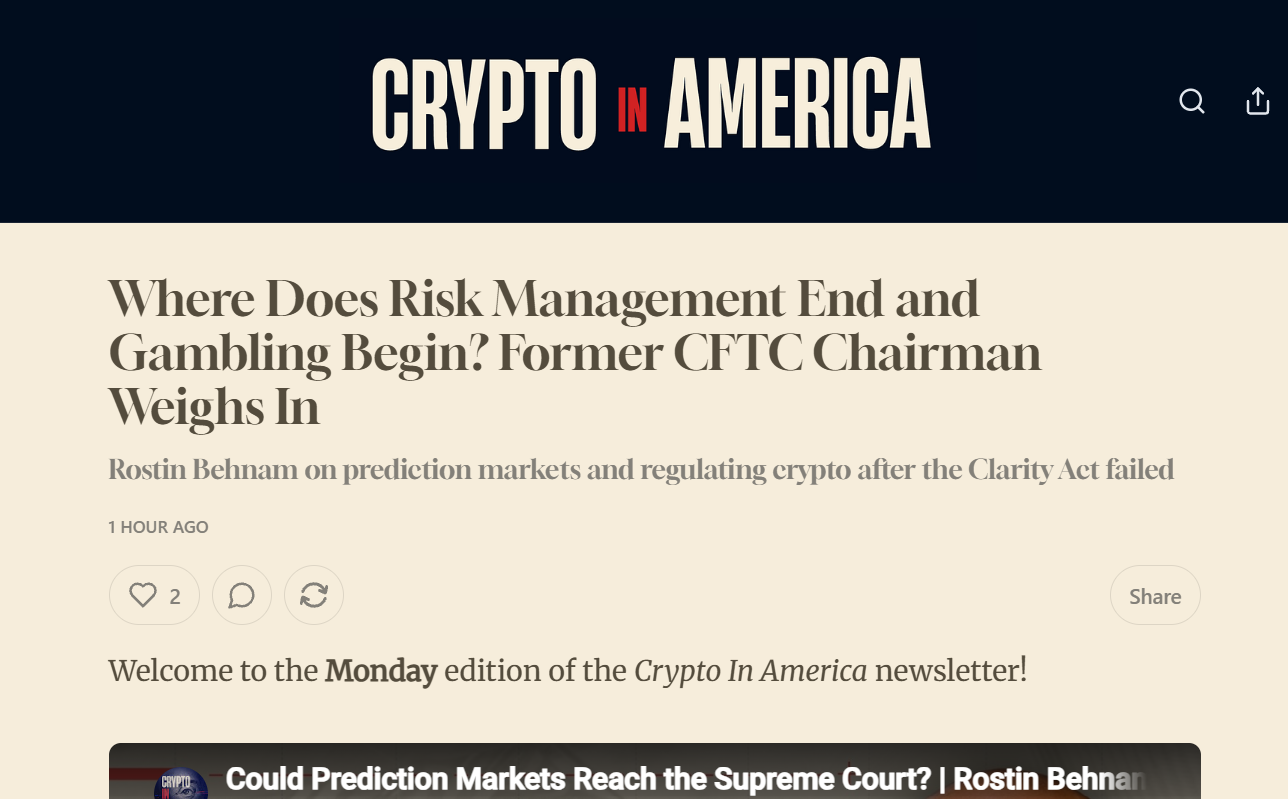
Rostin Behnam used to lead the U.S. Commodity Futures Trading Commission (CFTC). He says Congress must decide where risk management ends and gambling begins. He spoke to Crypto In America at a Georgetown University event. Prediction markets are growing fast, and sports contracts face court fights in many states.
At a Glance
-
Behnam wants Congress to set a clear line between risk management and gambling.
-
Prediction markets regulation is growing fast. Sports cause the most debate.
-
Lawsuits over these contracts are moving through courts in several states.
-
Behnam thinks the fights could end up at the U.S. Supreme Court.
-
The CLARITY Act did not move forward in the Senate. He says regulators need rules that last.
Prediction Market Regulation: Where Does Risk Management End and Gambling Begin?
The question is easy to ask and hard to answer. Some contracts help firms and investors guard against loss. Others let people bet on who wins a game. Behnam says the gap matters. He believes lawmakers should draw the line, not just courts or agencies.
Platforms say their event contracts fall under federal law. Many states see sports contracts as bets. They want to use their own gambling laws. Clear Prediction Market Regulation would show who is in charge.
Sources: Crypto In America newsletter
Key Issues in the Debate
| Issue | What It Means |
| Risk-management products | Contracts that help guard against loss |
| Prediction markets | Sites where people trade on future events |
| Sports event contracts | Contracts tied to the result of a game |
| State rules that may ban sports betting | |
| Federal rules | The rules platforms say should apply |
| Overlap | A fight over whether the state or the U.S. is in charge |
Sports Event Contracts Face Legal Battles Across U.S. States
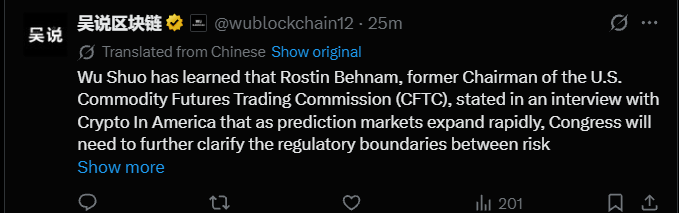
Court fights over sports contracts are still going on in many states. The latest is a Sixth Circuit ruling against Kalshi. The court said Ohio and Tennessee can use their sports betting laws against the platform. It did not accept Kalshi Market claim that federal law beats state law.
This ruling covers those two states and that one platform. It does not settle the issue for every market or every court. That is why the debate goes on.
Source: Wu Blockchain
Could Prediction Market Disputes Reach the U.S. Supreme Court?
Behnam thinks so. That is his own view. It is not a case the Supreme Court has agreed to hear. If courts reach different answers, a higher court may step in. Nothing is sure yet.
Timeline of Recent Developments
| Date | What Happened |
| Earlier | People asked if event contracts fall under federal or state law |
| 2026 | Sports contract fights spread to many states |
| September 2026 | The Sixth Circuit sided with Ohio and Tennessee against Kalshi |
| September 29, 2026 | Behnam asked Congress to set a clear line and said the fights may reach the Supreme Court |
What Behnam Says About U.S. Crypto Regulation After the CLARITY Act
Behnam spoke about crypto oversight after the CLARITY Act failed to advance in the Senate. He said the CFTC can regulate spot markets only with its existing authorities, which feels like using "Scotch tape and paperclips." In his view, that makeshift approach is not built to last, so regulators now face a premium on writing durable rules that can hold up over the long term.
He also discussed what agencies can realistically do to protect customers if a crypto firm goes bankrupt. Behnam did not predict when or whether Congress will revive the bill, and the path forward remains uncertain. Until lawmakers act, regulators are left working within older statutes that were not written for digital assets.
Why Clear Federal Rules Matter for Prediction Markets and Crypto
Doubt hurts everyone. Platforms cannot plan when rules change by state or after each ruling. Users may not know what protection they have. States want to use their own laws. Federal Reserve regulators must work with old laws.
Firm rules could ease the strain and give users better safety. Still, no one knows if or when Congress will act.
Other agencies are moving too. The Federal Reserve just put forward two stablecoin rules under the GENIUS Act. CFTC staff also said that some derivatives firms can hold certain customer funds as tokens.
What This Means for Users, Readers, Investors and Traders
Prediction Market Regulation is still unsettled, and that affects everyone following this space. Congress has not yet defined where risk management ends and gambling begins, so court rulings, like the Sixth Circuit decision against Kalshi, can change access to sports event contracts by state with little warning.
Behnam's view that the disputes may reach the Supreme Court is his opinion, not a confirmed outcome. Watch court decisions and any congressional action, check whether your state allows a platform before trading, and avoid risking more than you can afford to lose. This is informational only, not financial, legal or investment advice.
Conclusion
Prediction markets are growing faster than the law. Courts are testing how event contracts fit with money rules and betting rules. Behnam says Congress should step in. Until then, Prediction Market Regulation will keep taking shape one case at a time.
Disclaimer: This article is for information only. It is not financial, legal, investment or gambling advice. Crypto and prediction market products are risky, and you could lose all you put in. Rules can change. Do your own research and talk to a licensed pro before you act.








