Raiffeisen Bank Bitpanda Partnership Targets 18M Customers in Europe


Raiffeisen Bank and Bitpanda Team Up to Bring Crypto to Europe
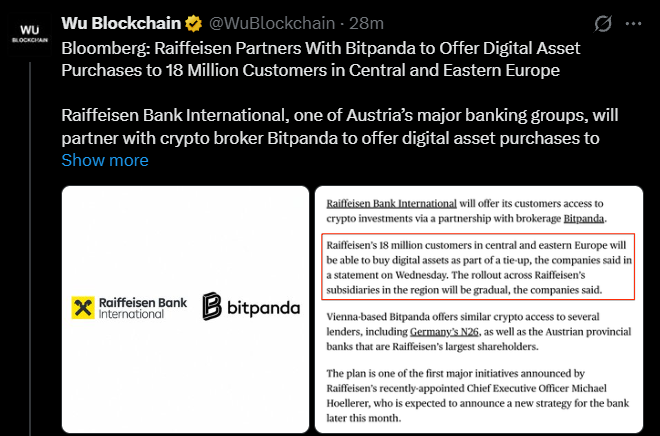
Raiffeisen Bank International (RBI) has teamed up with Vienna-based broker Bitpanda. Together, they plan to let customers in Central and Eastern Europe buy digital assets.
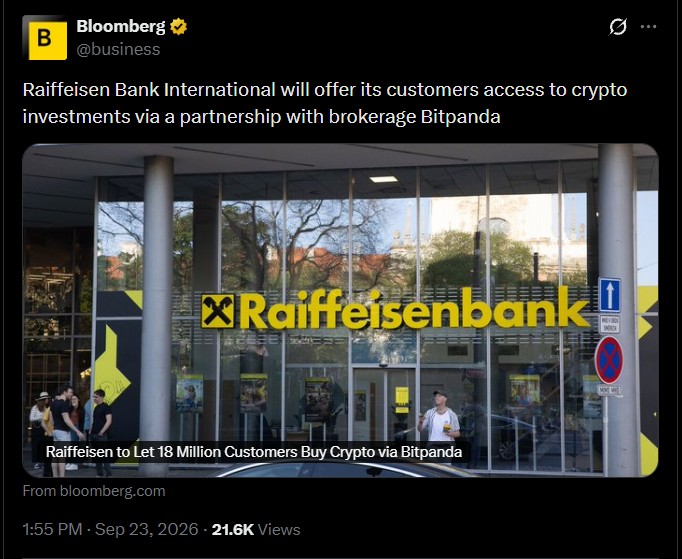
Bloomberg reported Raiffeisen Bank Bitpanda deal, and both companies confirmed it. In time, it could reach about 18 million people across the bank's regional network.
It is one of the first big moves by new CEO Michael Höllerer. He is expected to share the bank's wider plan before the month ends.
At a Glance
-
Banking Group: Raiffeisen Bank International (RBI)
-
Crypto Partner: Bitpanda Enterprise
-
Possible Reach: About 18 million customers
-
Region: Central and Eastern Europe
-
Rollout: Step by step, through local banks
-
Tech Provider: Bitpanda Enterprise
-
Earlier Test: Austria, 2024
-
CEO: Michael Höllerer
Bitpanda Enterprise Will Power the Rollout
The Vienna firm will supply the technology through its business arm, Bitpanda Enterprise. It will not run a product of its own for customers.
Each local bank in the RBI network will decide which digital asset services to launch, and when. Every market will move at its own pace, based on demand and local rules. So the plan is flexible. It is not one single product for the whole region.
The broker has done similar work before. It supplies technology to N26 in Germany, so it knows how to place crypto inside banking apps.
Source: Bloomberg Data
Austria Provided the Blueprint
The deal builds on work done in Austria. In 2024, Raiffeisenlandesbank Niederösterreich-Wien became one of the first traditional banks in the EU to let customers buy crypto inside their banking app. It used Bitpanda technology.
That test showed a regular bank can offer crypto without a separate exchange account. Now the new deal turns that one-bank test into shared tools for the whole network.
A Phased Rollout Across the Region
RBI works in many countries, and the rules differ from one to the next. So the service will not launch everywhere at once. Each local bank will pick its own timeline, products, and compliance plan.
Crypto rules vary a lot across EU states and nearby markets. A staged launch lets each bank match its offer to local demand. No one has to follow a single launch date.
Crypto Access Moves Closer to Mainstream Banking
The deal shows how people may buy crypto in the future. Instead of using only exchanges or special apps, customers could buy through the bank they already use every day.
The N26 work shows this is not just an RBI trend. More European banks seem open to crypto tools inside their apps as customer interest grows.
Source: Wu Blockchain
What the 18 Million Reach Really Means
Reach is not the same as use. The 18 million figure is the bank's total customer base in the region. It is not a forecast of how many people will trade crypto.
Still, a trusted bank makes crypto easier to try. There is no new account, no new password, and no unfamiliar platform. That ease could matter more for long-term adoption than any ad campaign.
MiCA and Local Rules Will Shape the Expansion
Rules will decide how fast these services arrive and what they look like. The EU MiCA (Markets in Crypto-Assets) framework and national laws will guide what each local bank can offer. Bitpanda also received a fine in Austria in August 2026 over MiCA-related compliance issues.
Nothing suggests the fine is linked to the RBI deal. But it shows that regulators are still watching closely, even as banks move faster into crypto.
RBI's New Strategy Could Put Crypto in Focus
Höllerer is expected to reveal RBI's wider strategy later this month. This deal may be just one part of that plan. The next steps will come from the local banks. Product news, launch markets, and approvals from regulators will decide how fast digital assets show up in RBI's retail offer.
Conclusion
The RBI and Bitpanda deal is a big step toward mainstream crypto in Central and Eastern Europe. It builds on a proven model from Austria. But the plan starts with the tools, not the products. Real launches will roll out slowly and unevenly across markets. Watch for local bank announcements and new rules in the coming months.
YMYL Disclaimer: This article is for information only. It is not financial, investment, legal, or professional advice. Please do your own research and talk to a qualified advisor before you make financial decisions. Crypto investments carry high market risk. This content does not represent investment advice.









