SoFiUSD Polygon Launch: Can 17M Users Boost Stablecoin Adoption?


Why Did SoFi Choose Polygon for Its Stablecoin Expansion?
The SoFiUSD Polygon launch is now live. SoFi has brought its bank-issued stablecoin to the network, according to an official Polygon post shared on November 12, 2026.
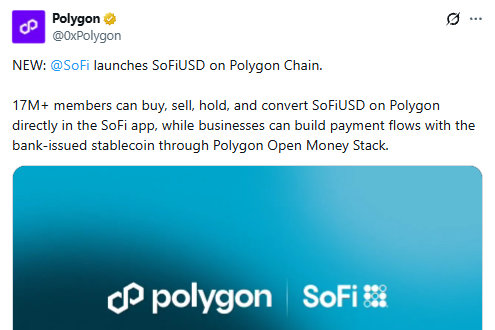
More than 17 million SoFi members can buy, sell, hold and convert SoFiUSD on Polygon inside the SoFi app. Businesses can also build payment flows with the token through Polygon Open Money Stack.

Source: SoFi Post on X
The announcement does not name business partners or give volume targets, so early demand is unknown. Still, this crypto stablecoin news adds a regulated issuer to a Polygon stablecoin market that already carries heavy traffic.
What Is SoFiUSD and Who Issues This Bank-Issued Stablecoin?
SoFiUSD is a dollar stablecoin issued by SoFi Bank, N.A., a national bank regulated by the Office of the Comptroller of the Currency.
In its December 2025 SoFiUSD launch release, SoFi said the token is fully reserved 1:1 by cash for immediate redemption. It also described itself as the first national bank to issue a stablecoin on a public, permissionless blockchain.
At first, the token served settlement among banks, fintech firms and enterprise partners. Ethereum and Solana were already supported. Polygon now becomes the third network for the SoFiUSD stablecoin.
What Can SoFi Members Do With SoFiUSD on Polygon?
With SoFiUSD Polygon access, members can buy, sell, hold and convert the token inside the app. Reports on the launch say no separate crypto wallet or manual bridging is needed. That makes SoFiUSD digital payments feel like an app feature, not a crypto product.
Eligibility and terms are listed on the SoFiUSD product page. The SoFi 17 million members figure shows the potential audience, not the number who will actually use the token.
How Could Businesses Use SoFiUSD Payments on Polygon?
Companies sit on the other side of the launch. Through Polygon Open Money Stack, firms can design payment flows around the stablecoin. More detail from Polygon sits in its launch blog post.
Settlement looks like the natural first use, given the token's institutional origins. That would fit Polygon's push into blockchain payment infrastructure.
Why Did SoFiUSD Choose Polygon for Its Third Chain?
The SoFiUSD Polygon announcement does not explain the choice, so any motive is an inference. Polygon has pushed hard into payments, and its stack targets banks and fintechs. For a regulated issuer, that is a logical fit.
Network data supports the picture. Polygon recorded $97.9B in stablecoin volume in September, up 14% from August. Stablecoin adoption on the chain was already rising before SoFi arrived.
Multi-chain reach also matters. Ethereum, Solana and Polygon serve different users and cost structures. This SoFiUSD Polygon integration adds a low-fee network to the mix, which may suit smaller payments.
SoFiUSD Polygon Integration: What Could It Mean for POL and Banks?
For POL, the SoFiUSD Polygon launch has only an indirect effect. The Polygon post does not link SoFiUSD to POL demand, fees or burns, so no price impact can be assumed.
For banks, the launch is a signal. A nationally chartered issuer is placing a token on a public chain, which tests whether regulated stablecoins and open networks can work together.
One launch does not set a trend. It does fit the wider crypto news today theme of banks moving toward stablecoins.
Expert Take: Which Signals Will Show If SoFiUSD Payments Can Scale?
Supporters see a bank adopting a public chain, with payment infrastructure now reaching a large retail base. Skeptics note that use may stay inside the SoFiUSD app, which limits activity on open networks.
The data suggests three signals matter most: SoFiUSD supply on Polygon, the number of businesses live on Open Money Stack, and transfers that happen outside the app.
The main uncertainty remains whether members will move the token beyond SoFi. Redemption terms, interest and insurance status also shape how it compares with a bank deposit. The SoFiUSD Polygon rollout will need steady on-chain data to prove demand.
Conclusion
More banks are testing stablecoins on public networks, and SoFi's move is a clear example. The member base gives the SoFiUSD Polygon launch scale, though real usage is still unproven.
Supply data on Polygon will show what comes next, and later Polygon news will track it.
Disclaimer: This article is for information only and is not financial advice. Stablecoins and crypto assets carry risk, and values or terms can change. SoFi's own disclosures cover deposit insurance and redemption terms.






