Solv Protocol SOLV and the Hidden Risks of Bitcoin Yield

Solv Protocol SOLV Risks Across BTC Yield, Collateral, and DeFi
Bitcoin pays no interest on its own. That gap gave rise to BTCFi, a corner of crypto that tries to earn returns on Bitcoin, and Solv Protocol SOLV sits right inside it.
The pitch behind Solv Protocol SOLV is easy to follow: deposit BTC, receive a wrapped token, and let vault strategies work in the background. The structure behind it is harder to read, since every layer adds a place to fail.
What Is Solv Protocol SOLV, and How Does Solv BTC Work?
Solv Protocol SOLV describes itself as an on-chain Bitcoin reserve that links traditional finance, centralized platforms, and DeFi. DeFi, short for decentralized finance, means financial services run by smart contracts instead of banks or brokers.
The official Solv website adds that its products rely on ERC-3525, a token standard built by its own team.
The main product is SolvBTC. A holder deposits BTC and receives SolvBTC, which Solv says is backed one-to-one by Bitcoin held in its reserves.
That token can then move across chains and enter lending markets or Solv's own yield vaults. Official material mentions BTC staking and market-neutral trading as strategies.
Solv also runs Bitcoin Reserve Offerings, known as BRO. These structured vaults package BTC exposure into yield products, and one of them later suffered an exploit.
How Does the Solv Protocol SOLV Token Work?
SOLV is the protocol's native token, and it is separate from SolvBTC. SolvBTC aims to follow Bitcoin's price, while SOLV trades on its own market and moves with demand for the project.
Solv's own publications describe staked SOLV as a security layer for cross-chain SolvBTC transfers, built with two infrastructure partners. The ERC-3525 token standard documentation covers how the underlying assets are represented.
Public material reviewed does not confirm any revenue share for holders, so that point stays unverified.
Where the token trades keeps shifting, and the latest crypto exchange listing updates are the quickest way to see which platforms currently carry Solv Protocol SOLV.
What Does the Solv Protocol SOLV Supply Look Like?
The table below uses approximate figures from market data reviewed in late October 2026. Prices move daily, so the market values are snapshots.
Metric | Approximate figure | What it means |
Maximum supply | 9.66 billion | Total tokens that can exist |
Circulating supply | About 5.53 billion | Roughly 57% of maximum supply |
Still locked | About 4.13 billion | Roughly 43% are yet to enter circulation. |
Price | About $0.0043 | Changes constantly |
Market cap | About $24 million | Circulating supply times price |
FDV | About $42 million | Maximum supply time price |
On-chain contract data shows about 8.4 billion SOLV on BNB Chain and 1.26 billion on Ethereum, which adds up to the maximum supply.
For Solv Protocol SOLV, market cap counts only tokens already circulating. FDV, short for fully diluted valuation, assumes every token exists. The gap between roughly $24 million and $42 million shows how much supply is still waiting.
Token price is also not project valuation, and neither number measures the Bitcoin held inside SolvBTC products. Unlock trackers list scheduled releases to community rewards and the DAO treasury, but a full allocation split was not confirmed from official material.
What Went Wrong in the Solv Protocol SOLV Vault Exploit?
In early March 2026, one BRO vault in the Solv Protocol SOLV ecosystem lost 38.0474 SolvBTC, worth about $2.7 million at the time. Solv confirmed through its official X account that fewer than ten users were affected.
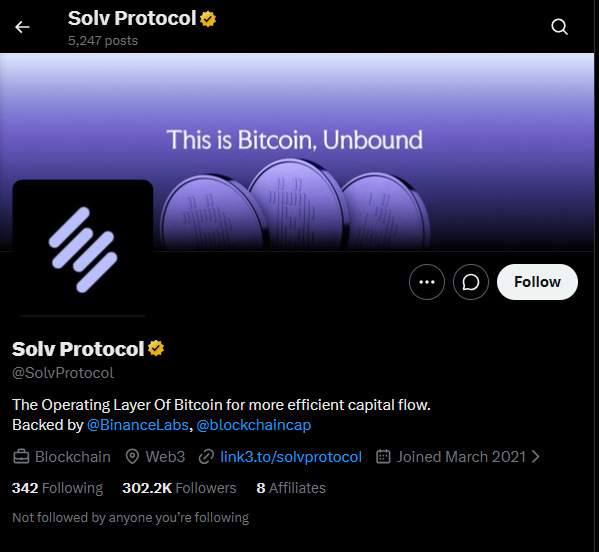
The project promised to cover the full loss, offered the attacker a 10% bounty, and said other vaults and user funds were unaffected.
Early reviews pointed to a flaw in how the vault created tokens. Solv said it was working with several security firms to strengthen the affected contracts.
On-chain data at the time showed more than $508 million locked in SolvBTC-related products, so the loss was small by comparison.
Analyst view: The case showed that risk in Bitcoin yield often sits in vault code, not in Bitcoin itself.
Which Risks Matter Most for Solv Protocol SOLV Holders?
The vault exploit joined a long list of DeFi security incidents that shape how cautious investors treat wrapped assets. The main risks around Solv Protocol SOLV fall into five groups.
Smart contract risk: Every vault, bridge contract, and token wrapper is code, and one flaw in a single vault can drain funds while the wider protocol stays online.
Custody and reserve risk: SolvBTC is only as solid as the Bitcoin sitting in custody. A reserve proof shows balances at a given moment, but it can’t catch a bad process or a poor governance call.
Cross-chain risk: Wrapped Bitcoin has to cross bridges to move between networks, and bridges are among the most attacked parts of DeFi. Using a single provider keeps things tidy, though it also puts more weight on one system.
Yield risk: Some returns come from the strategy itself, while others come from rewards that were never meant to last. Once incentives stop, or a strategy takes a loss, the advertised rate can drop quickly.
Depeg and exit risk: A wrapped token can trade below the BTC it represents when markets are stressed or redemptions slow down.
How Is Solv Protocol SOLV Responding to Those Risks?
On reserves, Solv worked with Chainlink (LINK) on a SolvBTC-BTC secure exchange rate feed on Ethereum. The feed combines market pricing with proof of the Bitcoin reserves behind the token.
On bridges, the project announced in May 2026 that it would retire its earlier bridge setup. It moved SolvBTC and xSolvBTC, valued at over $700 million, to Chainlink CCIP after what it called an extensive security review.
Both steps reduce specific doubts. Neither is a guarantee, since an audit or reserve proof narrows one type of risk and leaves the rest untouched.
What Is Solv Building Next?
The stated plan points toward real-world assets. In January 2026, Solv's newsroom announced a partnership with BNB Chain for a SolvBTC.RWA vault, where institutions could use Bitcoin as collateral for tokenized real-world assets.
Real-world assets, or RWAs, are things like treasury bills represented on a blockchain. The model could widen yield sources, but it adds issuer, legal, and regulatory risk on top of code risk.
The project's official X account has also pointed to SolvBTC.RWA as an upcoming product. No launch date or yield figure was confirmed, and wider crypto market developments will shape demand for it.
Is Solv Protocol SOLV Worth Watching Right Now?
Solv Protocol SOLV holds a real position in BTCFi, with large amounts of tokenized Bitcoin tied to its products and a push toward institutional use. Scale gives relevance, though not safety.
Several items deserve a close look: whether reserve data stays current, whether a full report on the vault exploit is published, how much yield comes from incentives, and when the next supply unlocks arrive.
Interest in the Solv Protocol SOLV is reasonable. Treating the project as low risk is not, because Bitcoin yield adds custody, code, and bridge exposure that plain Bitcoin does not carry.
Conclusion: Bitcoin Yield Always Has a Price
Solv Protocol SOLV turns Bitcoin into a yield-bearing asset through SolvBTC and structured vaults, while the token sits beside it with its own supply. Reserve proofs and a single cross-chain provider stand out as visible security steps.
Uncertainty remains around the full cause of the vault exploit, the SOLV allocation split, and how the real-world asset plans will perform. Official updates and wider Bitcoin DeFi news are the place to check those points next.
Disclaimer:
This content is for information only and is not financial, investment, or legal advice. Crypto assets are volatile and carry a high risk of loss, so independent research is essential before any decision.