South Korea Crypto Tax Delay Proposed by Kim Min-seok Ahead of 2027


Ruling Party Leader Asks to Pause Korea’s Crypto Income Tax
South Korea’s ruling Democratic Party leader Kim Min-seok has formally proposed a crypto tax delay, asking the government to push back a tax that is set to start on Jan. 1, 2027.
This crypto news report covers what he said, why the Digital Asset Basic Act is part of the story, and what readers can watch next.
South Korea Crypto Tax Delay Proposal: What Kim Min-seok Said
According to a Yonhap News report of South Korea, Kim told the government that he wants the crypto income tax to be delayed.

The tax law is scheduled to take effect on Jan. 1, 2027, so the request comes close to the start date.
Kim spoke at a party council meeting, where he said the country should first pass the Digital Asset Basic Act, which is a legal framework for crypto.
He also said that companies and investors should get time to adapt before crypto gains are taxed. The report does not say how long the delay should last, so readers should treat any new start date as unconfirmed.
What Is the Digital Asset Basic Act in Crypto Regulation
The Digital Asset Basic Act is described as a legal framework for crypto. In simple terms, a framework like this sets clear rules for how crypto firms, exchanges, and users should act and what each side must do to stay within the law.
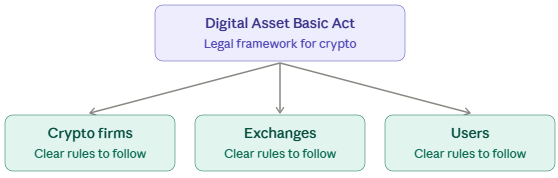
Many people in the crypto market want rules like these because they make it easier for firms to plan and for investors to know their duties. Readers can follow the Financial Services Commission website for official news on digital asset rules.
How a Crypto Income Tax Works in Simple Terms
A crypto income tax is a tax on the profit a person makes from crypto. If a holder buys a coin at one price and later sells it at a higher price, the gain may count as income, and the tax would apply to that gain.
Rules differ from one country to another, and the details of each tax can change over time. For this reason, readers who hold crypto in South Korea should check official guidance from the tax office before they make any plan.
Why Investors and Firms May Want Time to Adapt
Kim said companies and investors should be able to adapt before crypto gains are taxed. In practice, time to adapt can mean setting up better record keeping, updating software, and learning how gains are counted.
Crypto firms often need time to build tools that help users report their trades, while investors need time to understand what the rules mean for them.
The report does not list which steps Kim has in mind, so these are general examples and not details from his remarks.
Expert Opinion on South Korea Crypto Tax Delay Proposal
The proposal shows that the Digital Asset Basic Act and the tax date are now being talked about together. Supporters will likely say that clear crypto rules should come before a new tax so that firms and investors know where they stand.
Others may point out that the tax date is already set in law and that a delay would need lawmakers to change it. A proposal is also not a final decision, so the South Korea crypto tax delay may still change as official talks move forward.
What to Watch Next in South Korea Crypto News
A few items can help readers judge how far this proposal goes:
-
A reply from the government on the request to delay the tax
-
A new start date, if lawmakers agree to move the current one
-
Progress on the Digital Asset Basic Act in the coming weeks
How to Follow Crypto Tax News Safely
Tax plans can change quickly, so it helps to check each new detail against official sources before acting on it. Readers can also keep records of their trades, since clear records are useful no matter when a tax begins. A calm approach is often best while the rules are still being discussed.
Conclusion
The South Korea crypto tax delay proposal from Kim Min-seok asks the government to wait until the Digital Asset Basic Act is in place and until companies and investors can adapt.
In crypto news today, the open points are the length of any delay and the reply from the government, and more details are expected through official channels.
YMYL Disclaimer: This article is for educational and informational purposes only. It is not financial advice, tax advice, a price prediction, or a guarantee of returns. Readers should do their own research before making any decision.






