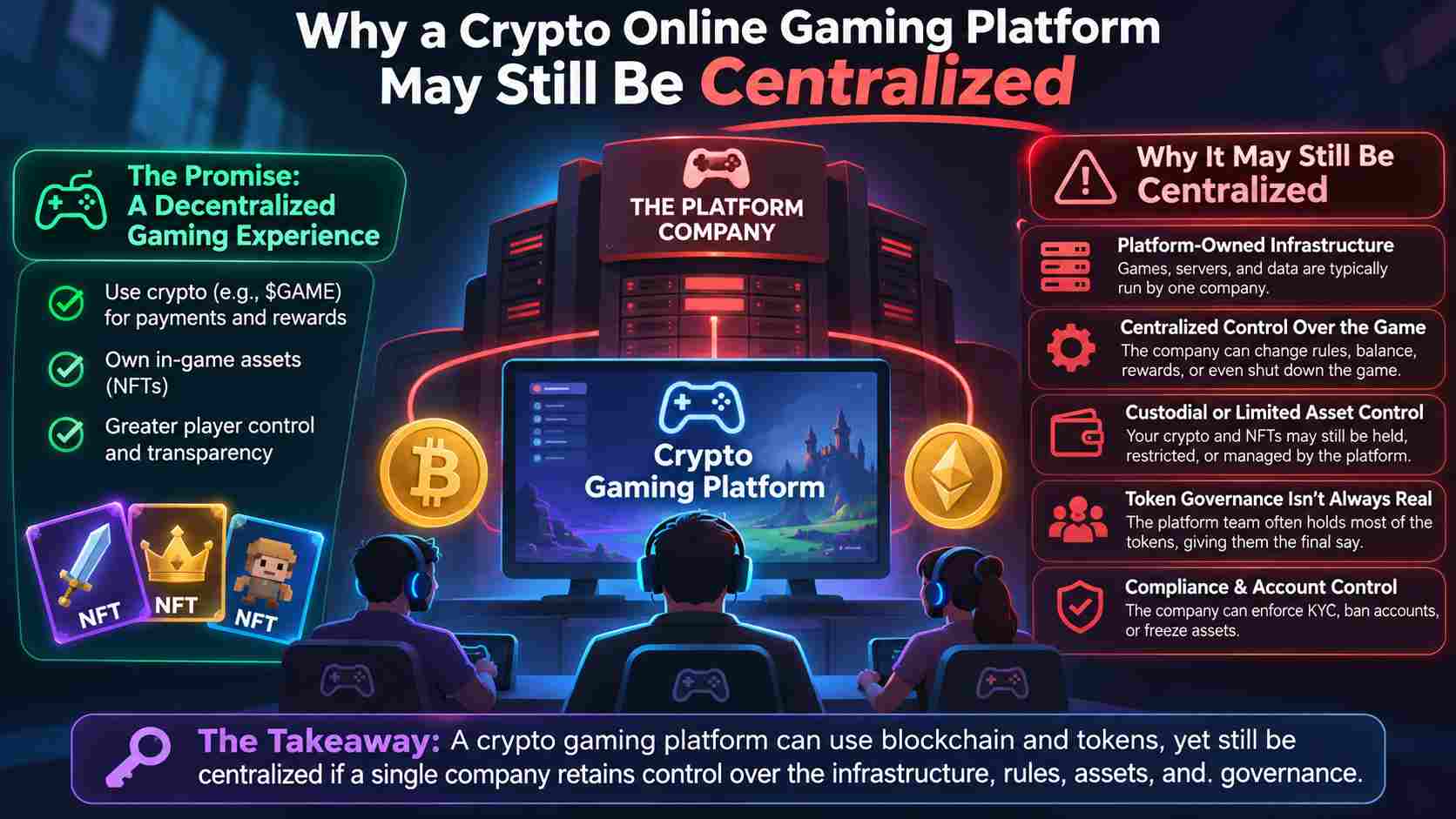
Why a Crypto Online Gaming Platform May Still Be Centralized

Anyone with even a casual interest in crypto will know that blockchain assets are increasingly accepted for a whole range of transactions and even underpin an entire niche of the online gambling market. Beyond the group of crypto-specific casino sites, many other platforms and operators in iGaming will accept deposits in popular decentralized currencies.
What’s important to appreciate is that while a gambling provider might let you use crypto to fund your account and even make withdrawals, that doesn’t mean they’re using an entirely decentralized infrastructure themselves. Here’s why.
Payment Support vs Infrastructure
The majority of the iGaming market is made up of companies like tikalcasino.com with centralized infrastructures underpinning them, and traditional governance in place. Such operators will be registered and regulated in specific jurisdictions and will typically use gambling software that’s licensed from well-known developers and publishers.
These mainstream sites can and will support crypto as a banking method, but this is generally achieved via whatever payment system they’re using. When you make a deposit with crypto, this will be converted to the platform’s preferred currency or in-house credit system. Often, withdrawals via crypto are not possible because the site generally won’t hold crypto for long and will instead convert it to a fiat currency for the purposes of revenue reporting and financial management.
Truly decentralized online gaming platforms will both accept crypto and have an infrastructure based on blockchain technology as a whole. In this case, assets you deposit with them will remain yours to manage in their original form, and there’s typically not any kind of corporate hierarchy involved in overseeing the entire DApp ecosystem. Similarly, the gaming software itself will be open to public scrutiny and be provably fair, while the infrastructure’s decentralized nature makes it very difficult to either regulate or shut down by any external party.
In short, accepting crypto payments and nothing more does not make a gaming platform decentralized. It has to be a much more fundamental, infrastructure-level facet.
Why Do Centralized Platforms Adopt Crypto?
Platforms adopt cryptocurrencies primarily for operational convenience, not ideological decentralization. Crypto offers faster cross-border settlements, lower chargeback fraud risks, lower transaction fees compared to traditional credit card processing, and the ability to service users in regions with restricted traditional banking access.
How you choose to use your crypto is down to you, of course. If you’re keen to make it a more widely accepted and viable form of financial instrument that is accepted for payments far and wide, then playing at iGaming sites that allow you to deposit with crypto, even if they are otherwise based on a centralized infrastructure, makes sense. If your reasons for using crypto are instead more to do with the ideological appeal of decentralization as a whole, then you should probably focus more on gaming platforms which are decentralized from top to bottom, rather than only interfacing with this arena at the point of payment. Knowing about this distinction makes it easier to choose what type of service to use.