Why Web3 Gaming Struggles to Keep Players Beyond Token Rewards

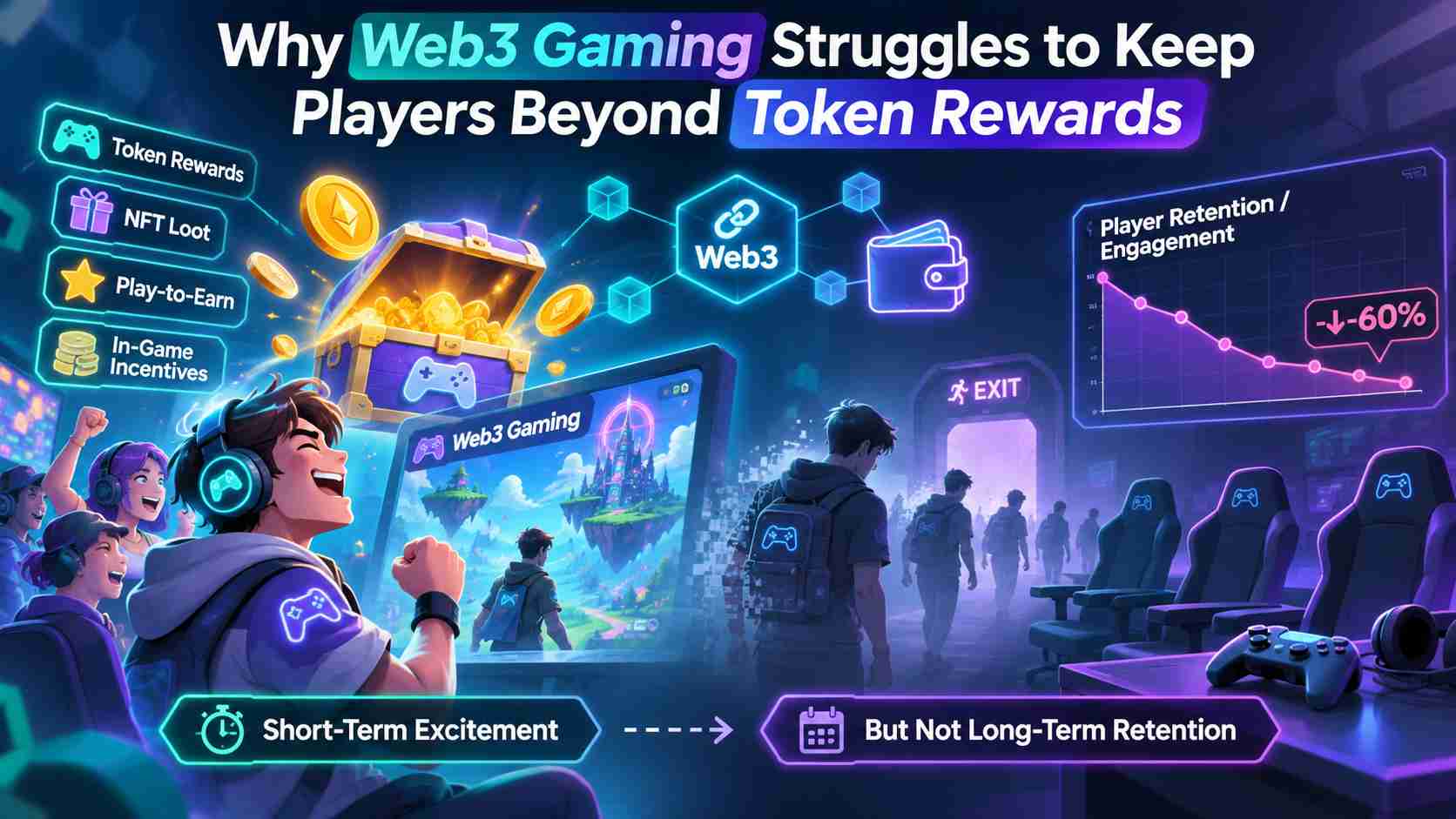
Blockchain gaming has spent years experimenting with ways to attract users through digital assets, token rewards and tradable virtual items. Yet the industry's long-term prospects depend on a less visible measure of success: whether players continue returning after the initial financial incentives disappear.
For developers, this creates a difficult economic challenge. Reward programs can generate registrations, wallet activity and short-term engagement, but these figures do not necessarily translate into a sustainable gaming audience.
The distinction matters as Web3 studios compete for attention in an entertainment market where players already have thousands of alternatives. Building a blockchain economy is technically possible. Establishing a community willing to spend time and money within that economy is considerably harder.
The Difference Between Wallet Activity and Real Engagement
Traditional gaming companies closely monitor player retention, session frequency, spending patterns and the cost of acquiring customers. These measurements help determine whether a game can sustain development costs after launch.
Blockchain games introduce another layer of activity that can complicate the picture.
A single player may control several wallets, while automated accounts can interact with smart contracts without representing genuine gameplay. Transactions may also reflect speculation, asset transfers or reward farming rather than participation in the game itself.
Consequently, a project reporting thousands of active wallets cannot automatically claim an equivalent number of engaged players.
This creates particular problems when evaluating promotional campaigns. A temporary increase in transactions following a token distribution might indicate interest in the rewards rather than the underlying product.
Developers need to distinguish between users who arrive for financial incentives and those who remain because they value the experience.
Metrics such as seven-day and 30-day retention, repeat sessions and revenue from voluntary purchases can provide a clearer picture. They are not perfect indicators, but they help reveal whether demand persists when promotional spending declines.
Token Rewards Can Distort Game Economics
Reward-based gaming introduces a financial obligation that conventional games do not necessarily face.
When players receive transferable tokens for completing activities, developers must consider where demand for those tokens will originate. If recipients consistently sell their rewards while few participants want to buy or use them, the system can experience persistent selling pressure.
Token issuance is not automatically unsustainable. Its effects depend on supply schedules, demand, utility and the broader economic design.
However, rewards become particularly difficult to maintain when their primary purpose is attracting new participants.
A game might report strong early participation while accumulating future liabilities through token emissions. Once incentives decline, users motivated principally by earnings may leave.
The next stage of blockchain gaming development may be judged less by token valuations and more by the economics of operating successful entertainment products. A useful evaluation would examine whether players return after promotional campaigns end, whether spending reflects demand for content, and whether revenue can support continuing development.
For studios, the practical question is how to generate revenue without depending on continuous token appreciation.
Cosmetic purchases, optional subscriptions, expansion content and marketplace services offer potential alternatives. Each requires a product that users consider valuable independently of speculative returns.
A marketplace fee, for example, creates recurring revenue only when players have a continuing reason to exchange items. Artificial trading volume cannot provide the same foundation as genuine demand.
Blockchain Ownership Still Faces Practical Limitations
Digital ownership remains one of blockchain gaming's most distinctive propositions. Players can potentially hold certain in-game assets in wallets outside the developer's own account system.
However, ownership of a token does not necessarily guarantee continued access to the associated game content.
An NFT representing a weapon or character may remain transferable even if the developer shuts down its servers. The token's existence cannot preserve gameplay functionality, intellectual property rights or access to discontinued services.
Interoperability presents similar complications. Moving an asset between games requires participating developers to recognize it and determine how it functions within their respective environments.
Technical standards can facilitate transfers, but they cannot automatically make an item useful across different games.
For players, the practical value of ownership therefore depends on the rights attached to the asset and the continued availability of experiences where it can be used.
Removing Friction Without Removing Control
Blockchain integration also affects how easily new players can access a game.
Traditional titles generally allow users to register and begin playing without understanding digital wallets, transaction fees or private-key management.
Web3 developers must decide how much of that complexity should remain visible.
Immutable Passport illustrates one approach. Its authentication and wallet infrastructure is designed to let players sign in through familiar methods while managing blockchain assets without manually handling seed phrases during ordinary gameplay. The company also offers gas-sponsored transactions intended to reduce interruptions.
Such systems can make blockchain games more accessible, although simplified interfaces introduce their own questions about account recovery, security and the responsibilities of infrastructure providers.
Distribution rules add another constraint. Apple's App Store guidelines permit certain NFT-related transactions but restrict how digital assets can unlock functionality and how developers can direct users toward external purchases.
These requirements influence business models, particularly for studios targeting mobile audiences.
A blockchain game that functions smoothly through a desktop browser may need a different payment and asset-management structure to reach smartphone users.
Retention Is Becoming a More Meaningful Test
The next stage of Web3 gaming development may be judged less by token valuations and more by the economics of operating successful entertainment products.
A useful evaluation would examine whether players return after promotional campaigns end, whether spending reflects demand for content, and whether revenue can support continuing development.
These are familiar questions in conventional gaming. Unity's analytics documentation, for example, tracks player retention, session activity and purchasing behavior as separate measures of performance.
Blockchain studios have an additional opportunity to examine asset transfers and marketplace participation, but those measurements should complement rather than replace conventional engagement data.
The distinction could become increasingly important for investors assessing gaming projects. A large token treasury or active NFT marketplace provides limited insight into the costs of acquiring players, producing new content and maintaining servers.
Ultimately, the strongest evidence of a sustainable Web3 gaming business would be a community that continues playing even when financial rewards are modest or absent.
Blockchain technology may expand what players can own and exchange. Whether those capabilities support a lasting business will depend on the relationship between operating costs, genuine consumer spending and sustained engagement.