Wire Network Explained: How One Layer Connects Multiple Chains

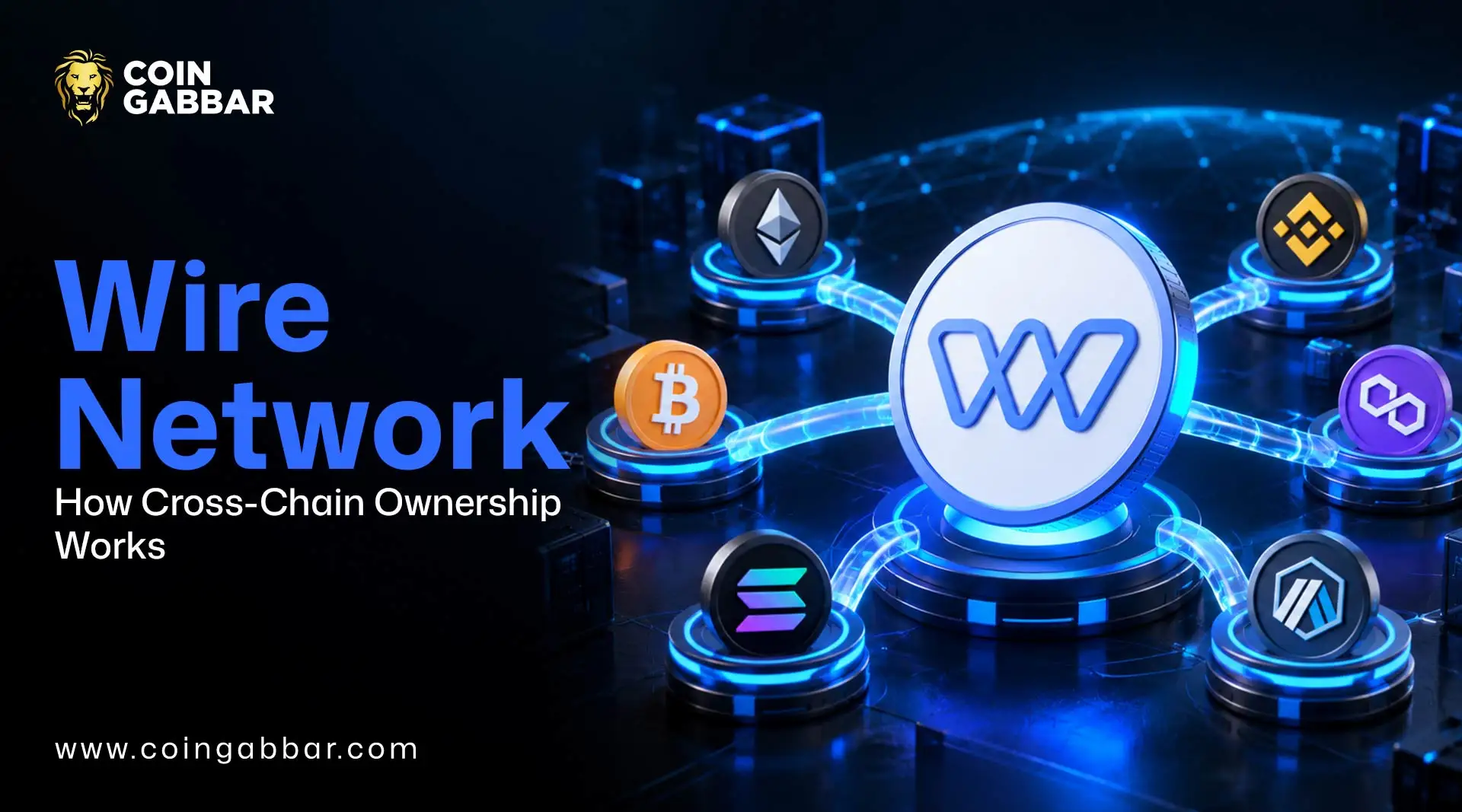
How Does Wire Network Handle Asset Ownership Across Different Chains?
Crypto is split into many chains. Each has its own wallets, its own rules and its own apps. Moving between them usually means extra steps and extra risk.
This guide explains how Wire Network tackles that problem, using the official Explore Wire page. It covers the architecture, the settlement flow and the tools developers get.
Key Takeaways
Wire runs its own layer-1 blockchain, with the Universal Transaction Layer (UTL) as its settlement and interoperability layer.
Assets stay locked on their own chain, while ownership is recorded on Wire.
People can sign with the Ethereum or Solana wallets they already hold.
The Wire Network Blockchain
The Wire Network blockchain is its own layer-1, built on the Antelope and EOSIO lineage. On top of it sits the Universal Transaction Layer, called the UTL.
The site says the UTL connects supported blockchains through one network, without traditional bridges.
Source: official website.
Wire UTL Architecture and Working
The official page breaks the technology into six parts:
Part | What it does |
Accounts and signing | UPAP derives a Wire account from a wallet’s public key |
Written in C++ and compiled to WebAssembly | |
Settlement | WNS bucket contracts lock assets, and settle.wns contracts record ownership |
Resources and fees | Compute, bandwidth and storage, allocated through the Resource Owners’ Association |
Transaction state | Outposts package intents, and Depot records each lifecycle |
Developer tools | TypeScript SDK, Hyperion, docs, public testnet |
How Does Wire Network Connect Multiple Blockchains?
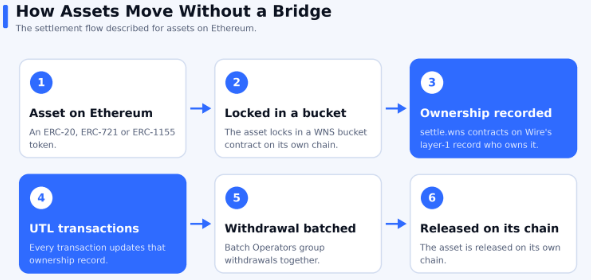
In short, Wire doesn’t move assets across a bridge. Assets stay locked on their own chain. Ownership of each asset is recorded on Wire’s layer-1, and every transaction in the UTL updates that record.
This is the core of Wire Network cross-chain technology. The sections below show each step.
Wire Network Blockchain Connectivity: Accounts and Signing
Connectivity starts with the account. The Universal Polymorphic Address Protocol (UPAP) derives an account from the public key of a wallet someone already holds.
Wire accepts several key types, including Ethereum-style and ed25519 signatures. That means people sign with the Ethereum or Solana wallet they already use, and the signature verifies on Wire’s layer-1.
No new wallet is needed to get started.
Wire Network Smart Contracts
Contracts on Wire are written in C++ and compiled to standard WebAssembly. Teams can test them with tools they already use.
The page also says Wire works with Ethereum wallets, signatures and assets, so existing users don’t need to change their habits.
Settlement Layer: How Ownership Is Recorded
The settlement flow is described for Ethereum:
Assets lock in WNS bucket contracts, which support ERC-20, ERC-721 and ERC-1155 tokens.
The settle.wns contracts on Wire’s layer-1 record who owns each asset.
Every transaction in the UTL updates that record.
Batch Operators batch withdrawals.
Assets are released on their own chain.
Native Assets Stay on Their Own Chain
This design has a clear result. An ERC-20, ERC-721 or ERC-1155 token never leaves Ethereum. Only the ownership record is updated on Wire, and the asset returns to the user on its original chain at withdrawal.
Wire Network Transaction Routing
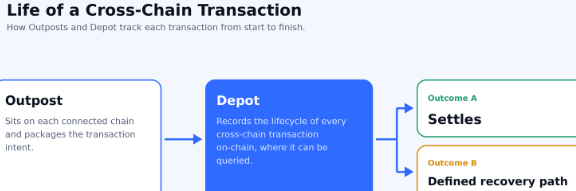
Cross-chain work can fail halfway, so tracking matters. Wire handles it with two parts.
Part | Role |
Outposts | Sit on each connected chain and package transaction intents |
Depot | Records the lifecycle of every cross-chain transaction on-chain, where it can be queried |
Each transaction either settles or follows a defined recovery path. That takes per-route retry and reconciliation logic out of the application.
Resources and Fees
Every transaction uses compute, bandwidth and storage. These are allocated through the Resource Owners’ Association.
Item | How it works |
Node Owners | Hold the allocations |
Whitelisted contracts | Users of these contracts pay no fees |
Other contracts | Pay in $WIRE |
Cost planning | Costs map to the resources a transaction uses, so teams can budget before deploying |
How to Use Multiple Blockchains Through Wire Network
Based on the official page, the flow looks like this for an everyday user:
Keep using an existing Ethereum or Solana wallet.
Let UPAP derive a Wire account from that wallet’s public key.
Sign with the same wallet. The signature verifies on Wire.
Lock assets in a WNS bucket contract on their own chain.
Transact in the UTL while the ownership record updates.
Withdraw when needed. The release happens on the asset’s own chain.
The page describes the Ethereum case in detail, and it refers to “supported” blockchains in general. Readers should check the docs for the current list.
The Wire Network Ecosystem for Developers
The Wire Network ecosystem is open source across 66 repositories. Developers get these tools:
Tool | Detail |
SDK | TypeScript SDK (@wireio/core) |
History | Full transaction history through Hyperion |
Docs | docs.wire.network and testnet-docs.wire.network |
Testnet | Public testnet with a faucet at pre.wire.network |
Code | github.com/Wire-Network |
Final Thoughts
Wire Network keeps its idea simple. Assets stay on their own chain, ownership is recorded on one layer, and a clear lifecycle tracks each transaction.
The official Explore Wire page and the docs are the best places to confirm current details, since features and supported chains may change.
Disclaimer: This article is for information only and is not financial, investment, legal or tax advice. It is based on the official Explore page reviewed in October 2026, and details may change. Readers should verify current information on official channels before making any decision.