Zcash Network Upgrade 7 Goes Live While ZEC Price Slips 2.24%

Zcash Network Upgrade 7: What Changes for Blocks and Fees?
Zcash Network Upgrade 7 (NU7) activated on mainnet at block height 3,543,405, around November 5–6, cutting block times from 75 seconds to 25. ZEC still slipped about 2.24% to near $1,283 as the wider market fell.
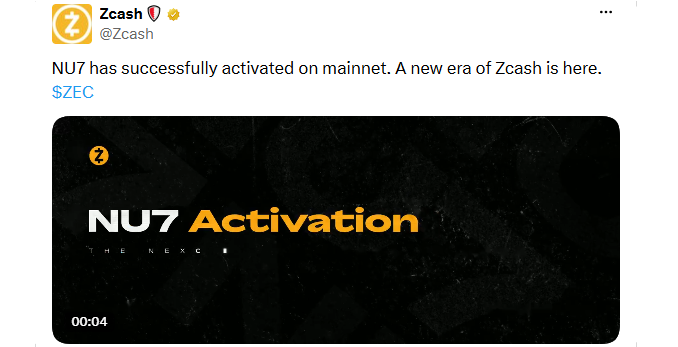
Source: Official X Announcement
This Zcash crypto news today covers what changed, who is affected and where the price stands.
What Zcash Network Upgrade 7 Changes for Blocks, Fees and Old Sprout
Speed is the main gain. Blocks now arrive about every 25 seconds, so first confirmations come roughly three times faster. Daily issuance stays almost flat because each block reward is split into thirds, as the ZIP 208 specification describes.
Key changes at activation:
Block time: down from 75 seconds to 25 seconds
Fee reserve: 60% of each block’s fees go into the Network Sustainability Mechanism
Miner share: 40% of fees are paid out right away
Reserve payouts: returned through block rewards from around 2031
Supply: the 21 million ZEC cap and halving schedule stay the same
Shielded activity: new per-block limits help curb spam
The retirement of the Sprout pool is another major change. Roughly 12,000 to 12,200 ZEC, worth about $16 million, was left in the 2016 pool and can no longer be spent. Developers gave long notice and say the move clears out outdated code.
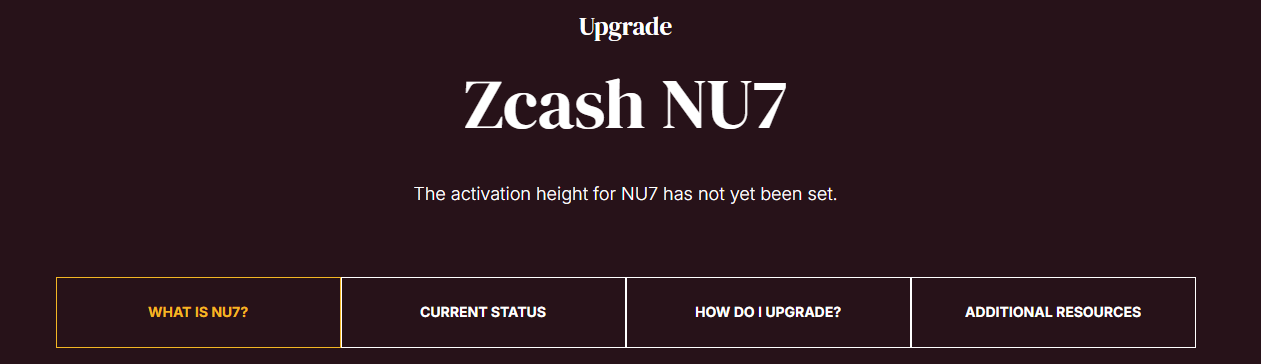
Details are on the official Zcash upgrade page.
Zcash Price Today: ZEC Price Down Even After a Smooth Activation Day
Despite the successful upgrade, ZEC price moved lower during the trading session. Here are the latest figures from CoinMarketCap as of November 6:
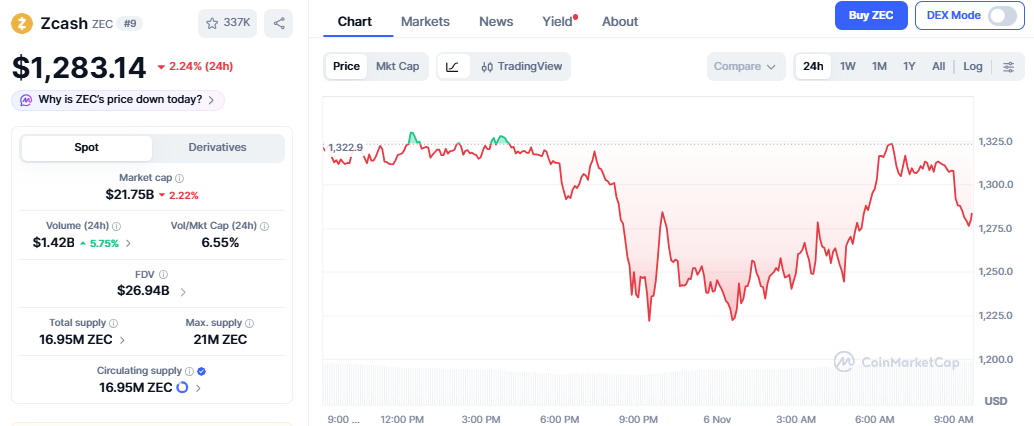
Token price: $1,283.14
24-hour change: down 2.24%
Market cap: $21.75 billion
24-hour volume: $1.42 billion
Circulating supply: 16.95 million ZEC
ZEC’s decline was smaller than the broader crypto market’s drop. The bitcoin price fell 5.87% in the same period, and total crypto market value dropped 5.34%. Some traders linked ZEC’s dip to the frozen Sprout funds. The market-wide sell-off appears to be the larger factor.
Market Voices and the Zcash Price Prediction Debate
Two well-followed X accounts have shared very different takes on where ZEC could go next.
HFA Research founder and trader Taiki Maeda said he expects ZEC to soon grow to about 2% of Bitcoin’s market cap. He believes that would trigger sharp upward moves and push the token past $2,000 before the year ends.
On the other hand, market analyst Ansem wrote on X that Zcash has been among the strongest crypto assets lately, and he is tracking how it behaves if the market corrects further. He argues the privacy case may matter more as political and regulatory attention on crypto grows.
Both are personal views, not forecasts or advice.
Zcash Wallet Impact: Who Needs to Act and Who Can Relax After Launch
For most people, Zcash Network Upgrade 7 changes little beyond faster confirmations.
Zcash wallet users: modern Sapling and Orchard wallets work as before
Sprout holders: funds in old Sprout addresses are frozen
Miners and pools: the same total daily reward, paid in smaller and more frequent pieces
Node operators: must run Zebra 7.0.0 or compatible software, available on GitHub, or fall off the chain
Zcash Latest Update: Project Tachyon, Quantum Work and the Road Ahead
Developers describe Zcash Network Upgrade 7 as groundwork, not a finish line. It kept to changes that already had broad support so it could ship cleanly. Clearing Sprout code frees engineers to focus on Project Tachyon, which targets scalability and privacy gains, and on features for recovering funds in a quantum-computing future.
The next test is whether faster blocks bring more payments, exchange deposits and bridge activity. Fee data from the new reserve will show how the sustainability design works in practice.
Disclaimer: This article is for informational purposes only and does not constitute financial or investment advice. Crypto markets carry significant risk. Always do your own research before making any investment decisions.






