Best Staking Coins September 2026: Top Picks for Higher Rewards

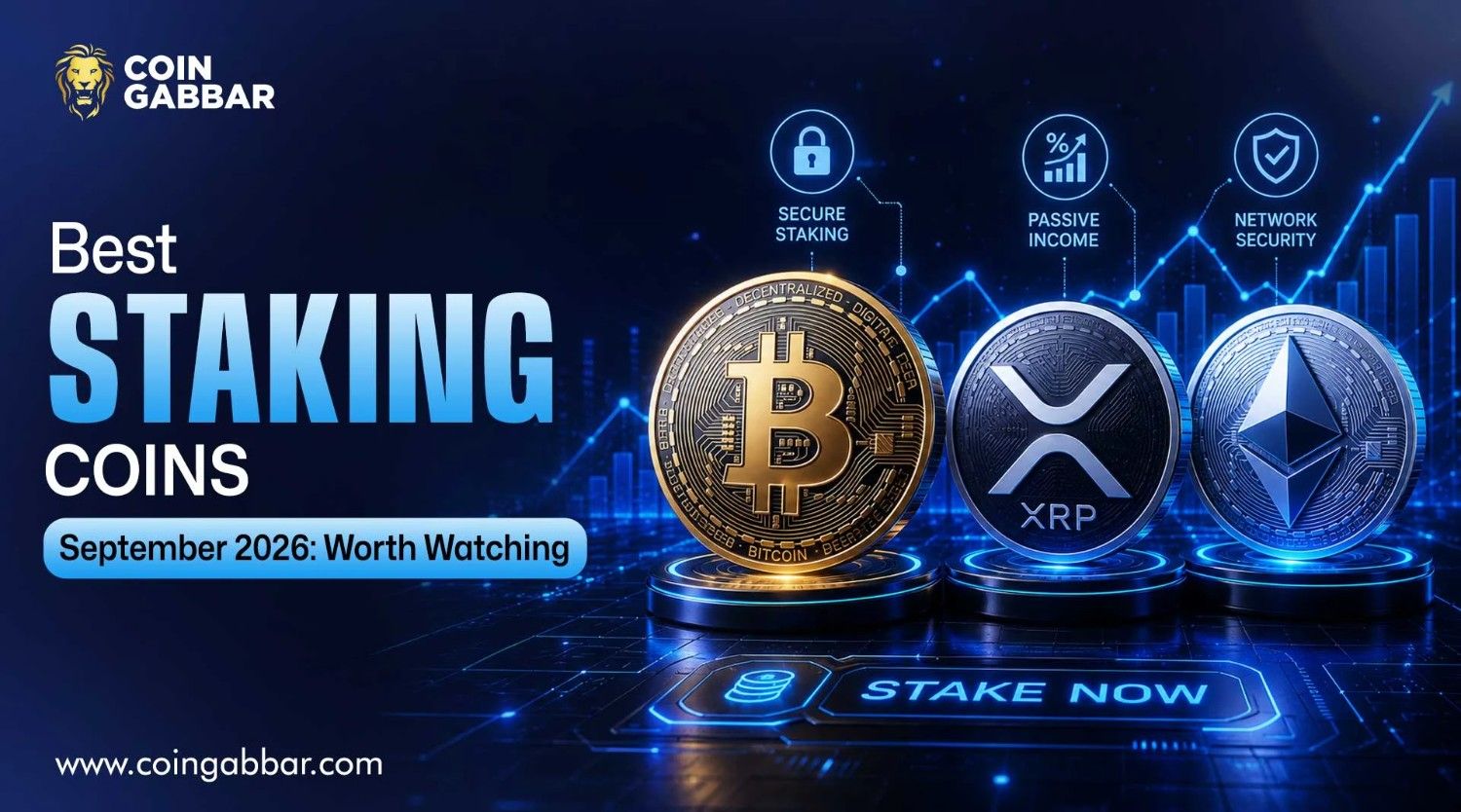
Best Staking Coins September 2026: Top Picks & Rewards
What Is a Staking Coin?
Crypto staking is a mechanism that allows cryptocurrency owners to participate in the validation of blocks in the blockchain network by locking certain funds. This allows network participants to receive a reward from the system in the form of cryptocurrency.
It works the way banks provide clients with interest when they deposit their money in bank accounts.
Such cryptos as ATOM, SOL, DOT, INJ, and ETH (using the Lido protocol) support staking. However, each of them follows specific rules related to rewards, withdrawal periods, and risks. This is precisely why there is no one solution to the question "best staking coin."
The Top 5 Ranked List (And Why Does It Matter?)
This is what the current situation with the top five looks like, ranked by yield and then adjusted for difficulty of the lockup period:
1. ATOM: The King of Rewards With the yield around 14%, ATOM becomes the coin with the highest yield among these coins. Cosmos Hub is known for the high rewards it gives to the stakers, so it is no wonder that it constantly ranks high on the lists of comparisons.
Meanwhile, there is the 21-day unbonding period, so you will have to wait 3 weeks after the unstaking of the coins to gain access to the funds.
ATOM is suitable for the stakers who definitely do not need quick access to their funds.
2. INJ: Almost as profitable as ATOM. Injective Protocol provides almost the same yields as ATOM, with the yield around 11.5% APY, becoming second on this list.
Injective Protocol has become quite well-known in the DeFi and derivatives space and provides the yields based on the network usage, not on inflation, which gives additional confidence to the stakers.
3. DOT: Good Rewards with the Longest Unbonding Period Polkadot provides about 10.4% APY, which is still quite a good yield in comparison with the majority of assets in the market, but its unbonding period equals 28 days, becoming the longest one in this list.
DOT is good for the stakers with the truly long-term plans, such as the people who are planning to stake for months or even years.
That is one whole month of the total inability to withdraw your funds after you make a decision to unstake them.
4. SOL: Low Yield and Short Access Period This coin provides yields significantly lower than other coins, with the yield around 7.26% APY, becoming a weak link of this list next to ATOM, INJ, or DOT.
It completely changes the risk profile of staking SOL because, for the majority of users, it becomes the more attactive option because you do not sacrifice your possibility to react to the market.
It becomes a good choice for stakers who want the good yields without the loss of control over their funds.
5. ETH via Lido: The lowest APY with liquid token Ethereum via Lido has the lowest APY among all listed above, with the yield around 2.8% APY. This makes it seem the least attractive option at first sight.
However, its advantage is a liquid token (stETH), which may be used in DeFi protocols and generate rewards at the same time.
So, your staked ETH is not simply lying and doing nothing while you earn the rewards, and you can lend, trade, or use it as collateral in any other DeFi platform using stETH. It is suitable for the stakers who need the utility and composability.
Which Cryptocurrency Is Better for a Beginner to Stake?
At the very beginning of crypto staking coins, the best thing to do is not to choose the one with the highest yields without even considering its features. The main criterion to evaluate coins for beginners is the speed of funds' access.
For this reason, SOL is the easiest to start staking with. It does not give the most impressive yield, but the access period after unstaking is rather short, 2 to 3 days. ETH via Lido comes second, giving liquidity in exchange for low yields.
ATOM, INJ, and DOT are more suitable for investors who already know something about staking and are ready to lock their funds for weeks.
Staking Coins Quick Comparison:
| Rank | Coin | Approx. APY | Lockup / Exit Time | Best Suited For |
| 1 | ATOM (Cosmos) | ~14% | 21 days unbonding | Highest raw yield seekers |
| 2 | INJ (Injective) | ~11.5% | 21 days unstaking | Aggressive yield chasers |
| 3 | DOT (Polkadot) | ~10.4% | 28 days unlocking | Patient, long-term stakers |
| 4 | SOL (Solana) | ~7.3% | 2–3 days (per epoch) | Balanced reward + easy access |
| 5 | ETH (via Lido) | ~2.8% | Queue-based withdrawal | Liquidity & DeFi flexibility |
What Makes the Staking Coin Actually Worth It?
This is where most people make a mistake – they see a high APY and stake their money right away without looking into any other details. The APY of 14% is not necessarily superior to 7% if the former figure is accompanied by a longer lockup period, greater risks, or inflation disguised as rewards.
To be sure about the deal you're making before investing any money, go through the following list of questions:
-
Posted APY – Is it really a good offer, or does it just look good?
-
Lock-up or exit period – How long are you ready to wait for your rewards?
-
Smart contract or validator risk – Does the project bring additional risk?
-
Real yields vs. inflationary yields – Are you going to get rewarded for your activity, or will the token issuance simply be increased?
It is only when the coin finds the balance between decent rewards and accessibility that it is worth staking.
Conclusion
Staking isn't about grabbing the biggest APY and hoping for the best; it's about understanding the full trade-off between reward, risk, and access. ATOM and INJ reward you generously if you can afford to wait three weeks.
DOT pays well but demands the most patience of all, with a full month before you see your funds again. SOL trades a chunk of yield for the freedom to react quickly, making it one of the more practical everyday options.
Disclaimer
This article is for informational purposes only and should not be treated as financial, investment, or legal advice. Staking involves real risk, including price volatility, smart-contract vulnerabilities, validator slashing, and the possibility of losing part or all of your staked funds. Do your own research and, if needed, consult a qualified financial advisor before making any investment decisions.