Top Metaverse Crypto Projects August 2026: Full Comparison

How We Ranked the Top Metaverse Crypto Projects August 2026
The metaverse sector has matured considerably since its 2021 hype peak, and the projects still standing tend to be the ones that kept shipping.
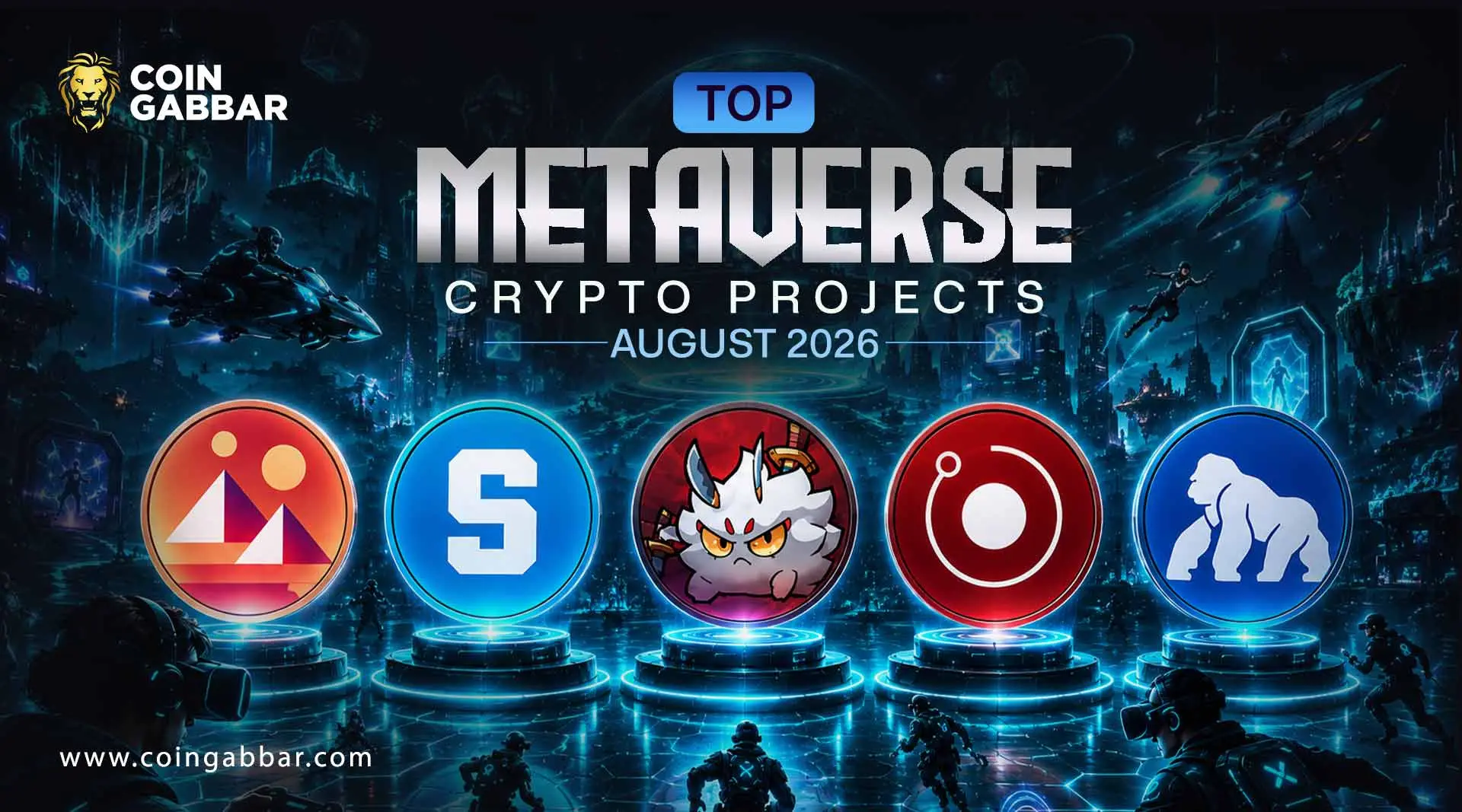
This list of top metaverse crypto projects August 2026 covers five established names, Decentraland, The Sandbox, Axie Infinity, Render, and ApeCoin, comparing their current data, recent development activity, and where each one genuinely fits for someone researching this space.
Anyone looking to actually trade these tokens can also check our Binance exchange review for a breakdown of fees and supported markets.
How We Selected These Picks
These five were chosen using a simple, transparent scoring approach across four factors, rather than hype or market buzz.
This isn't meant to be an exhaustive list of every metaverse-adjacent token but a representative cross-section of the top metaverse crypto projects august 2026 based on verifiable activity rather than social media sentiment:
-
Active development in 2026: Confirmed updates, governance proposals, or migrations within the past several months
-
Ecosystem backing: Whether a company, foundation, or DAO is actively funding and steering the project
-
On-chain relevance: Real usage tied to virtual worlds, gaming, or the infrastructure that supports them
-
Data transparency: Whether current market data is cleanly available and verifiable through CoinMarketCap
Render and Axie Infinity lean more toward infrastructure and gaming than a literal "virtual world," but both remain closely tied to the broader virtual world crypto projects conversation of August 2026 through GPU rendering for 3D environments and blockchain gaming, respectively.
The Shortlist at a Glance
| Project | Ticker | Price | Market Cap | FDV |
| Decentraland | MANA | $0.06710 | $133.25M | $147.79M |
| The Sandbox | SAND | $0.04241 | $124.61M | $127.43M |
| Axie Infinity | AXS | $0.8292 | $144.47M | $223.54M |
| Render | RENDER | $1.36 | $705.95M | $876.77M |
| ApeCoin | APE | $0.1333 | $133.39M | $132.62M |
Source: CoinMarketCap data
Individual Project Breakdowns
Decentraland (MANA)
Overview: A 3D virtual world running on Ethereum, where users buy land as NFTs and build experiences using MANA. The platform is steered by the nonprofit Decentraland Foundation and community DAO. The platform originally opened to the public in February 2020 and runs on the Unity engine.
Strengths: One of the longest-running metaverse platforms, with an established creator economy and recurring cultural events like Art Week and Music Festival.
Risks: Total supply is uncapped, which can dilute holders over time if issuance outpaces demand.
Key Developments: A July 2026 governance proposal raised the Wearables and Emotes submission fee from $5 to $25, with voting ending July 28, 2026, aimed at improving content quality by raising the economic stake for creators submitting new items.
The Sandbox (SAND)
Overview: A voxel-based gaming and UGC metaverse, operated as a subsidiary of Animoca Brands, where creators build using Game Maker and VoxEdit tools.
Strengths: A strong brand partnership pipeline, including collaborations with Cirque du Soleil and Jurassic World and an active Alpha Season format that drew over 144,000 players in 2025.
Risks: The platform's long-promised Sandbox 3.0 on-chain shift, including SANDchain and a mainnet launch, remains in progress.
Key Developments: The Sandbox 3.0 vision outlines a shift toward on-chain infrastructure supporting $SAND, SAND Points, Creator Points, and Creator Tokens in a single network, with mainnet launch targeted for 2026.
Axie Infinity (AXS)
Overview: A Web3 creature-battling game built on Ronin, a purpose-built chain from developer Sky Mavis, originally launched on Ethereum before moving to its own sidechain to escape high gas costs during the 2020-2021 growth phase.
Risks: The chain carries the legacy of the March 2022 Ronin Bridge hack, in which $625 million was stolen and later attributed by the US Treasury to North Korea's Lazarus Group.
Sky Mavis has confirmed a series of partial recoveries in the years since, most recently $5.7 million returned via Norwegian authorities in 2025, though the majority of the stolen funds remain unrecovered.
Render (RENDER)
Overview: A decentralized GPU compute network for AI and 3D rendering workloads.
Originally issued as RNDR on Ethereum, it migrated to Solana and rebranded as RENDER following a 2023 community governance vote (RNP-002).
Key Developments: As of the most recent reporting, 98.4% of the total token supply has completed migration from the legacy Ethereum-based RNDR to native Solana RENDER, reducing transaction costs for the micro-payments common in GPU rendering jobs.
ApeCoin (APE)
Overview: An Ethereum ERC-20 governance and utility token tied to the Bored Ape Yacht Club ecosystem and Yuga Labs' Otherside metaverse project.
Strengths: A leadership change naming Michael Figge as CEO in April 2026 coincided with a sharp price rally for APE.
Risks: Governance has been in flux. The original ApeCoin DAO was dissolved in 2025 through proposal AIP-596 in favor of a centralized entity, ApeCo, which was then folded directly into Yuga Labs by a June 5, 2026 deadline amid regulatory pressure, reducing token holder governance influence further.
Key Developments: Yuga Labs CEO Michael Figge announced the consolidation of ApeCoin operations directly under Yuga Labs, citing growing international regulatory scrutiny of decentralized governance structures.
Who Each Pick Suits
-
Decentraland: Best for those interested in creator-driven virtual worlds and long-term platform history.
-
The Sandbox: Suits users following brand-backed gaming experiences and UGC tooling.
-
Axie Infinity: Fits readers tracking blockchain gaming infrastructure and Ronin's ecosystem, including how the network has handled security incidents. For related coverage, see our crypto hack roundup on major DeFi exploits.
-
Render: Appeals to those interested in decentralized GPU compute infrastructure rather than virtual worlds directly.
-
ApeCoin: Relevant for anyone following NFT-linked ecosystems and governance restructuring in Web3.
Side-by-Side Comparison
Beyond price and market cap, these five projects differ in ways that matter more for evaluating long-term fit.
| Criteria | Decentraland | The Sandbox | Axie Infinity | Render | ApeCoin |
| Primary Use Case | 3D virtual world, creator economy | Voxel gaming, UGC metaverse | Web3 creature-battling game | Decentralized GPU compute for AI/rendering | NFT ecosystem governance (BAYC/Otherside) |
| Blockchain | Ethereum | Ethereum | Ronin (Sky Mavis chain) | Solana (migrated from Ethereum) | Ethereum |
| Governance Model | DAO + nonprofit Foundation | Company-led (Animoca Brands subsidiary) | Company-led (Sky Mavis) | Foundation-led | Centralized under Yuga Labs (post-DAO dissolution) |
| Primary Backing | Decentraland Foundation | Animoca Brands | Sky Mavis | Render Network Foundation | Yuga Labs |
| 24h Vol/Mkt Cap | 5.71% | 11.37% | 6.34% | 1.75% | 5.68% |
| Notable 2026 Event | $5 to $25 submission fee vote (July) | 3.0 roadmap toward on-chain infrastructure | Ongoing partial recovery from 2022 Ronin hack | 98.4% supply migration to Solana RENDER | Governance centralization under Yuga (June) |
Risks and What Could Go Wrong
-
Governance instability, as seen with ApeCoin's DAO dissolution, can shift token utility with little warning and reduce holder influence over treasury decisions
-
Legacy security incidents, such as Axie Infinity's Ronin Bridge hack, remain a lasting factor in risk assessment even years later
-
Metaverse platforms broadly still show inconsistent daily active usage relative to token valuations across the sector, a gap that any list of top metaverse crypto projects august 2026 has to weigh alongside price and market cap figures
-
Regulatory pressure is pushing some projects toward more centralized structures, which can improve decision speed but reduces the decentralization several of these tokens were originally built around
Conclusion
Among these top metaverse crypto projects August 2026, the common thread is active change rather than stagnation: governance overhauls, token migrations, and platform roadmap updates are happening across nearly all five.
Render currently carries the largest market cap and FDV of the group, while Decentraland and The Sandbox continue leaning on creator ecosystems to justify their valuations.
Anyone evaluating these best metaverse tokens august 2026 should weigh recent development activity and governance structure as heavily as price action, since several of these projects are mid-transition in ways that could reshape their fundamentals well before the year is out.
Disclaimer
This article is for educational and informational purposes only and should not be considered financial or investment advice. Always conduct your own research before making investment decisions.