Clarity Act News: Senate Vote Nears As SEC Moves Ahead On Its Own


Clarity Act News: Senate Vote Nears As SEC Moves Ahead On Its Own
Sixteen days remain before the Senate decides whether America's biggest digital asset bill lives or dies, and this week's Clarity Act news shows momentum splitting in two directions at once.
Industry advocates are pointing to hundreds of thousands of jobs riding on passage, while regulators aren't waiting around to find out how the vote goes.
What Alderoty And The Jobs Report Say
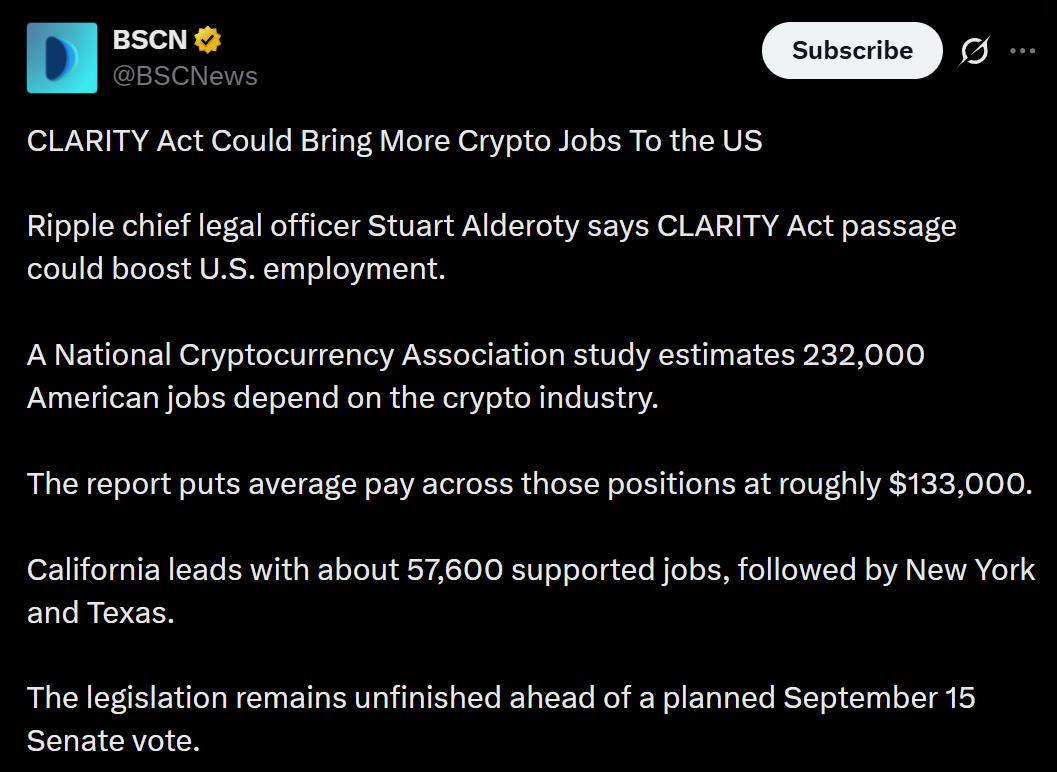
Ripple's chief legal officer, Stuart Alderoty, argued this week that passing the CLARITY Act could boost related employment across the country, pointing to fresh figures from the National Cryptocurrency Association.
Per the NCA's study, roughly 232,000 American jobs currently depend on the crypto industry, paying an average of about $133,000. California leads all states with close to 57,600 supported positions, followed by New York and Texas.
Source: BSCNews on X, National Cryptocurrency Association
Where The Bill Actually Stands
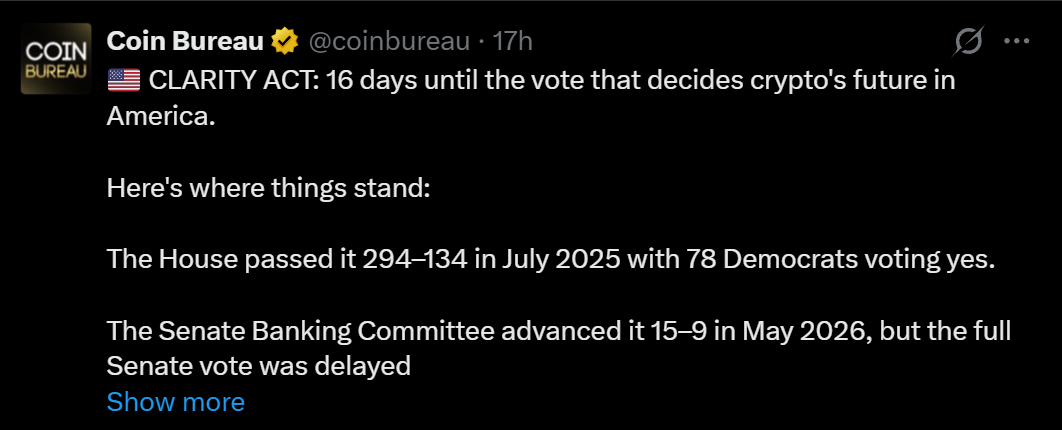
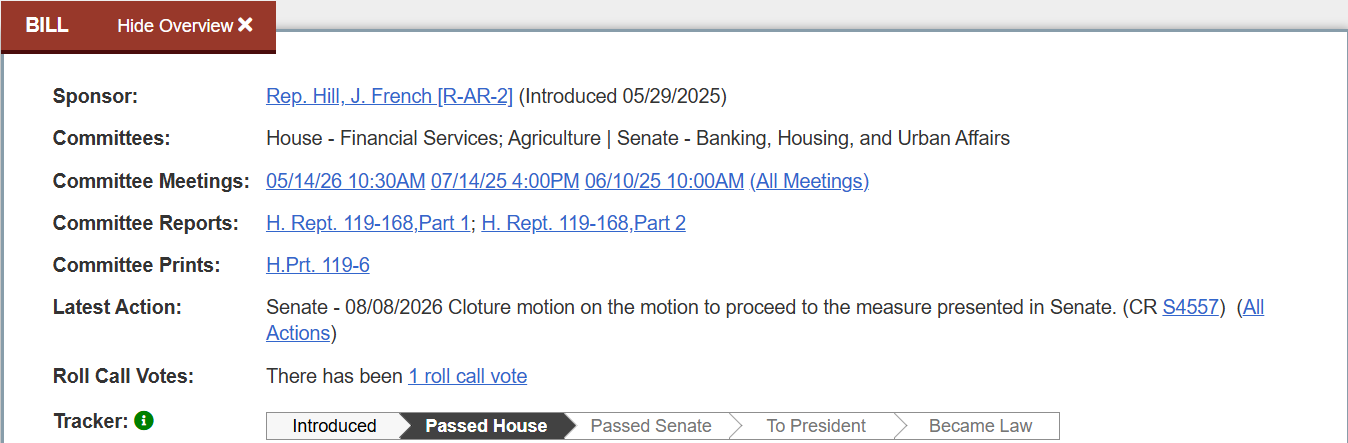
The CLARITY Act, formally H.R. 3633, cleared the House back in July 2025 by a 294–134 margin, with 78 Democrats crossing over to vote yes, according to the official House roll call record.
The Senate Banking Committee later advanced its own version 15–9 before Democrats stalled a floor vote over the absence of ethics rules covering President Trump's crypto holdings.
That standoff has hit the bill's odds hard. Prediction market Polymarket has passage odds down to roughly 14%, a steep drop from 82% back in February.
Source: Coinbureau on X
The cloture vote is scheduled for September 15, the day senators return from recess, and it needs 60 votes to clear.
Miss that, and the bill is effectively dead for the year, with only 14 working days left on the calendar before Congress breaks again for the October election recess.
The SEC Isn't Waiting On Congress
While lawmakers stall, this Clarity Act news cycle shows regulators moving on their own.
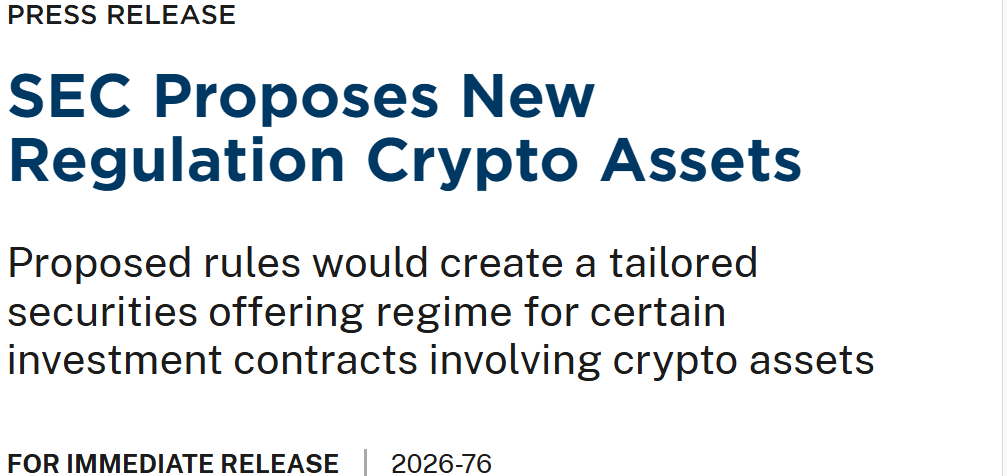
On August 18, the SEC proposed "Regulation Crypto Assets," its first standalone offering framework built specifically for digital assets, drawing directly from definitions found in the bill itself.
Per the agency's own release, the proposal includes two exemptions from standard securities registration: a one-time $5 million offering allowed over four years and a repeatable $75 million offering allowed every 12 months, the latter carrying ongoing disclosure and reporting duties.
It also proposes a conditional safe harbor that would keep qualifying digital assets outside the legal definition of an "investment contract."
"As we continue the Commission's efforts to provide clarity for crypto markets, and as Congress works to establish a lasting regulatory framework, Regulation Crypto Assets seeks to provide crypto asset entrepreneurs and market participants with clear pathways to raise capital," said SEC Chairman Paul Atkins.
Source: SEC Release 2026-76
The CFTC Is Moving Too
The agency isn't acting alone. Per the same Coinbureau post, CFTC Chair Mike Selig has directed staff to begin building out prediction-market and digital asset trading rules using existing authority, rather than wait for Congress to hand it new powers through legislation.
Together, the two moves point toward the same conclusion this Clarity Act news cycle keeps circling back to: digital asset regulation is arriving in America regardless of what the Senate does on September 15. The only open question is whether Congress writes the final rulebook or whether the SEC and CFTC end up filling that role by default.
What Happens If The Vote Fails
A failed cloture vote wouldn't erase the SEC's proposed exemptions or the CFTC's rulemaking push, both of which can proceed under existing agency authority regardless of what happens on the Senate floor.
What it would do is leave this Clarity Act news story without a legislative resolution for the rest of 2026, pushing any fresh attempt into a new Congress and a different political map.
For now, the bill's official record, per H.R. 3633's Senate calendar listing, still shows it reported and awaiting floor action, meaning nothing so far is decided.
Source: Congress.gov, H.R. 3633
Disclaimer
This article is for educational and informational purposes only and should not be considered financial or investment advice. Always conduct your own research before making investment decisions.






