Ethereum News: Crypto AI Scam, Bitfinex Whale Move and ETH Fee Drop


Ethereum News: AI Scam, ETH Fees Fall, Bitfinex Whale Moves $86.9M
At Glance
-
Price: $2,624.72, up about 5.4% in 24 hours
-
Scam: 224 victims lost 274.60 ETH to fake AI arbitrage bot tutorials
-
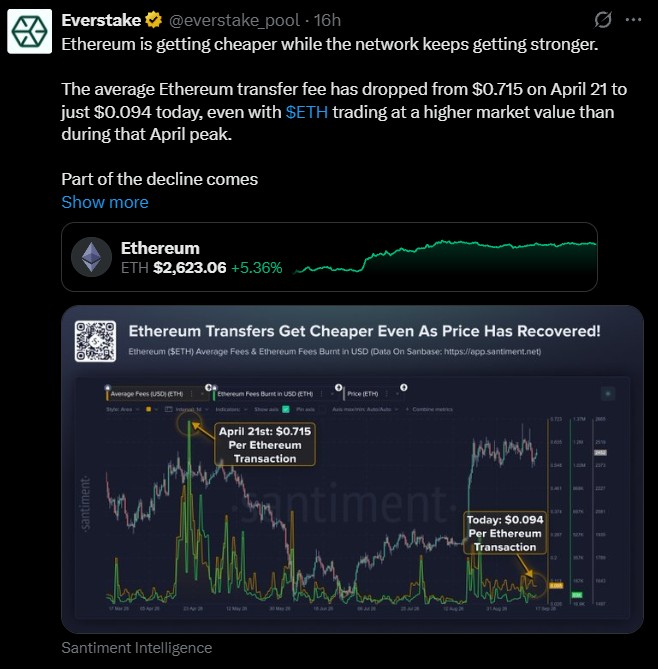
Fees: average transfer cost fell from $0.715 to $0.094
-
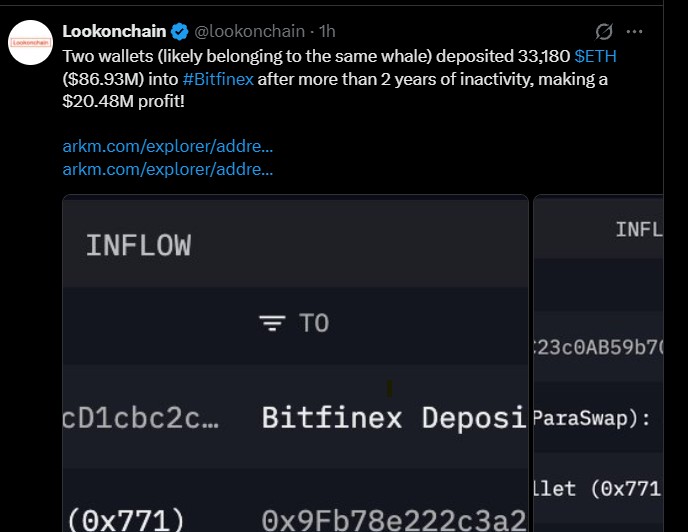
Whale: 33,180 ETH ($86.93 million) sent to Bitfinex after 2 years of inactivity
Ethereum News today covers security, network costs, and large wallet activity. The ETH price today trades near $2,624.72, up about 5.4% over 24 hours. Trading volume is around $21.8 billion, and market capitalization stands near $320.5 billion. Three stories stand out: a scam built on fake AI tutorials, a sharp drop in transfer fees, and a long-dormant whale moving funds to an exchange.
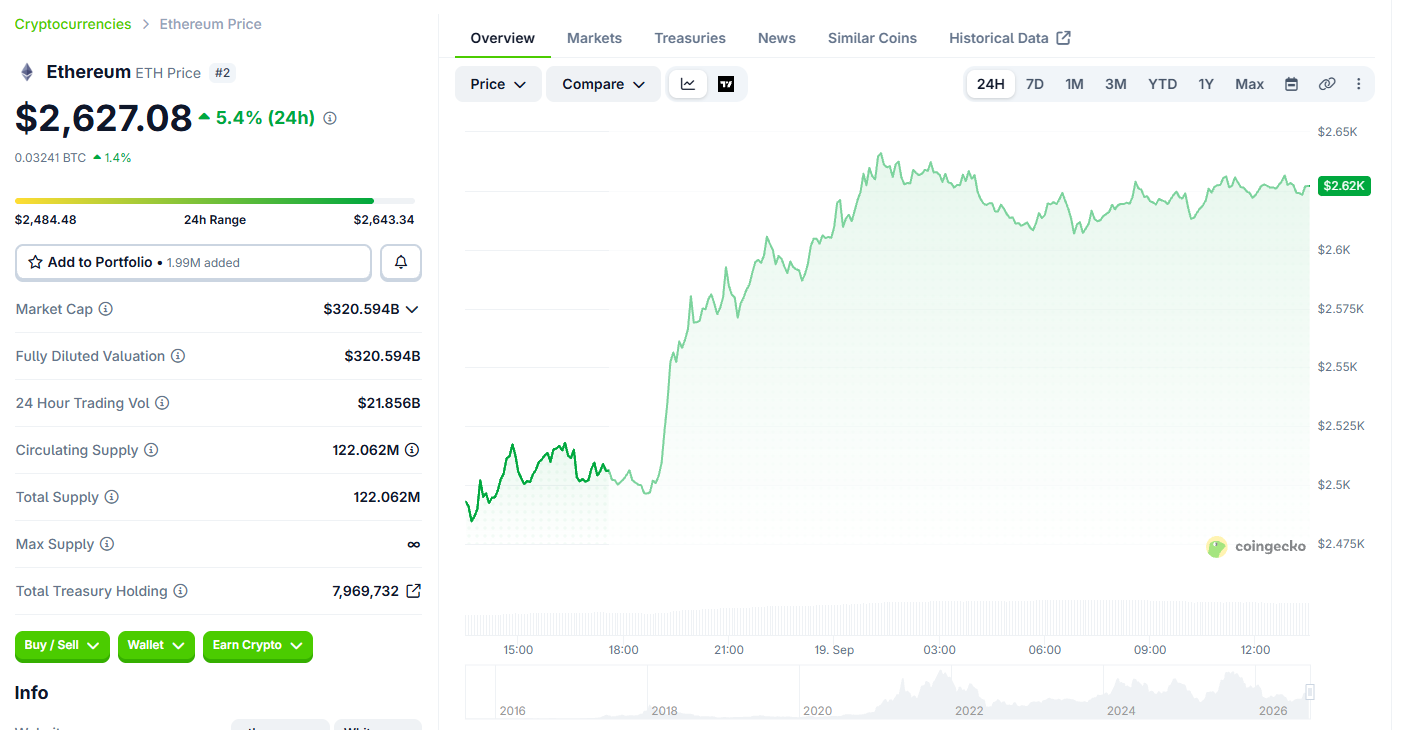
Source: CoinGecko Data
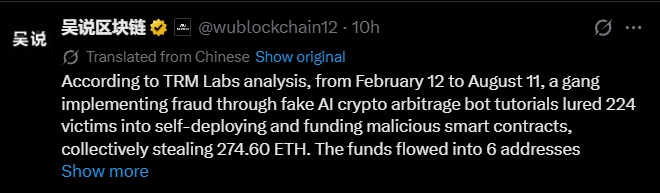
Ethereum AI Arbitrage Scam Steals 274.6 ETH From 224 Victims
TRM Labs analyzed a fraud campaign that ran from February 12 to August 11. The group lured 224 victims into deploying and funding malicious smart contracts, and collectively stole 274.60 ETH.
The money flowed into six addresses controlled by the attackers. Based on prices at the time of each transfer, the haul was worth about $517,000. The median loss per victim was 1 ETH, so most people lost a modest sum, but it added up across hundreds of targets.
How Fake Claude and AI Arbitrage Tutorials Tricked Ethereum Users
TRM identified nine highly similar YouTube tutorials. Each claimed viewers could build a crypto arbitrage bot with Claude, then sent them to a compilation website run by the attackers. Some of these sites partly imitated Remix, a well-known tool for writing smart contracts.
One method quietly discarded the code the user pasted and deployed a malicious contract supplied by the attackers instead. Funds sent to that contract went straight to the scammers. After the first theft, some sites showed a fabricated "gas nonce liquidity" error. The message was designed to convince victims that adding more money would fix the problem.
By September, the nine videos had gathered roughly 310,000 views. Anyone following such a guide should know that a real arbitrage bot does not require sending funds to a contract you cannot inspect.
Source: Wu Blockchain
Ethereum AI Scam Used ChatGPT Bait Before the Latest Campaign
TRM also found that the same scheme used ChatGPT as bait in 2025. Only the brand name changed. The tactic stayed the same: promise easy automated profit, then walk the viewer through a step that hands control of funds to the attacker.
AI themes make these tutorials feel modern and credible, especially to newcomers who assume an AI tool has already checked the code. The technology itself is not the problem here. The fraud relies on trust in a familiar name and on victims deploying code they have not reviewed.
Ethereum Transfer Fees Fall Below $0.10 as Network Capacity Expands
Staking provider Everstake reported that the average transfer fee dropped from $0.715 on April 21 to $0.094 today. That happened even though the token trades at a higher market value than during the April peak.
Everstake says softer mainnet demand explains part of the decline. It also points to added capacity. The Fusaka upgrade and growing Layer-2 activity have reduced pressure on the main chain's blockspace. In simple terms, Layer-2 networks handle many transactions off the main chain and post compact records back to it. That leaves more room on the base layer and keeps costs down.
Glamsterdam Could Push Ethereum Toward Faster and More Scalable Infrastructure
Everstake also believes the upcoming Glamsterdam upgrade could change how people see the network. In its view, the chain could move from a strong foundation with a broad ecosystem toward infrastructure that is faster, more scalable, and more accessible. That is Everstake's outlook, not a guaranteed result.
If greater capacity, Layer-2 growth and low fees continue together, everyday use such as payments, app interactions and token swaps could become cheaper and smoother for ordinary users. The story here is about infrastructure, not price direction.
Source: Everstake Post
Ethereum Whale Deposits 33,180 ETH Into Bitfinex After 2 Years
Lookonchain reported that two crypto wallets, likely controlled by the same whale, deposited 33,180 ETH into Bitfinex. The transfer was worth about $86.93 million. Both wallets had been inactive for more than two years, and the holder is sitting on a reported profit of $20.48 million.
A deposit to an exchange does not confirm a sale. Holders move coins to exchanges for many reasons, including lending, trading or custody. No source has said what the whale plans to do.
Source: Onchain Lens
Ethereum News Timeline: From AI Scam Activity to Latest Whale Movement
| Date | |
| Feb. 12, 2026 | TRM Labs' identified scam activity begins |
| Apr. 21, 2026 | Average transfer fee recorded at about $0.715 |
| Aug. 11, 2026 | Identified crypto scam activity period ends |
| September 2026 | Nine scam videos reach about 310,000 combined views |
| Sept. 19, 2026 | Average transfer fee reported at $0.094; price near $2,625 |
| Sept. 19, 2026 | Two long-inactive wallets deposit 33,180 ETH into Bitfinex |
Conclusion
ETH News shows a network with two sides. Costs are falling, capacity is growing, and large holders are moving funds, while scammers keep using trusted AI names to target users.
The practical takeaways are simple: never deploy code from a video tutorial without independent review, and treat sudden "error" messages that demand more funds as a red flag. Source reports came from TRM Labs (via The Defiant), Everstake, and Lookonchain.
Disclaimer: This article is for informational purposes only and is not financial, investment, or legal advice. Cryptocurrency prices are volatile, and you can lose some or all of your capital. Always do your own research and consult a licensed financial advisor before making decisions.









