EU MiCA Crypto Licensing: How Spain and Poland Differ

Spain and Poland MiCA Licensing Rules and Regulatory Differences
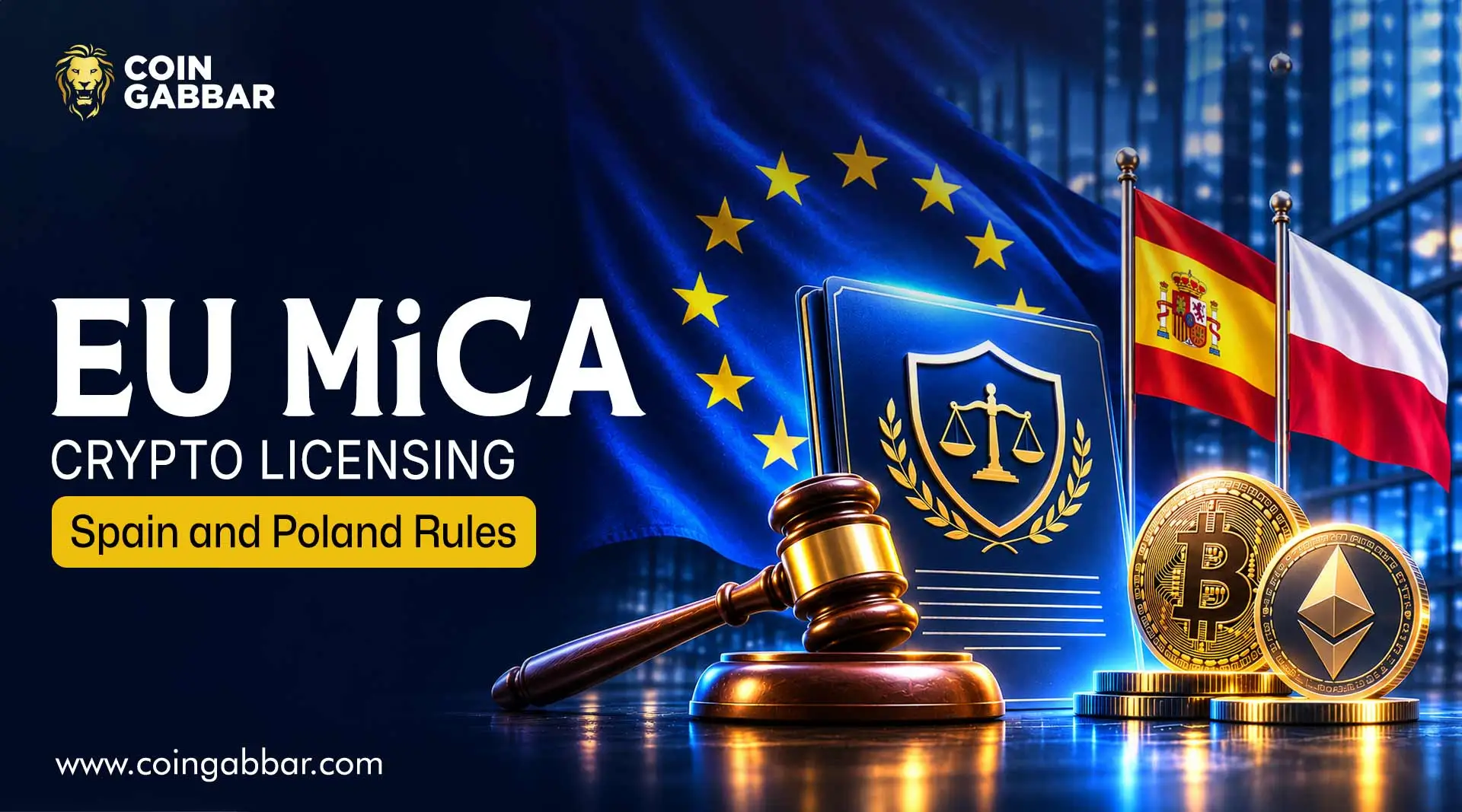
EU MiCA Crypto Licensing was meant to work the same way in all 27 member states. Spain and Poland show how far real life can drift from that plan.
Spain runs a working approval process through its securities regulator. Poland still lacks the national law its regulator needs before it can accept applications.
The gap in EU MiCA crypto licensing affects exchanges, wallet providers, and everyday users.
What Does EU MiCA Crypto Licensing Actually Mean?
MiCA is one EU rulebook for crypto-assets that older financial laws did not cover. ESMA's official MiCA page says it deals with disclosure, authorization, and supervision. The rules for service providers have applied in full since 30 December 2024.
A few terms keep coming up, so here is what they mean:
CASP: A crypto-asset service provider. Think exchanges, custody services, and brokers.
VASP: An older national label for similar firms, mostly tied to anti-money-laundering registers.
Competent authority: The national regulator a country picks to approve and supervise firms.
Passporting: One EU license lets a firm serve clients in other member states after a notification.
Grandfathering: A transition window that lets existing firms keep operating while they apply.
Member states could give existing firms up to 18 months of grandfathering. That window ran until 1 July 2026, or until a firm was approved or refused, whichever came first.
MiCA is a regulation, not a directive. It applies directly. Still, each country must name a regulator and write the procedures around it. That is where EU MiCA Crypto Licensing turns into a national story.
How Does Spain Handle EU MiCA Crypto Licensing?
Spain gave the job to the CNMV, its securities regulator. The CNMV's MiCA guidance includes application material and a published Q&A on how it assesses files. The central bank, Banco de España, handles some duties tied to stablecoin-style tokens.
For EU MiCA crypto licensing, Spain also used the full 18 months. The CNMV states that the Spanish transition ended on 1 July 2026. Since that date, three groups can serve Spanish clients:
Banks that notified the CNMV about their crypto services
Firms authorized in another EU country that passport into Spain
Some sector reports say platforms moved Spanish users to withdrawal-only mode or to other group entities near the deadline. The regulator has not confirmed those individual cases here.
Spain's long transition gave firms time. It also created a hard cliff edge. Under EU MiCA Crypto Licensing, a pending application did not extend a firm's right to operate past the final date.
Stablecoin holders face a related deadline, covered in the MiCA stablecoin deadline explainer.
Why Is EU MiCA Crypto Licensing Stuck in Poland?
Poland's problem is not MiCA itself. It is the missing national law. A Polish act would name the Polish Financial Supervision Authority, known as the KNF, as the competent authority. Without it, the KNF has no legal basis to approve CASP applications.
The timeline shows how the process stalled:
Date | What happened? |
7 Nov 2025 | Sejm passes the Crypto-Assets Market Act. |
1 Dec 2025 | The president asks the Sejm to reconsider the act. |
12 Feb 2026 | Second presidential veto, as reported |
11 Jun 2026 | Third veto, as reported |
1 Jul 2026 | MiCA transition ends across the EU |
4 Sep 2026 | Sejm fails to override the latest veto, as reported. |
After 1 July 2026, the old Polish VASP status no longer covers services under EU MiCA Crypto Licensing rules. Reports also say a new draft act reached the Sejm in early September 2026. It had not entered into force at the time of writing.
Poland's EU MiCA Crypto Licensing gap does not switch MiCA off. The rules still apply. Firms authorized elsewhere in the EU can serve Polish clients after a cross-border notification, and the KNF's official website is the place to watch for regulator statements.
EU MiCA Crypto Licensing: Spain and Poland Side by Side
Factor | Spain | Poland |
Main regulator | CNMV for service providers | KNF is intended but not yet empowered. |
Transition end | 1 July 2026 | 1 July 2026 |
Domestic CASP application route | Open | Closed until a national act takes effect |
Passporting out | Spanish license can passport | No Polish license to passport |
Passporting in | Allowed after notification | Allowed after notification |
Main user risk | Platforms exiting or migrating clients | Legal uncertainty, no local licensing desk |
The table shows one clear difference in EU MiCA Crypto Licensing. Spain has a regulator that can say yes or no. Poland has rules without a local decision-maker.
That does not make Spain risk-free or Poland unusable. Both countries rely on the same EU framework. The practical difference is where a firm can apply and who answers to local regulators.
What Should Crypto Users Check Before Using a Platform?
An approval under EU MiCA Crypto Licensing is not a guarantee of safety. It only shows a firm passed a regulator's review. Prices can still fall, and platforms can still fail.
Still, a few checks take only minutes:
Search the platform in the ESMA interim MiCA register, which lists authorized service providers and non-compliant entities.
Confirm which legal entity serves the account, since groups often split services across countries.
Read the terms for the country of residence, because rights can differ by entity.
Note where the firm is authorized and whether it uses passporting.
Self-custody changes the picture. Holding crypto in a personal wallet keeps assets away from a platform's license status, though it adds its own security duties. The hardware wallet security lessons article covers one such case.
Regulation outside the EU is moving too. The GENIUS Act stablecoin rules show a different approach in the United States.
What Do the Two Cases Say About EU MiCA Crypto Licensing?
Analyst interpretation: MiCA harmonised the rulebook, not the speed of national politics. Spain moved early and let firms apply. Poland debated the powers its regulator should hold, and the debate outlasted the transition clock.
The result is an uneven map of EU MiCA Crypto Licensing. Passporting softens the effect for users, since licenses issued elsewhere still reach Polish clients. But firms based in Poland cannot get a home license for now, which limits where they can legally set up.
Several points stay uncertain. The date of any Polish act is unknown. Spain's list of authorized firms may keep changing. ESMA's register will also change as national regulators report updates.
Conclusion: What Stands Out and What Remains Open
EU MiCA crypto licensing now has two clear faces. Spain offers a working CNMV route and a closed transition window. Poland has the same rules but no domestic approval desk.
What stands out is how much depends on national lawmaking. What remains uncertain is when Poland will act and how many firms Spain will approve.
Disclaimer:
This article is for information only and is not financial, legal, or investment advice. Crypto assets are high-risk, and rules can change quickly. Readers should research independently and speak to a qualified professional before making decisions.