OKX ICE Tokenized Stocks: Issuer Opt-Out vs Shareholder Rights

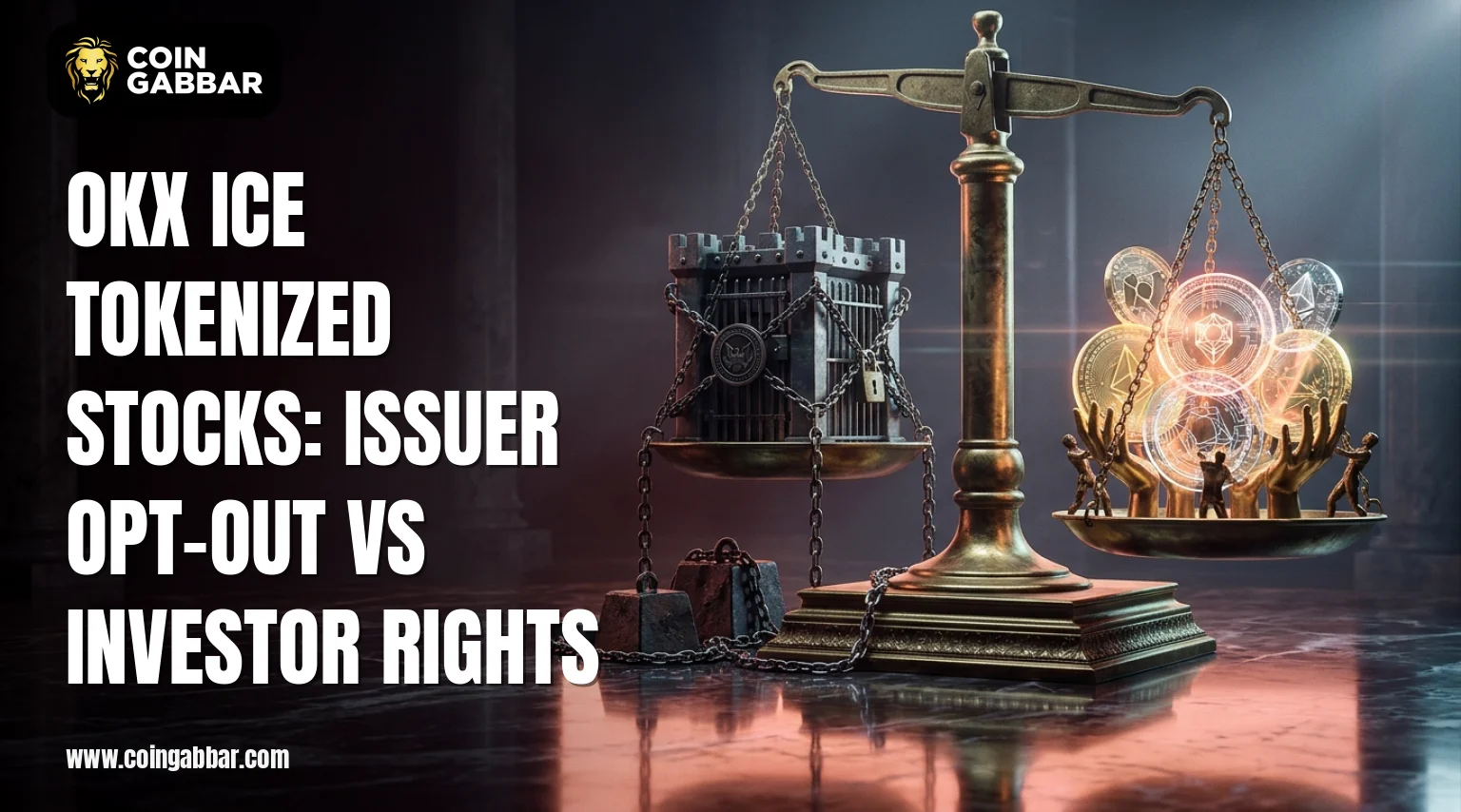
Why So Many Companies Are Saying No to OKX ICE Tokenized Stocks
OKXICE is a proposed tokenized US stock platform backed by a 50-50 ICE and OKX joint venture.
Under the SEC’s conditional exemption, companies can object within 30 days to tokens of their shares made by an unaffiliated party.
By November 5, 2026, 67 companies had objected, including 56 of the original 62. As of November 11, 2026, trading has not started.
The fight over OKX ICE tokenized stocks comes down to one question. Who decides if a stock gets a blockchain twin, the platform or the company? Here is how the opt-out works, what holders own, and where the risks sit.
What Are OKX-ICE Tokenized Stocks, and How Does the Venue Work?
OKXICE is a Tokenized Securities Venue, or TSV. The ICE joint venture announcement confirms the 50-50 setup.
Tokens trade against stablecoins in automated market maker pools, or AMMs. These are smart contracts that set prices from the ratio of two assets. Only approved wallets can trade.
The notice uses future tense, so this is still a proposal. RWA tokenization basics cover the wider idea.
The SEC’s exemption is not an approval. Its Innovation Exemption page says a venue’s listing there does not show it meets the conditions.
The order also bars primary issuance, and offers and sales must follow registration rules or an exemption.
The order caps trading too. Tier 1 covers large-cap index stocks and eligible exchange-traded products under the LULD Plan.
It allows 75 symbols and 0.25% of each stock’s prior-month average daily share volume. Tier 2 covers other eligible stocks, excluding rights and warrants. It allows 250 symbols and 2.5%. The first breach needs no pause. Each later breach forces a three-month pause.
OKX Unified Tokenized Stocks vs the OKXICE Venue: Key Differences
OKX Unified Tokenized Stocks | OKXICE venue (proposed) | |
What the holder gets | Price exposure to a stock | A token tied to one underlying share |
Voting and dividends | No shareholder rights, including voting | Must match the rights of ordinary shares |
Can the company block it? | Not stated on the product page | Yes, within 30 days, for tokens |
The OKX help page says the Unified product tracks price only.
A primer on how tokenized stocks work adds the basics.
How Does the SEC Issuer Objection Process Work Step by Step?
Under the SEC exemptive order, a company may worry about its shareholder register or price gaps against the real share. The right covers only tokens made by an unaffiliated party. An objection applies to the venue that received the notice, not to every other venue.
The TSV sends the company a written Issuer Notice.
The 30 days start when the company receives it. Trading cannot begin earlier.
The company can object in writing within that time.
After a timely objection, the TSV cannot list the token and must update its public notice within five business days.
A second 30-day period also exists, for the TSV’s own public notice before it operates. The SEC staff FAQs say a stock can be listed in that notice while its objection period is pending. They show staff interpretation, not rules.
How Many Companies Objected, and What Does the Count Really Show?
The OKXICE public notice dated November 5 is the latest version found in reports updated November 10.
Metric | Figure |
Original proposed companies | 62 |
Total objecting companies by November 5 | 67 |
Original companies that objected | 56 |
Original companies without a disclosed objection | 6 |
The 67 includes 11 companies outside the original list. The six without a disclosed objection are not confirmed launch names.
Each token still needs its notice period to end and the other conditions to be met. The count for OKX ICE tokenized stocks may also change, because a TSV has five business days to disclose an objection.
Do Token Holders Get Voting and Ownership Rights on the Venue?
Ordinary shares carry a stake in the company, dividends, a vote, and a claim on assets in a liquidation. The SEC order says a token can trade only if it provides those same rights.
According to the notice, each token is a security entitlement to one underlying share. The Tokenizer holds the share through a registered broker-dealer, and the holder gets the entitlement under the account arrangements.
The Tokenizer handles dividends and passes votes along. A holder does not necessarily appear on the company’s shareholder register.
An independent reserve attestation is also reviewed, though its date, scope, and provider deserve a check.
An opt-out is a company decision about one venue, not a shareholder vote. The tokenized stocks vs shares comparison covers more.
What Are the Main Risks of Holding Tokens on This Venue?
Broker-routed tokenized equities work differently. For OKX ICE tokenized stocks, the notice lists these risks:
The TSV is not SEC-registered for these activities, and it is not under Regulation NMS or fair-access rules.
Pool prices can differ from the real share.
Liquidity providers may be thin and can leave.
Protection for self-custodied tokens under SIPC is uncertain.
Administrators can upgrade contracts without a timelock.
The access-token contract has an internal audit only. The trading-hook contract is planned to get internal and external audits before launch.
Expert Take: What Could Issuer Opt-Outs Mean for the Future?
The stronger signal is the rights test. The main concern is supply. With 56 of 62 original companies objecting, the platform could launch with a thinner list than planned. That is an interpretation of the reported counts.
The biggest unknowns are the reasons for each objection and the launch date. Holders should check the latest notice, the Tokenizer’s documents, and the attestation.
Final Thoughts: The Same Stock Ticker, Very Different Rights
The tokenized stock plan aims to give holders the rights of ordinary shares, while companies keep a 30-day veto over tokens.
OKX’s older product only tracks price. The 67-company count is a November 5 snapshot, so the latest notice is worth checking.
Disclaimer: This article is for education only and is not financial, legal, or tax advice. Tokenized stocks carry risks, including price gaps and limited protections. Rules and counts change, so holders should verify details with official sources.