Phina Network Staking: PHN Pools, Rewards and APY Explained


How Does Phina Network Staking Work? Explore PHN Pools and Rewards
Holding a token and watching the chart is one way to spend a year. Putting it to work is another. Staking on Phina lets PHN holders lock tokens in smart contracts and earn rewards while those tokens support the network.
Before anyone locks a single coin, a few things need clear answers: what the pools offer, where the risks sit, and which sources are official. This guide covers all of it in plain words.
Key Takeaways
Phina offers three options: flexible staking, locked staking (30, 60, 90 or 180 days) and liquidity pool staking.
Eligible holders can get a 20% bonus on staking rewards, distributed quarterly.
Rewards change with pool performance and tokens can be locked, so only money that can sit untouched belongs in a pool.
What Is Phina Network?
Phina Network is a decentralized ecosystem built around the token. According to its official docs, PHN pays network fees, secures the network through staking, powers governance votes and works as the main currency inside its apps.
The official website lists PHN as a BEP-20 token on BNB Smart Chain, next to a platform token called PHNA. The ecosystem also includes a Gameverse with NFTs, a metaverse and a payment card.
Source: official website
Where the Project Is Heading
Phina is still a young project. The docs talk about a scalable, user-focused ecosystem, and the whitepaper mentions extra specialized cores in the future.
Plans like these can shift, so treat them as intentions, not guarantees. Phina Network roadmap breakdown tracks the milestones in more detail.
Phina Network staking is the process of locking tokens in the network’s smart contracts for a chosen period. In return, the holder earns rewards.
The official docs call it one of the core earning mechanisms in the ecosystem. It rewards holders for keeping tokens in the network instead of selling them.
What Is Phina Network Staking?
Phina Network staking is the process of locking PHN tokens in the network’s smart contracts for a chosen period. In return, the holder earns rewards.
The official docs call it one of the core earning mechanisms in the ecosystem. It rewards holders for keeping tokens in the network instead of selling them.
How Phina Network Staking Works
A holder locks PHN in a smart contract for a set time. While the tokens sit there, they earn rewards based on the pool’s APY.
Rewards arrive in PHN or in paired assets like BNB or ETH, depending on the pool. The locked tokens also help with the network’s security, liquidity and stability.
Phina Network Staking Pools at a Glance
Pool type | Lock period | Reward level | Best for |
Flexible | None, withdraw anytime | Lower | People who want access to their tokens |
Locked | 30, 60, 90 or 180 days | Higher, plus bonuses for long-term stakers | People who can wait |
Liquidity pool | Depends on the pair | Trading fees plus incentives | People comfortable with DeFi |
PHN Flexible Staking vs Locked Staking: Which Is Better?
Neither wins on its own. The answer depends on how long a holder can stay away from the tokens.
Flexible staking carries no penalty for leaving early, but it pays less. Locked staking pays more and rewards patience, but the tokens stay out of reach until the term ends.
Liquidity Pool Staking
This route suits holders who want more activity. They provide liquidity to trading pairs such as PHN/BNB or PHN/ETH.
In return they earn a share of transaction fees plus reward incentives. One general warning from DeFi at large: when the two assets move apart in price, a liquidity provider can end up with less value than simple holding. The pool details deserve a careful read first.
Phina Network Staking APY Explained
APY is the yearly return on a stake, with compounding included. In the Phina documentation, each pool has its own APY, and locked pools pay more than flexible ones.
The staking page does not publish a fixed number. Holders should check the figure shown on the official platform on the day they stake. Staking APY crypto numbers are never promises, because they move with pool activity and token price.
PHN Token Staking Rewards and the 20% Holder Bonus
Staking is only one part of what holders can earn. The holder rewards page describes a 20% bonus on staking rewards and special distributions.
Detail | What the docs say |
Bonus size | 20% on staking rewards |
Eligibility | PHN held in verified wallets and staked on official Phina platforms |
Payout timing | Quarterly, with extra chances during presale or promotions |
The same program also lists referral bonuses, airdrops, governance incentives, NFT perks and loyalty milestones based on how long investors hold.
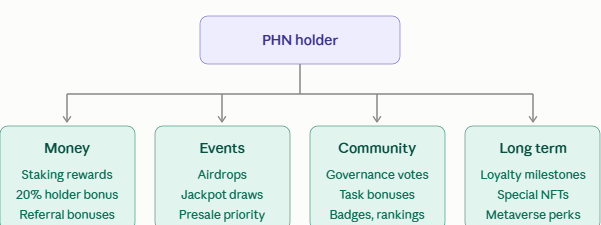
PHN Staking Benefits
Passive income: passive income crypto staking means tokens earn while the holder does nothing else with them.
Staking rewards: PHN holders may earn rewards by staking tokens, depending on the selected pool and its terms.
Long-term incentives: bonuses for loyal holders reduce selling pressure.
Community growth: active pools bring more people into the ecosystem.
Using Rewards With Phina PayCard
Staking connects to other parts of the ecosystem. With Phina PayCard, users can spend staking rewards directly on payments.
Stakers can also earn exclusive NFTs or in-game assets through campaigns. They get priority access to metaverse events, land sales and airdrops.
Source: official documentation
How to Stake PHN Tokens on Phina Network
The docs describe the process in broad terms, so here is a safe path to follow:
Hold PHN in an official, supported wallet.
Verify the token contract on BscScan. The official site lists the PHN-contract and urges users to check it before trading.
Open the staking platform only through the links on phina.network or the official GitBook.
Pick a pool: flexible, locked or liquidity.
Confirm the amount, stake, and keep track of the lock end date.
Is Phina Network Staking Safe?
No staking is risk-free, and the project’s own docs say so. Tokens can be locked, rewards can vary, and market swings change what PHN rewards are worth in real money.
Beyond that, the usual crypto rules apply. Readers should use official links only, double-check contract addresses, and look for a published audit report themselves instead of trusting a claim. Only money that can be lost without harm should be staked. This is not financial advice.
Final Thoughts
Staking gives PHN holders three clear routes: stay flexible, lock for a higher rate, or provide liquidity. The 20% holder bonus and the PayCard link add more reasons to stay involved.
Still, the official staking page and holder rewards page are worth reading in full before any decision. For supply and distribution details, the tokenomics guide is a good next step.
Disclaimer: This article is for information only and is not financial advice. Crypto is volatile. Do your own research.