Selective Disclosure: Digital Credentials Prove One Fact Privately

Selective Disclosure Lets a Credential Prove Only One Fact
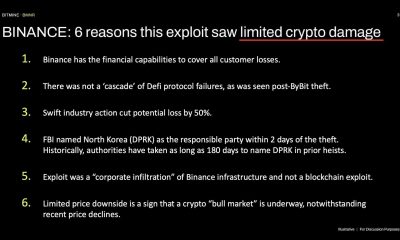
Selective disclosure is a way for a digital-credential to prove one fact without exposing everything else it contains.
A holder can show that a credential is genuine and that a single claim, such as being above an age threshold, is true, while name, address, and birth details stay hidden. The verifier still checks that a trusted issuer signed the credential.
What Is Selective Disclosure?
A normal identity document is all or nothing. Showing a card to prove age also shows a full name, address, and document number. Selective disclosure changes that design.
The credential stores each claim in a form that the holder can reveal or withhold, and the issuer's signature still covers the whole credential.
The idea matters for crypto because exchanges, wallets, and on-chain analysis apps increasingly ask users to prove something about themselves, such as residency, age, or a completed identity check.
Selective disclosure lets those apps ask for the one fact they need, not a full copy of a passport. Readers following crypto news Today I will notice that identity and compliance questions keep returning to the privacy debate.
How Does a Credential Prove Only One Fact?
The most common approach in current standards uses hashed claims. At issuance, each claim receives a random salt, and the issuer signs a list of hashes of those salted claims instead of the plain values.
The holder keeps the salted claims in a wallet. When a verifier asks for one fact, the holder sends the signed credential and only the matching salted claim.
The verifier hashes it, confirms the result sits in the signed list, and checks the issuer's signature.
Claims that stay hidden stay hidden, because a hash with a random salt cannot be guessed from the outside.
A second step called key binding proves the person presenting the credential holds the key it was issued to, which stops a copied credential from being replayed.
The format is described in the public work on selective disclosure for signed tokens and fits into the broader verifiable credentials data model.
What Is the Difference Between Hiding Claims and Proving Statements?
Two ideas are easy to mix up. Hiding claims means the holder withholds some fields and reveals others.
Proving a statement means the holder shows that something is true about a hidden value, such as an age being above a threshold, without revealing the value itself.
The hash approach handles the first case well. For the second, the issuer often has to prepare a ready-made claim in advance, such as a flag that says the holder is above a given age.
That adds work for the issuer and grows the credential when many thresholds are needed.
A second family of designs uses signatures that support zero-knowledge proofs. The holder builds a fresh proof from the signature each time, so thresholds and ranges can be proven without the issuer preparing each one.
These designs are more flexible but less widely standardized, and reports describe them as still emerging in production use.
Where Does Selective Disclosure Appear in Crypto?
Exchange onboarding: A user could prove a completed identity check without handing over the underlying documents.
Access to restricted products: An app could confirm residency or eligibility without storing personal files.
Compliance sharing: Firms exploring privacy-preserving checks study how limited disclosure could serve travel-rule-style requests.
Proof of personhood: A wallet could show that one human controls it without tying it to a legal name.
Reputation and credentials: A holder could prove a qualification or membership on-chain without exposing the full record.
A broader view of related privacy design appears in Ethereum's official explainer on decentralized identity.
What Does the Evidence Show About Selective Disclosure?
Claim | Status |
Hashed, salted claims let a holder reveal chosen fields while the issuer signature still verifies | Official/Confirmed |
Key binding stops a copied-credential from being replayed by someone else | Official/Confirmed |
Hash-based designs are the ones used in current standards, including mobile driver's licences | Reported |
Signature schemes with zero-knowledge proofs allow flexible predicate proofs and fresh proofs per use | Reported |
Zero-knowledge signature schemes are widely deployed in production | Not verified |
Selective disclosure makes presentations fully untraceable | Not verified |
Why Is Selective Disclosure Not Complete Privacy?
The technique reduces what is shared, but it does not remove every risk. Several limits are worth knowing:
Linkability. With hash-based designs, every presentation carries the same signed commitment, so two verifiers can match the presentations. Fresh credentials per use, or signature schemes with randomized proofs, reduce this.
Issuer trust. A verifier still has to trust the issuer, and the issuer may learn when a credential is used if verification goes through it.
Over-asking. A verifier can simply demand more fields than it needs. The technology allows minimal sharing but does not force it.
Metadata. Timing, device, and wallet details can still identify someone even if the claim is minimal.
Future cryptography. Some zero-knowledge signature schemes rely on assumptions that may not survive quantum computers, while hash-based designs can use post-quantum signatures.
Readers who track Crypto Price Predictions 2026 coverage sometimes treat identity projects as one group, but their trust models differ widely, so a market view cannot replace a technical read.
What Are the Main Risks for Crypto Users?
Phishing for full disclosure. A fake verifier can ask for every field, so the guide on crypto phishing protection is worth reading before approving any request.
Social engineering. Scammers can exploit identity checks, as described in the report on AI crypto scams.
Wallet compromise. A stolen credential key can let someone present the credential as the holder.
Weak implementations. A buggy smart contract or verifier can leak more than intended.
Overclaiming. A product that promises complete anonymity should be treated with caution.
What Safety Checks Apply Before Sharing a Credential?
Read exactly which fields the verifier requests before approving.
Confirm the verifier's identity through an official channel.
Prefer requests for a derived fact, such as an age flag, over raw birth details.
Check whether the wallet shows what will be revealed before signing.
Avoid reusing the same credential across unrelated services when fresh copies are available.
Keep recovery details offline and never share credential keys.
Review audits and documentation for the wallet and verifier, using the guide on verifying a smart contract audit.
Further reading on identity, privacy, and market structure is collected in the Cryptocurrency Blogs section.
Final Thoughts
Selective disclosure turns a credential from a document into a set of options. The holder decides which fact to show, the issuer's signature keeps it trustworthy, and the verifier gets an answer without a full file.
The approach is real and already used in some digital identity systems, but it does not guarantee anonymity, and the stronger zero-knowledge designs are still maturing.
The practical habit is simple: check what a request asks for, share only that, and treat any claim of perfect privacy as unproven. More crypto education is available on the homepage.
Disclaimer: This article is for educational purposes only and is not financial, legal, or investment advice. Digital identity systems and standards are changing. Always confirm details with official documentation before sharing personal data.