Tokenized Treasury Fund: How It Differs From a Bank Deposit

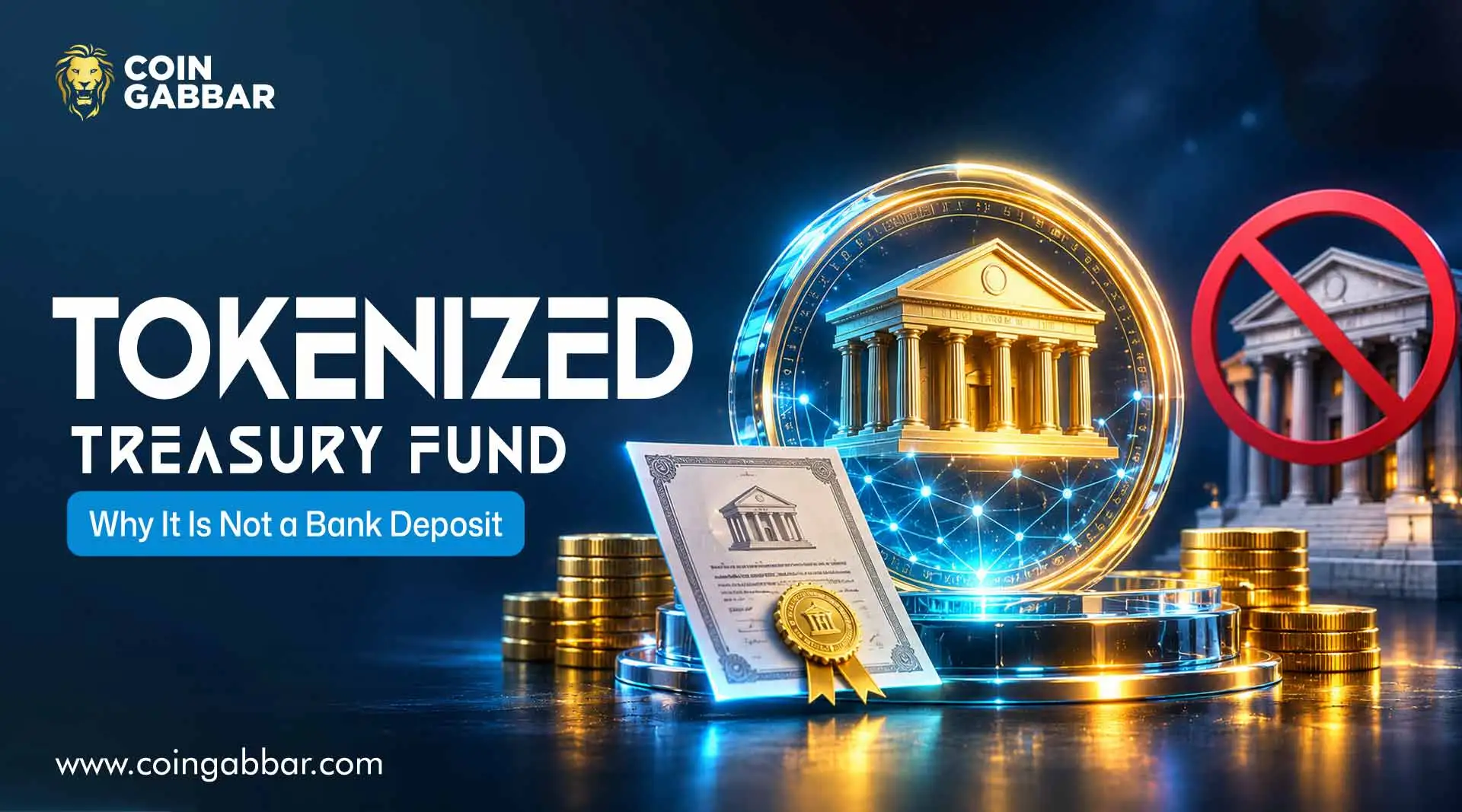
Tokenized Treasury Fund Structure, Investor Rights, and Deposit Risks
A tokenized treasury fund holds short-term US government debt and records each investor's share as a token on a blockchain. A bank deposit works differently, because the money becomes a claim on the bank itself.
The two often get compared since both can earn interest and both feel low-risk. The gaps in protection, access, and eligibility are wide, though, and they decide which product fits which job.
What Does a Tokenized Treasury Fund Actually Mean?
Treasury bills, or T-bills, are short-term loans to the US government that mature in one year or less. A tokenized version puts a claim on those securities onto a blockchain as a digital token.
Chainlink's tokenized treasuries explainer describes the most common design. A fund owns the government securities, and each token stands for one share of that fund.
Smart contracts do much of the back-office work in a tokenized treasury fund. These small programs run on their own on a blockchain, issuing tokens, crediting interest, and processing redemptions without a person approving each step.
What Is a Bank Deposit and How Is It Protected?
A bank deposit is money placed in a checking, savings, or similar account. The bank owes that balance back to the depositor and uses the funds in its own lending and investing.
In the US, the FDIC covers deposits up to $250,000 per depositor, per bank, for each ownership category. The FDIC deposit insurance rules also list what falls outside that cover, including Treasury bills and crypto assets.
How Does a Tokenized Treasury Fund Work Behind the Scenes?
The process starts offchain. An asset manager buys actual T-bills and hands them to a qualified custodian, a regulated institution whose job is to keep the assets safe. Tokens are then created on a blockchain, one for each share backed by those bills, and sold to investors.
Holders can later burn tokens, meaning permanently remove them, and receive cash value back. Pricing follows the Net Asset Value, or NAV, which is the fund's per-share value based on what it owns.
Chainlink notes that the model depends on constant checks between custodian records and the blockchain. Proof of Reserve, an automated audit of the backing assets, is built for that job.
Weekend pricing is another weak spot, and always-on tokenized asset pricing aims to close that gap for lending markets.
How Does Ondo's OUSG Work in Practice?
The official OUSG page describes a tokenized treasury fund that gives qualified purchasers exposure to short-term US Treasuries. Minting and redemption run around the clock, including weekends and bank holidays.
As of November 2, 2026, the page showed about $317.71 million in underlying assets and a 30-day yield of 3.74%. Ondo adds that yields reflect past performance and can change.
Instant minting and redemption start at $5,000. Buyers must be accredited investors and qualified purchasers, a US legal category covering investors with large holdings.
One sweep fund held 47.79% of assets, a BlackRock fund held 32.16%, and smaller fund and cash-like positions made up the rest.
Ondo also launched seven portfolios on Solana at the end of October.
Tokenized Treasury Fund vs Bank Deposit: Main Differences
| Feature | Tokenized treasury fund | Bank deposit |
| What is held | Share in a fund that owns Treasury securities. | Claim on the bank |
| Deposit insurance | Not a deposit, so no FDIC cover | FDIC covers up to $250,000 per depositor, per bank, per category. |
| Return | Variable, tied to Treasury yields and fund costs | Rate set by the bank |
| Access | Some products mint and redeem 24/7. | Transfers often settle on banking days. |
| Who can buy | Often limited to eligible investors | Open to most individuals and businesses |
The core split is the type of claim. A deposit is a loan to the bank, backed by insurance up to a limit. A fund share is ownership of assets, with no insurance but a pool of short-term government debt underneath.
What Are the Main Risks to Consider?
-
No deposit insurance: FDIC cover stops at deposits. A tokenized treasury fund is an investment, so if the custodian or fund structure fails, holders have no insurer to fall back on.
-
Code and data errors: A bug in a smart contract, a crypto wallet slip, or a wrong price feed can disrupt minting, redemption, or valuation, even when the T-bills underneath are perfectly fine.
-
Access limits: Plenty of these products only admit accredited or qualified investors. Rules also change from country to country, and a buyer who qualifies today may not tomorrow.
-
Liquidity dependence: Instant redemption usually leans on stablecoin liquidity or partner funds. In a stressed market, that support could thin out quickly.
-
Variable yield: A 30-day yield only shows what the fund earned recently. It moves with Treasury rates and costs, and it promises nothing about next month.
Is a Tokenized Treasury Fund Worth Watching Right Now?
Tracker figures differ, but most place the segment in the mid-teens of billions of dollars during 2026. That makes it one of the largest corners of the on-chain real-world asset market.
Banks are showing interest too. A recent agreement between a digital asset group and a banking technology firm aims to help banks offer tokenized assets more easily.
The practical question is purpose, not a winner. A deposit stays simpler for insured everyday savings, while a tokenized treasury fund may suit treasury teams or DeFi users who want treasury exposure with round-the-clock settlement.
The OUSG mix also shows that a token can hide concentration. Nearly half the assets sat in one sweep fund, so the details behind the token matter as much as the token itself.
Conclusion
A tokenized treasury fund and a bank deposit both aim for low-risk returns, yet they rest on different legal foundations. One is a bank liability with FDIC cover, while the other is a share in a Treasury-backed fund without that cover.
What stands out about the tokenized treasury fund model is access, with round-the-clock minting and redemption on some products. What remains uncertain is how rules, liquidity, and yields will behave under stress.
The fine print is the next place to look: fund documents, eligibility terms, the custodian, and the redemption rules.
Disclaimer:
This content is for information only and is not financial, investment, or legal advice. Crypto and tokenized assets carry risk, including loss of capital. Always research independently and consult a licensed professional before acting.