Vitalik Buterin Flags AI Security Risks: Are Crypto Wallets Safe?

Why Is Vitalik Buterin Warning About AI Security Risks at Devcon?
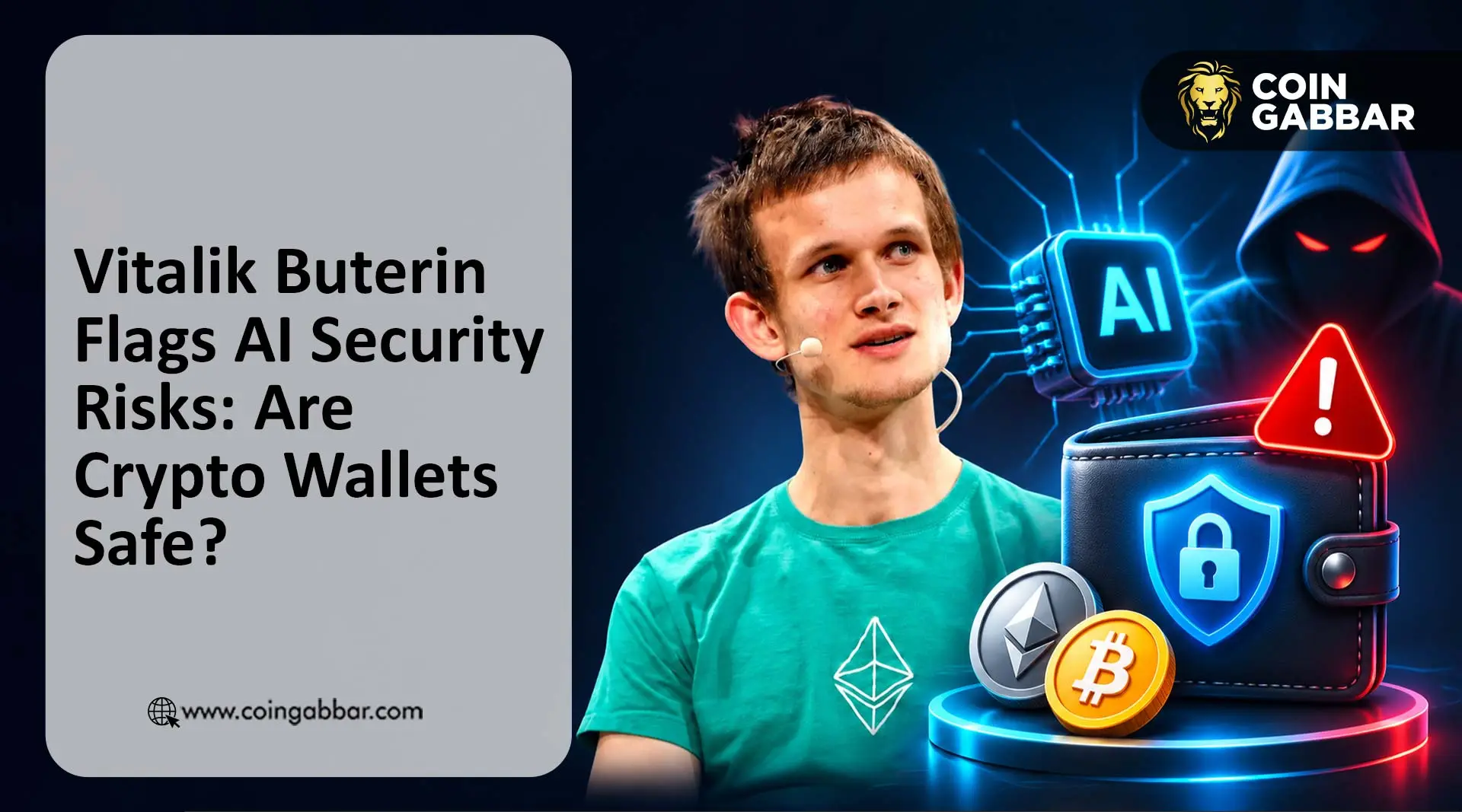
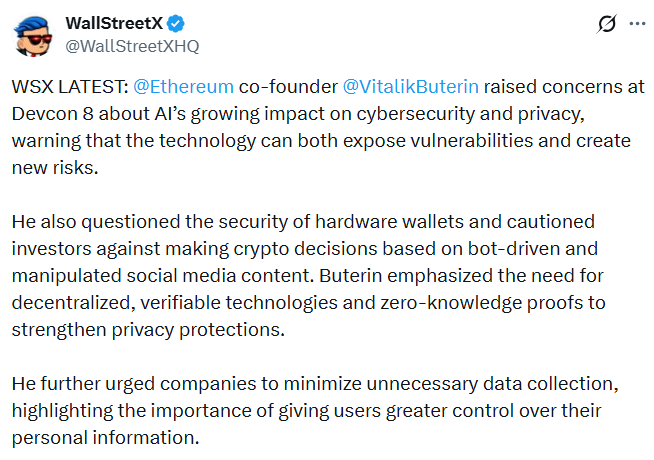
Ethereum co-founder Vitalik Buterin has raised fresh concerns about AI security risks at Devcon 8 in Mumbai, according to a WallStreetX post on X. He said AI can expose software weaknesses while also creating new dangers for users.
The Ethereum Foundation event runs from 3 to 6 November 2026 at Jio World Centre. For speaker lineups and ticket details, see our Devcon 8 guide.
The Vitalik Buterin AI warning covers more than one threat. It touches AI cybersecurity, wallet safety, social media manipulation and digital privacy protection. Each point leads back to one question: who controls user data and trust?
What Did the Ethereum Founder Say About AI Cybersecurity and Privacy?
During the talk, Buterin highlighted five key concerns:
AI can find vulnerabilities, but it can also create new risks.
Hardware wallet security deserves a closer look.
Investors should avoid crypto decisions based on bot-driven or manipulated posts.
Decentralized technology and zero knowledge proofs can strengthen privacy.
Companies should collect less data and give users more control.
One caveat matters. The post is a short summary, not a transcript. It does not list the exact hardware wallet concerns, so those details remain unconfirmed until the full talk is published.
Are Hardware Wallets Still Safe? Understanding Crypto Wallet Risks
Hardware wallet security is the most direct point for everyday holders. The summary says Buterin questioned it, but it gives no technical detail.
This is not his first caution on wallets. In October 2026, The Block reported that he urged the industry to take AI-accelerated math risks to cryptography seriously. He also cautioned against rushing to move funds into new wallets.
That balance is useful. Crypto wallet risks are real, yet panic moves can create new mistakes. In 2024, he also argued against relying only on hardware wallets and favoured multisig setups.
Can Bot-Driven Posts Weaken Crypto Investor Security?
Buterin cautioned investors against decisions shaped by bot-driven and manipulated social media content. For crypto investor security, that is a practical warning. Fake hype can spread fast.
Analysis: AI lowers the cost of producing convincing posts at scale. That reasoning is ours, not a claim from the talk. Checking official announcements, filings and blockchain explorers remains the safer habit.
How Do Zero Knowledge Proofs and Less Data Collection Fit In?
Buterin pointed to zero knowledge proofs as a privacy tool. These proofs let someone verify a fact without revealing the underlying data. That supports crypto privacy and limits what AI systems can learn about users.
He also urged companies to cut unnecessary data gathering. Data collection risks grow when AI tools can process huge amounts of personal information. These AI privacy concerns explain why he keeps returning to user control.
For blockchain security, the lesson is simple. Build systems that users can verify, not systems they must simply trust.
Expert Opinion: What Should Readers Watch Next?
The data suggests this warning builds on earlier statements rather than changing course. His October and April remarks follow one pattern: reduce AI security risks through verifiable and local tools.
Key signals to watch include the full Devcon 8 recording, any response from wallet makers and follow-up posts from Buterin on X. Those could clarify what he meant on hardware wallets.
The main uncertainty remains the hardware wallet point. Without specifics, readers cannot tell whether it targets devices, firmware or user habits. The main user risks are AI-driven scams and exposed personal data, and no market data was tied to the remarks.
Conclusion
Buterin's message at Devcon 8 is clear. AI security risks are growing, and users need verifiable tools and stronger privacy. The hardware wallet details still need confirmation once the full talk is out.
Readers tracking crypto news today and verified cryptocurrency news should also watch how wallet makers respond.
YMYL Disclaimer: This article is for information only and is not financial advice. Crypto assets are volatile and carry risk. Do your own research before making any decision. Readers should also verify details from official sources, as information may change.






