What Are Privacy Coins? Inside 2026's Best-Performing Sector


Why Are Privacy Coins Suddenly Leading the Crypto Market?
Privacy coins are cryptocurrencies made to hide who sends money, who gets it, and how much moves. Most blockchains, Bitcoin included, are open books, and anyone with a block explorer can follow a payment from wallet to wallet. That’s why interest in blockchain transaction privacy keeps growing.
In 2026, that interest turned into real money. A data report from September 7, 2026 showed the privacy crypto sector up 213% since Bitcoin’s October 6, 2025 peak, with its total value rising from $7.1 billion to $33.6 billion in a year. Zcash and Monero lead these privacy-focused cryptocurrencies.
What Are Privacy Coins, and How Do They Work?
Privacy coins use math to cut the link between a wallet and the person behind it. The network still checks every payment, but it doesn’t need to see every detail. Four tools do most of the work.

Four Tools Behind Confidential Cryptocurrency Transactions
Ring signatures mix the real sender with decoys.
Stealth addresses create a fresh address for each payment.
Confidential transactions hide the amount.
Zero-knowledge proofs (zk-SNARKs) prove a payment is valid without showing the details.
Privacy isn’t perfect, though. Studies point to leaked metadata, reused addresses, timing patterns, and exchange records as weak spots. Mixing open and shielded Zcash addresses can also shrink the anonymity set, which is simply the crowd a payment hides in.
Privacy Coin Market Performance: Why 2026 Favored This Sector
The rally wasn’t a one-coin story. Zcash made up about 62% of the sector’s value in the September 7 snapshot, yet the rest of the group still rose roughly 85% this year. Bitcoin stayed about 36% below its October 2025 high. These are dated snapshots, not live prices.
Crypto financial privacy also became a bigger worry as tracking tools improved and exchanges asked for more ID. Plenty of holders now see anonymous cryptocurrencies as protection from constant on-chain tracking, while regulators see the same features and worry about crime.
Best Privacy Coins in 2026: Zcash vs Monero
Zcash (ZEC)
What it is: A privacy coin that started from Bitcoin’s code in 2016 and lets users choose between open and hidden payments. It uses the ticker ZEC.
Features: Shielded addresses use zk-SNARKs to hide sender, receiver, and amount, while transparent addresses work like Bitcoin. Encrypted memos can ride along with shielded payments.
Token utility: ZEC pays fees and moves value, and miners earn it as a reward. Supply is capped at 21 million coins.
Roadmap: Updates point toward better wallets and wider shielded use. Timing can shift, so official channels should confirm plans.
Risks: Mixing open and shielded transfers weakens privacy, and several exchanges have restricted the coin. Price swings are sharp.
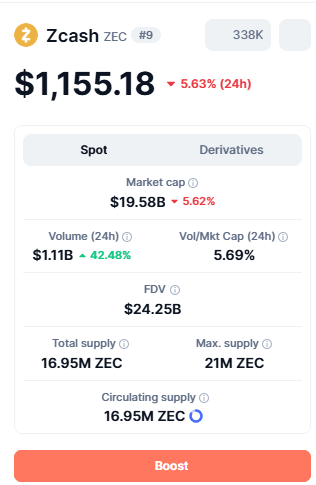
Monero (XMR)
What it is: A digital currency built for privacy from day one, launched in 2014, with every payment hidden by default. It uses the ticker XMR.
Features: Ring signatures, stealth addresses, and RingCT hide the sender, receiver, and amount. Nothing needs switching on.
Token utility: XMR pays fees and works as everyday cash. A small, steady tail emission keeps paying miners, so supply grows slowly.
Roadmap: Developers have discussed an FCMP++ upgrade to widen the crowd a payment hides in. It’s planned, not finished.
Risks: Many large exchanges have delisted it, cutting liquidity. Regulators also dislike default privacy because it blocks tracking.
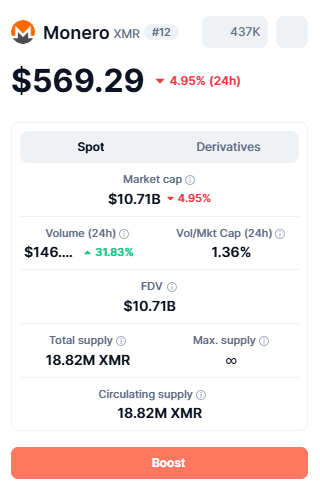
Dash (DASH)
What it is: A payment coin from 2014 built for fast, cheap transfers, with privacy as an optional extra. It uses the ticker DASH.
Features: InstantSend confirms payments in seconds, and optional CoinJoin mixing, once called PrivateSend, blends coins from several users.
Token utility: DASH pays for transfers and acts as collateral for masternodes, which are servers that run network services.
Roadmap: Plans lean on Dash Platform for apps and usernames. Progress should be checked on official pages.
Risks: Optional privacy gives a smaller crowd than Monero, and reports say Indian exchanges were told to stop handling it.
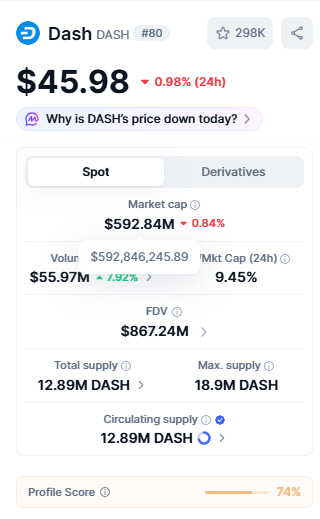
Decreased (DCR)
What it is: A community-run coin launched in 2016 where holders vote on changes, better known for governance than privacy. It uses the ticker DCR.
Features: Mining and staking votes work together to secure the chain, and StakeShuffle, built on CoinShuffle++, offers optional coin mixing.
Token utility: DCR pays fees and buys voting tickets, which earn rewards and give holders a say in the project.
Roadmap: Plans follow governance proposals, so priorities can change when ticket holders vote. Recent proposals show what’s currently planned.
Risks: Liquidity is thin, optional privacy offers less cover than Monero, and few people follow the project.
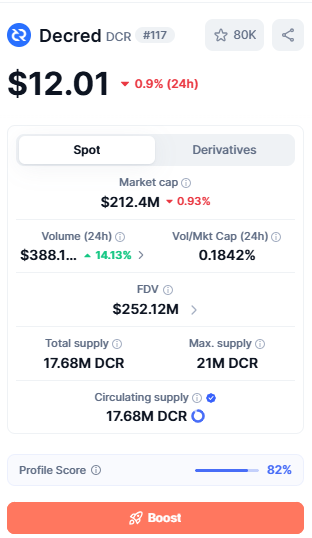
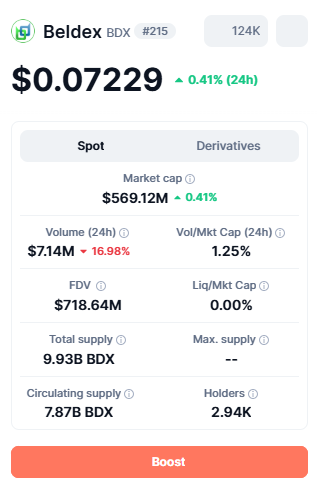
Beldex (BDX)
What it is: A privacy-focused ecosystem built around the BDX coin, covering payments, messaging, and browsing. It uses the ticker BDX.
Features: Encrypted chat, private browsing, and hidden payments sit under one brand, according to project materials.
Token utility: BDX covers transactions and masternode staking, where operators earn rewards for supporting the network.
Roadmap: Plans focus on growing its apps and users. These are stated goals, not confirmed results.
Risks: Liquidity is thin, few large exchanges list it, and independent research is limited. Prices can swing on small trades.
So what separates Zcash vs. Monero? Zcash gives a choice between open and shielded, while Monero makes everyone private by default. Neither is the best privacy coin for every case, because default privacy creates more friction with regulators, and optional privacy leaves a smaller crowd to hide in.
Are Privacy Coins Legal? India FIU Privacy Coin Ban Explained
Privacy coin legal status changes from country to country. In January 2026, reports said India’s Financial Intelligence Unit told registered exchanges to stop deposits, withdrawals, and trading of Monero, Zcash, and Dash.
That India FIU privacy coin ban works mostly through exchange rules, since reports say no separate national law names these coins. Anyone following India crypto news or crypto news today should check official notices.
Final Thoughts: Are Privacy Coins Here to Stay?
Privacy coins are making their way into popular discussions about cryptocurrencies, as the Privacy Coin 2026 boom brought this technology to the attention of wider audiences.
In order for significant prosperity to be experienced, there has to be true use, high liquidity, and well-defined regulations. Readers must monitor the price situation and the legal status at official resources before taking any actions.
Disclaimer
This article is for information only and isn’t financial, legal, or tax advice. Crypto assets, especially privacy coins, carry high risk and can lose value quickly. Readers should do their own research and talk to a licensed professional before making any decision.