Nillion NIL: Does Private Compute Utility Support Token Value?

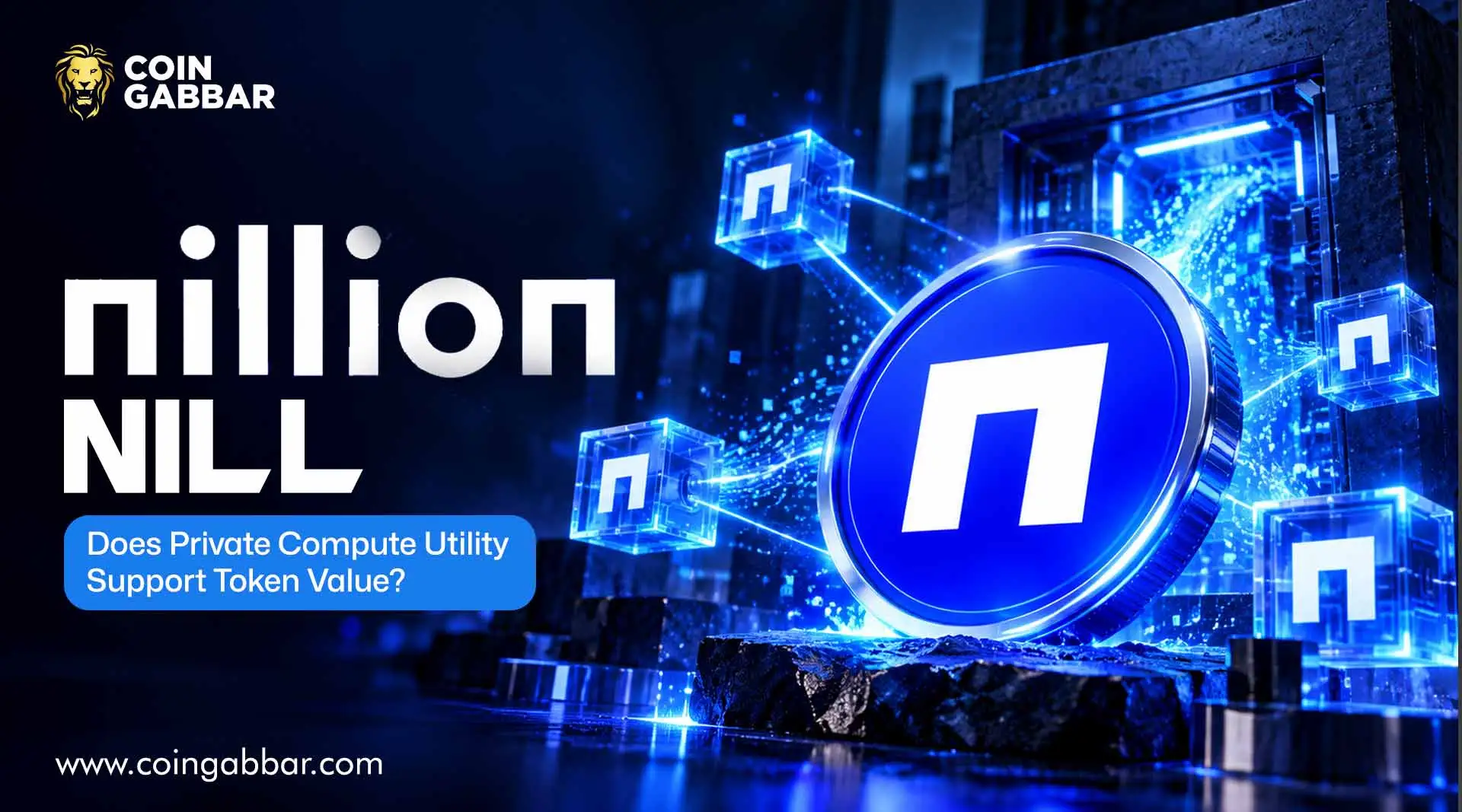
Nillion NIL and the Gap Between Private Compute Demand and Token Price
Can hidden data give a token real value? That is the core question around Nillion NIL, the native token of a network that calls itself a blind computer.
Blind computing lets a network process information without ever seeing it. The project says NIL pays for that work, rewards the machines that run it, and backs the system through staking. In 2026, the token also moved from a Cosmos-based chain to Ethereum.
How Does Nillion's Blind Computer Work?
Ordinary cloud services decrypt data before using it. That moment of exposure is where leaks usually happen.
The Nillion NIL network tries to avoid this. The project says its stack combines multi-party computation, secret sharing, homomorphic encryption, and trusted execution environments. Put simply, data is split or encrypted so that no single machine sees the whole picture, yet useful calculations still run.
Multi-party computation is a method where several machines solve a problem together, each holding only a piece of the input.
The project frames Ethereum (ETH) as the world computer that guarantees correct execution and itself as the blind computer that guarantees privacy. That is the project's own pitch, not an independent verdict.
What Does the NIL Token Actually Do?
The Nillion 2.0 update from October 20, 2025 is the clearest look at where NIL fits in the network. By that post’s account, every action on the network has to be paid for in NIL. That covers storing data, running a computation and handling a private AI request.
This payment loop is what gives Nillion NIL its job. Each group of participants touches the token differently:
-
Developers pay NIL every time they run a workload.
-
Node runners set their own minimum price, based on spare capacity and how busy the network is.
-
Checkers confirm the network is doing what it claims.
-
Staking and reputation scores are meant to keep bad operators in check.
The same post says governance is under exploration. Holders could eventually vote on staking rewards, emission schedules, and fee structures. That is a stated plan, not a live system.
Utility sits at the center of the Nillion NIL value case. If real customers pay for private compute, demand has a clear source. If not, utility stays theoretical.
How Did the Nillion NIL Migration Work?
The official migration guide, dated March 4, 2026.
It explains how NIL is leaving nilChain and becoming an ERC-20 token on Ethereum. Key details from the guide:
| Item | Detail From the Official Guide |
| Old network | nilChain (Cosmos-based) |
| New network | Ethereum (ERC-20) |
| Swap ratio | 1:1 |
| Ticker | NIL |
| Planned nil chain halt | March 23, 2026, 13:00 UTC (tentative) |
| ERC-20 contract | 0x7Cf9a80db3B29eE8efE3710AadB7b95270572d47 |
After nilChain halts, holders claim Nillion NIL through a Merkle-claim contract on Ethereum. A Merkle proof shows entitlement.
A signature from the original Cosmos key proves control of the account. The project says claims stay permissionless after the old chain shuts down.
The halt time was marked tentative, so readers should confirm final steps and the contract address on the official page.
Copycat tokens are common after any migration. The project links an audit report for the contract, but an audit is a code review, not a safety guarantee.
What Does Nillion NIL Tokenomics Show So Far?
This is where verified data runs thin. The official pages reviewed do not publish a full allocation table, vesting schedule, or total supply figure. None are quoted here.
The project does list the economic levers it was reviewing:
| Lever | Stated Aim |
| Emission | Decide how new NIL enters supply, inflationary or deflationary |
| Burns | Usage burns, slashing burns, and treasury buybacks considered |
| Staking | Define minimum thresholds for participation |
| Rewards | Balance yield against sustainable token supply |
| Sustainability | Use network revenue to reduce reliance on emissions |
| Gas | Two-way gas abstraction for predictable costs |
| Governance | Holder votes on economic parameters |
The project said it would publish full models later. Until final numbers appear, any value estimate for Nillion NIL rests on assumptions.
Market cap and fully diluted valuation (FDV) also cannot be stated without a verified supply figure.
Market cap uses circulating supply, while FDV uses total supply. Readers new to the topic can compare howtoken unlock schedules change supply pressure in other projects.
How Is Staking Changing With Blacklight L1?
A Blacklight L1 migration post published on September 26, 2026 carries the latest staking details. Blacklight L1 nodes help sealed Covenants stay locked until a set condition is met. Each node holds one encrypted share, so no operator can rebuild the payload alone.
The post lists these terms for Nillion NIL node operators:
-
Minimum stake stays at 70,000 NIL.
-
Rewards come from 0.5% annual inflation plus trigger fees.
-
Operators need ETH to pay gas on Ethereum.
-
Unstaking on the earlier L2 takes about an hour, and bridging back takes around nine days with no rewards in transit.
The post set Blacklight L1 mainnet for October 5, 2026. Readers should check the Blacklight page for the current status.
For Nillion NIL, the available data suggests two opposing effects. A 70,000 NIL stake ties up tokens while a node runs.
The 0.5% inflation adds new supply. Which effect wins depends on how many operators join. That is analysis, not a forecast.
What Did the Buyback Program Say?
On December 19, 2025, the project announced a buyback program. It said the Nillion Association would use part of its treasury in response to what it called an unauthorized liquidation of NIL by a former market maker.
The stated goal was to offset that sale and move NIL supply toward a sustainable level. The project said the program was not meant to engineer price moves. It also said it has no obligation to buy and may stop at any time.
The episode shows how a single supply event can matter for a token like Nillion NIL. Treasury actions also remain discretionary, a pattern seen in other treasury buyback programs.
What Are the Main Risks to Consider?
-
Missing supply data:The pages reviewed for Nillion NIL don’t include an allocation table or a vesting schedule, so there’s no way to measure dilution risk yet.
-
Unproven demand: Demand for Nillion NIL rests on people actually paying for the network. The project’s own disclosure says the token’s value isn’t guaranteed to stay stable or go up.
-
Plans, not products: Emission, burns and governance were all described as still under review.
-
Supply shocks: The buyback post itself talks about an unauthorized token sale.
-
Contract and claim risk: Fake tokens and phishing pages tend to show up around migrations. Good hardware wallet security habits and sticking to official links lower that risk.
-
Operator burden: Running a node takes 70,000 NIL, ETH for gas, always-on infrastructure and several days of bridging with no rewards.
-
Regulatory notice: The project’s disclosure says no EU authority has reviewed its marketing material.
Is Nillion NIL Worth Watching Right Now?
Nillion NIL has a clear thesis. Private computation needs a payment and security token, and NIL is built for that job. The project has also delivered visible changes, including the Ethereum move and the Blacklight L1 plan.
What is missing is proof of paid demand and final tokenomics. Those two items will likely decide whether the thesis holds. Readers researching Nillion NIL can track supply data, node participation, and fee usage on official channels. None of that predicts price.
Conclusion
Nillion NIL is a utility token tied to private computation, staking, and node rewards. The project has confirmed the move to Ethereum, a 70,000 NIL stake for Blacklight L1 nodes, and a treasury-funded buyback.
The clear role inside the network's cost model stands out. Supply data, final emission rules and real paid usage remain uncertain. Next, readers should review the official pages, verify the contract address, and check for updated tokenomics before drawing conclusions.
Disclaimer:
This article is for information only and is not financial advice. Crypto assets are volatile and can lose value. Readers should do their own research and consult a licensed advisor before making decisions.