Remittix Presale: $0.46 Dream or Launch-Day Trap for RTX Buyers?


The Remittix Presale is approaching its scheduled November 24, 2026, launch, but the biggest question is no longer how much the project has raised. It is whether RTX can justify the $0.46 price expectation once buyers enter the open market.
The project has led to PayFi expansion, wallet services and an Earn pilot. However, different published pages show conflicting RTX prices and contract addresses. As the launch date draws closer, these details may become more important than promotional goals.
Remittix Presale News: Opens Wallet Address Change Requests
Remittix is now accepting wallet address change requests from users whose wallets have been compromised or lost.
Affected users can email the team, which says it will guide them through the next steps. Remittix has not yet shared verification details or deadlines.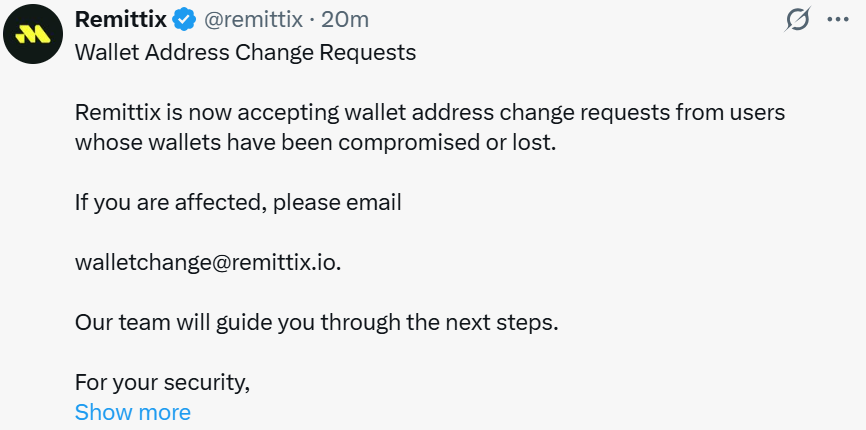
Source: Data From X
What to Watch When RTX Begins Trading in First 24 Hours
The first 24 hours could give a good sense of how the market values RTX beyond its presale campaign.
Watch trading volume, buy-sell balance, order-book depth and price spreads. A quick spike in price on low volume might not signal sustainable demand.
Remittix Presale: Can It Generate Demand Beyond Speculation?
The long-term interest will be determined by whether users return to the platform after testing the services.
Social media attention or presale fundraising results may not be as strong proof of adoption as repeat transactions, active wallets, payment volume, and user retention.
Remittix Presale Launch Countdown: What Happens on November 24?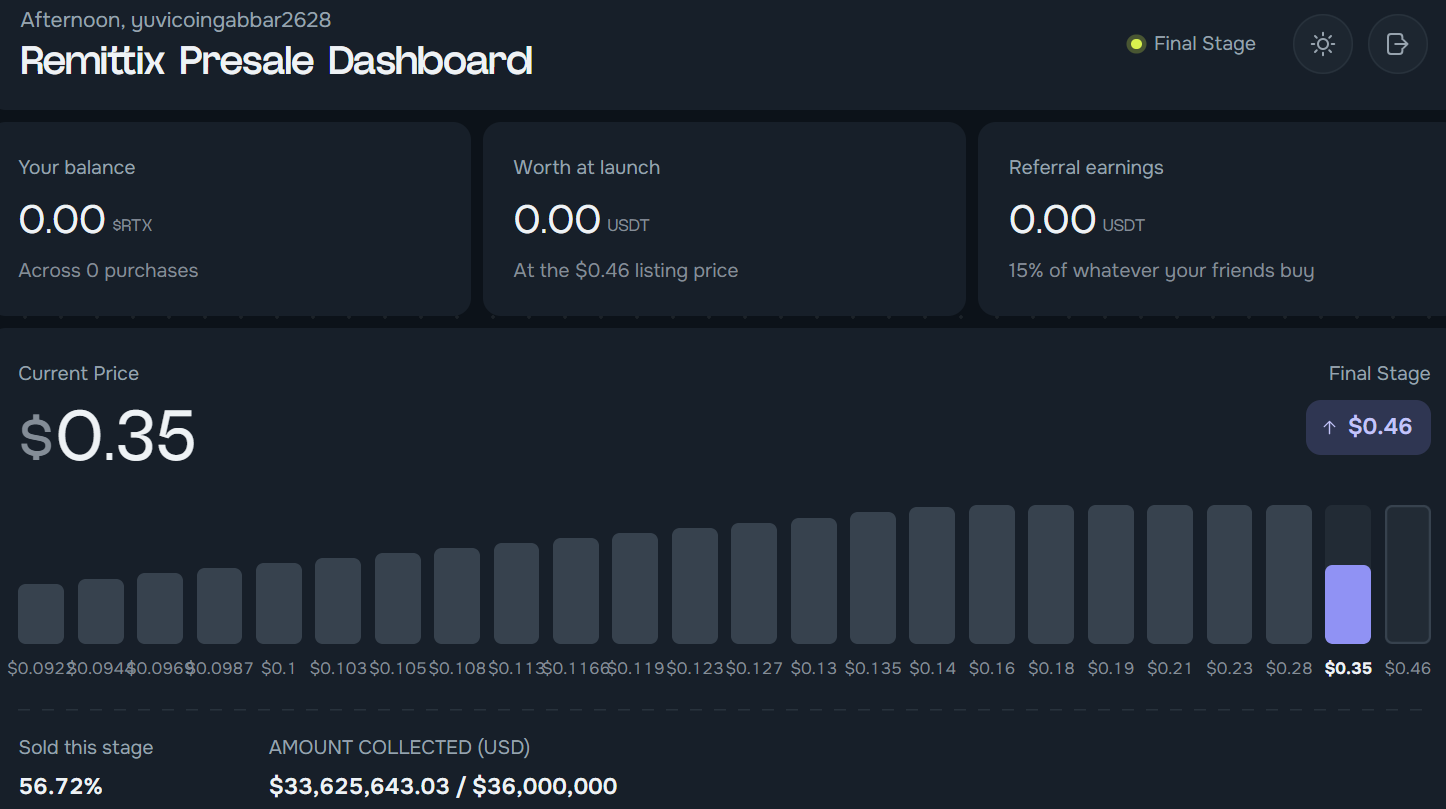
Remittix has announced November 24 as its planned RTX launch date. The project aims to connect cryptocurrency with traditional banking through crypto-to-fiat payments.
One important distinction: a scheduled token launch does not automatically confirm exchange trading. Buyers still need an exchange-issued announcement showing the trading pair, contract address and opening time.
Remittix PayFi: Can Product Growth Support RTX?
Remittix is building a payment platform intended to let users send crypto while eligible recipients receive local fiat currency through supported banking routes.
The project announced an expansion involving 41 additional fiat currencies on October 30. It also reported testing PayFi with invited users.
But announced currency support is not proof that every route is fully operational. Real adoption will depend on successful transfers, fees, settlement times and availability across supported countries.
Another question that matters for RTX holders is whether or not using PayFi requires holding or spending the token. The project’s documentation mentions utility like governance and potential staking, but the actual mechanism for demand is less clear and confirmed.
Remittix Price Prediction 2026: $RTX Targets From $0.10 to $1
Remittix price prediction has a few levels to watch for as the launch on November 24 approaches.
The $0.28 price of $RTX previously can be used as a guide and if selling pressure develops the market may test lower levels or if liquidity and demand improves move toward higher targets.
RTX Price Target | Change From $0.28 | Market Scenario |
$0.10 | -64.3% | Deep bearish |
$0.14 | -50% | Strong downside |
$0.21 | -25% | Bearish correction |
$0.28 | Reference | Starting benchmark |
$0.35 | +25% | Early recovery |
$0.40 | +42.9% | Bullish momentum |
$0.46 | +64.3% | Announced final-stage reference |
$0.50 | +78.6% | Extended rally |
$0.75 | +167.9% | High-growth scenario |
$1.00 | +257.1% | Aggressive long-term scenario |
These are hypothetical price scenarios, not guaranteed targets. The $0.46 figure has been promoted by the project as its final presale-stage price, but it should not automatically be treated as a guaranteed exchange opening price.
Token Claims Could Create Selling Pressure
The supplied token terms describe a claim period five days after launch. If the November 24 schedule and those terms remain unchanged, claims could begin around November 29. This is a conditional estimate, not a newly confirmed claim date.
The same documents list 750 million $RTX, or 50% of the stated supply, for the presale. Other project materials show different allocation figures, so the final distribution should be checked before relying on these numbers.
If a large number of tokens become transferable while liquidity is thin, early selling could put pressure on the price.
What Could Turn the $0.46 Dream Into a Trap?
The bullish case needs more than a launch countdown. Confirmed exchange listings, accessible token claims, transparent tokenomics and successful PayFi transfers could support market confidence.
The risks are equally important:
Conflicting published $RTX prices.
Different contract addresses across project materials.
No independently established exchange opening time.
Potential selling pressure after claims begin.
Limited independent evidence of large-scale PayFi usage.
The CertiK token review is one security reference, but an audit does not guarantee the safety of every product or future market performance. The reviewed profile also notes a centralization issue.
Expert View: Verify Before Chasing the Launch
Remittix has a clear payments-focused ambition, and its planned launch could bring greater attention to RTX. However, the $0.46 expectation needs to be separated from the price at which buyers can actually trade.
The key evidence to watch is a verified contract address, a consistent token price, exchange-issued listing details and proof of working payment routes. Without those details, chasing a launch target carries considerable uncertainty.
Disclaimer: This article is for informational and educational purposes only and is not financial advice. Crypto presales and newly launched tokens carry significant risks, including the possible loss of all invested funds. Verify current prices, contract addresses, token terms and exchange announcements independently.