Moonbirds BIRB Token: How to Verify Contract and Supply Data

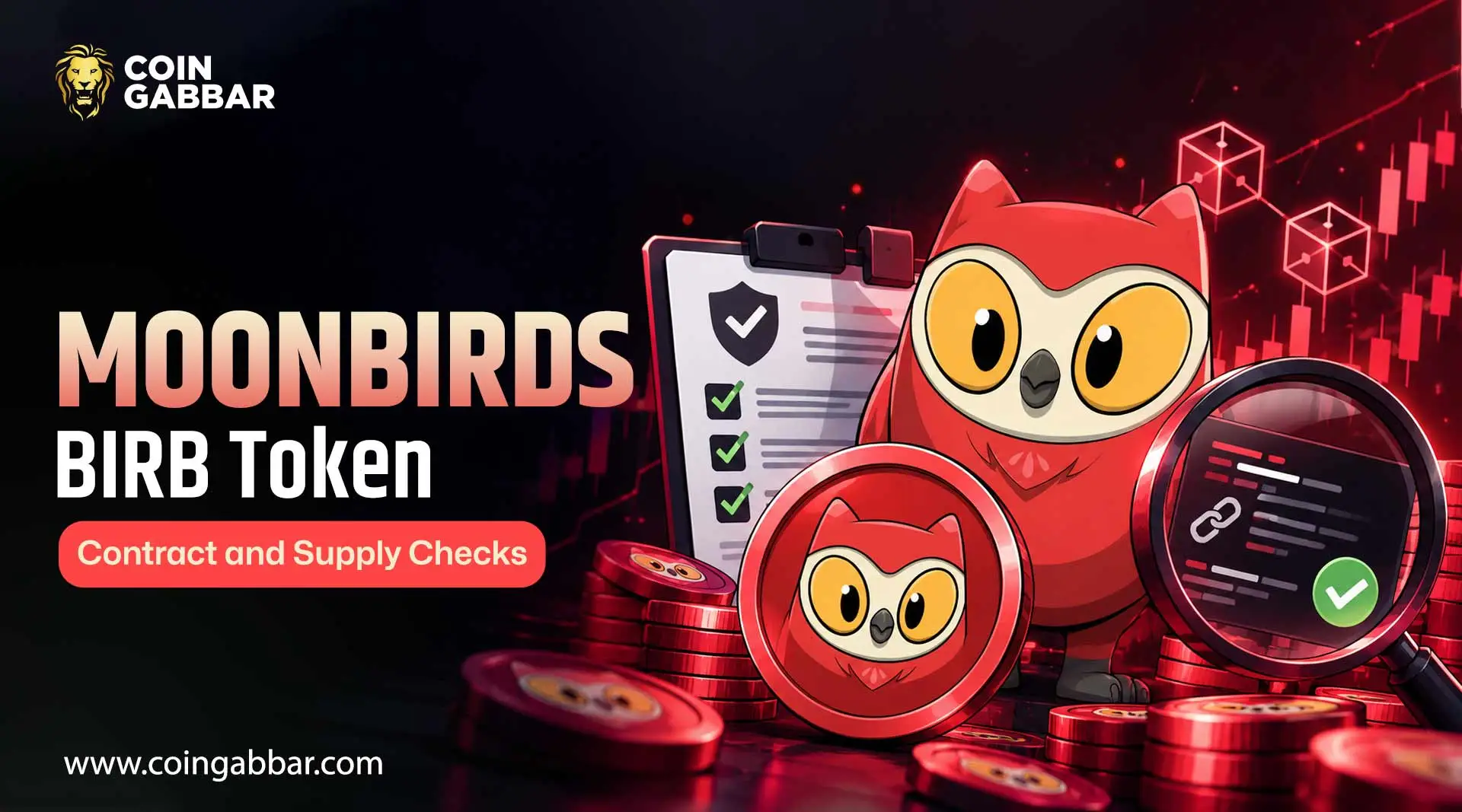
Moonbirds BIRB Token Contract Verification and Supply Risks
Where does a token's real data live, and how can anyone tell if the numbers are right? That question sits at the center of the Moonbirds BIRB conversation right now.
Moonbirds BIRB is the ecosystem token linked to the Moonbirds NFT brand. It launched on Solana on January 28, 2026, and data pages have shown mixed figures for chain, supply and price ever since.
What Is Moonbirds BIRB and Who Runs It?
Moonbirds began as a collection of 10,000 pixel-art owl NFTs on Ethereum, built on one of the Ethereum NFT standards. Its parent company today is Orange Cap Games, which also publishes the project's strategy paper.
That paper is called the Birbillions Thesis, released in January 2026. In it, the company says it wants to build a collectibles business that reaches $1 billion in annualized revenue, without relying mainly on trading fees or token emissions.
Here, Moonbirds BIRB acts as the token layer of that plan. The team also says unique wallets holding Moonbirds IP grew from roughly 10,000 to nearly 400,000 across Ethereum, Solana, and TON. These remain project claims, not audited results.
How Can Readers Verify the Moonbirds BIRB Contract?
A contract address is the unique public ID of a token on a blockchain. On Solana, the same idea is called the mint address. Scammers often copy a token's name and logo, so the address is the most reliable fingerprint.
Public data pages list the Moonbirds BIRB address as starting with G7vQW and ending with pKNwG. That pattern is a clue, not proof. The full string should be copied from the official site, then compared character by character.
The official Moonbirds website is the first stop.
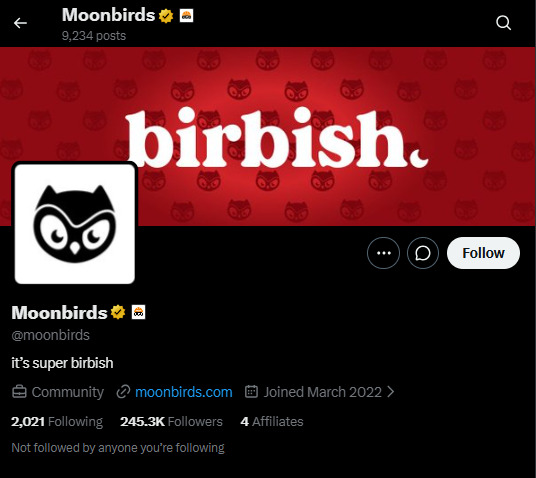
The project has also said that claim links and instructions come only through its verified social channels, so the official Moonbirds account is the second check.
A third step uses a blockchain explorer. Searching the address there shows the token's total supply, decimals, and holder activity. Decimals set how finely one token can be split. If the supply shown differs from the published figure, that gap needs an explanation.
The project's minting site also hosts a contract asset page, which can serve as one more reference point.
What Does the Moonbirds BIRB Supply Look Like?
Moonbirds BIRB comes with a fixed supply of 1 billion tokens, going by the tokenomics the project has published. Total supply means every token that exists, including those still locked or waiting to be claimed.
Circulating supply is different. It counts only tokens that can trade freely. At launch, public figures put that number near 285 million, or about 28.5% of the total. Live figures change over time and should be checked on the day of reading.
The published allocation breaks down as follows:
Allocation | Share | Tokens | Purpose |
Holder rewards | 27% | 270M | NFT holder claims |
Ecosystem partners | 12% | 120M | Partner growth |
Value chain incentives | 10% | 100M | Product chain rewards |
Liquidity | 8% | 80M | Market liquidity |
Innovation | 8% | 80M | Innovation reserve |
Investors and advisors | 25% | 250M | Early backers |
Team | 10% | 100M | Team allocation |
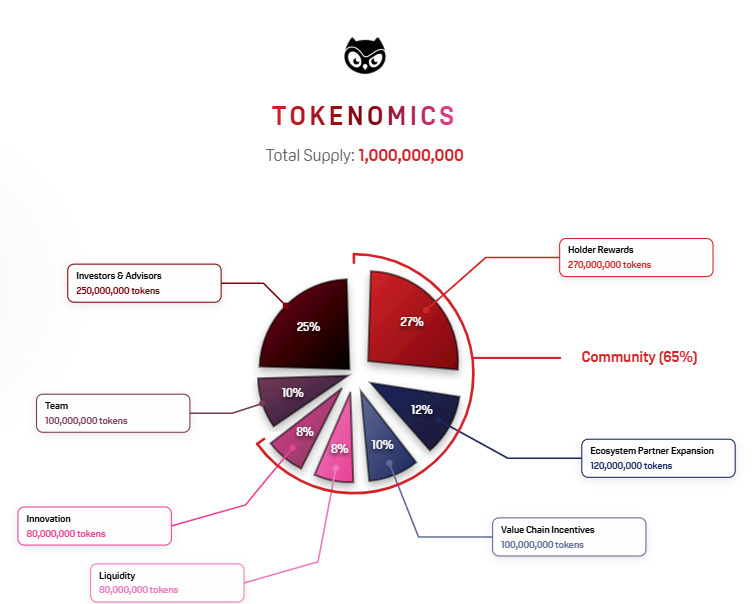
Read together, the figures show that 65% sits in community buckets, yet only 27% goes to Moonbirds NFT holders. Investors and advisors hold 25%, which is more than twice the team's 10%. Those splits come from the project's own published tokenomics, not from an independent audit.
How Does Vesting Affect Moonbirds BIRB Supply?
Token vesting is the schedule that controls when tokens become available. For NFT holders who join Nesting 2.0, the stated plan lets them claim 1/24 of their allocation on the 28th of each month for 24 months.
That drip-feed design can spread selling pressure over time, much like other token unlock schedules. It also means Moonbirds BIRB supply on the market can keep growing each month as claims unlock, so a fixed total supply does not mean a fixed circulating supply.
Market cap and FDV also depend on these figures. Market cap multiplies price by circulating supply. Fully diluted valuation (FDV) multiplies price by total supply. They are not the same number, and neither is a price target.
The project has also said its Birb game series will redistribute unclaimed community tokens, which shows how gaming rewards and token supply can interact.
Why Do Moonbirds BIRB Numbers Sometimes Disagree?
Some data pages list a different network or a much smaller supply for the token. Those entries may come from older records, copied templates, or confusion with similarly named assets.
If a project’s channels and the blockchain record disagree, the blockchain record wins. Any mismatch is a reason to stop and hold off on touching a wallet.
Long-term holders often think about hardware wallet security at this point, before they move any funds.
What Are the Main Risks to Consider?
A few things call for caution before anyone acts on this data:
Claims, not audits: The supply and allocation numbers come from the project itself. No independent audit has checked them, so they stay claims.
A goal, not a result: The $1 billion annualized revenue target is what the company hopes to reach. It hasn’t reached it.
Tokens keep unlocking: Monthly claims can feed new tokens into the market for the next 24 months.
Fake links: Airdrops attract fake claim pages and lookalike tokens, so a link only counts if it comes from a verified channel.
No audit confirmed: Research turned up no independent audit. Even if one existed, an audit does not guarantee safety.
Is Moonbirds BIRB Worth Researching Further?
Moonbirds BIRB sits at an unusual point between an NFT brand and a consumer product plan. The token's outlook may depend less on the ticker and more on whether the collectibles business delivers what the thesis describes.
That makes verification the first job. Supply, contract and unlock data are checkable today. Revenue claims can only be judged over time.
The same utility-versus-price question appears with Nillion NIL utility.
Conclusion: What Should Readers Check Next?
Moonbirds BIRB is the token side of a collectibles-focused plan from Orange Cap Games, launched on Solana on January 28, 2026.
The project's published tokenomics describe a fixed 1 billion supply, a 65% community share and 24-month claims for nested NFTs. What stays uncertain is the revenue goal, the live circulating supply and any independent audit.
Before acting on any data page, readers should compare the contract address with the official website and a blockchain explorer. Last reviewed: October 31, 2026.
Disclaimer:
This article is for information only and is not financial advice. Crypto assets are volatile and high risk, and readers should do their own research before making any decision.