Decentralized Crypto News: Latest DeFi, DAO, dApp & Web3 Updates
Follow decentralized crypto news covering DeFi, DAOs, dApps, smart contracts, blockchain governance, decentralized infrastructure, security, and Web3 developments. This hub helps readers understand important changes across decentralized blockchain ecosystems.










.webp)



What Is Decentralized Crypto News?
Decentralized crypto news explains developments across blockchain protocols and applications where distributed networks, smart contracts, or community governance play an important role. It can cover DeFi protocols, decentralized exchanges, DAOs, dApps, decentralized identity, DePIN, storage networks, oracle systems, and cross-chain infrastructure.
Not every crypto project is equally decentralized. Some use distributed blockchain networks while still depending on centralized companies, services, or administrators. Reliable coverage should therefore explain what is actually decentralized instead of using the term as a general marketing label.
Key Topics Covered in Decentralized Crypto News
- Decentralized finance and DeFi protocols
- Decentralized exchanges and liquidity
- DAOs and blockchain governance
- Decentralized applications and dApps
- Smart contracts and protocol upgrades
- Decentralized identity solutions
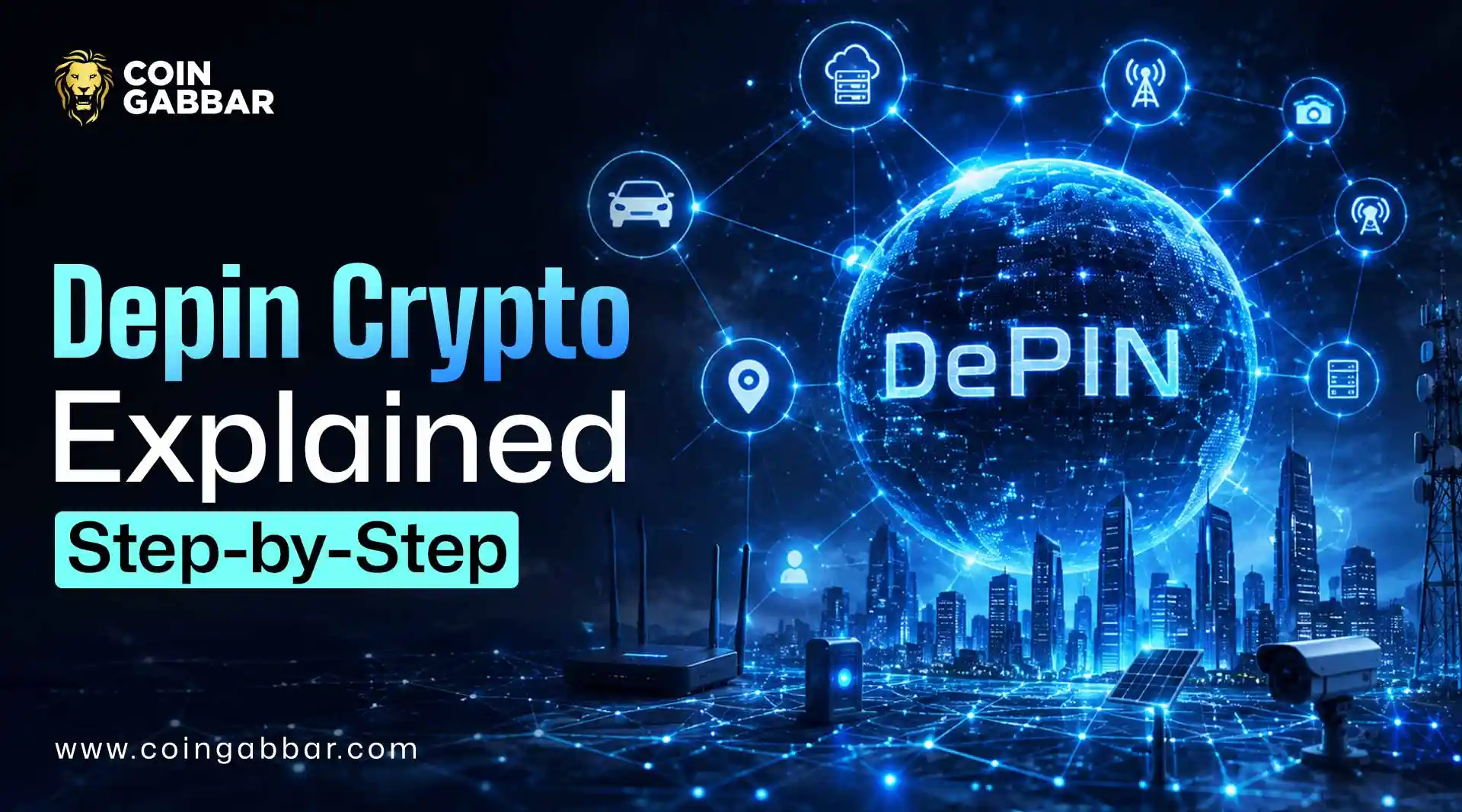
- DePIN and decentralized infrastructure
- Decentralized storage and computing
- Oracle and blockchain data networks
- Cross-chain and interoperability protocols
- Non-custodial blockchain infrastructure
- Proof-of-work and proof-of-stake networks
Why Decentralized Crypto News Matters
Decentralized blockchain developments can affect how people use financial applications, manage digital assets, participate in governance, and interact with online services. News about a protocol upgrade or security incident can be important even when it does not immediately affect a token's price.
Following this type of coverage helps readers understand the technology, governance, adoption, and risks behind decentralized projects instead of focusing only on market movements.
Understanding DeFi and Blockchain Developments
DeFi news can cover lending protocols, decentralized exchanges, staking services, liquidity pools, stablecoins, and other applications built with smart contracts. These developments can change how users access blockchain-based financial services.
Readers should check whether a protocol is live, under development, tested, or only announced. This distinction is important when evaluating new decentralized applications.
Following DAO Governance and Community Decisions
DAOs use blockchain-based governance systems to allow participants to vote or contribute to decisions about protocols, treasuries, and ecosystem development. DAO news can include proposals, voting results, treasury decisions, delegation systems, and governance upgrades.
Governance models can differ between projects. A useful news report should explain who can participate, how decisions are made, and whether approved decisions are executed on-chain.
Tracking dApps and Smart Contract Development
Decentralized applications, or dApps, use blockchain networks and smart contracts to provide services across areas such as finance, gaming, marketplaces, identity, and infrastructure.
News about dApps can include new launches, smart contract upgrades, integrations, security reviews, user activity, and support for additional blockchain networks. For more focused coverage, readers can explore CoinGabbar's dApps news section.
Decentralized Crypto News Across Major Blockchain Ecosystems
Decentralized applications and protocols operate across many blockchain networks. Tracking developments on major ecosystems can provide useful context for understanding changes in DeFi, smart contracts, governance, and Web3 infrastructure.
Ethereum and Decentralized Applications
Ethereum is a major ecosystem for smart contracts, DeFi protocols, DAOs, and decentralized applications. Ethereum-related developments can therefore provide useful context for broader decentralized crypto trends.
Readers can follow Ethereum news for network, ecosystem, DeFi, and smart contract developments.
Bitcoin and Decentralized Network Activity
Bitcoin provides an important example of a decentralized proof-of-work network. Its market and network developments can also influence the broader cryptocurrency environment in which decentralized assets operate.
For broader Bitcoin developments, readers can follow Bitcoin news.
Benefits of Following Decentralized Crypto Blogs
Well-researched decentralized crypto blogs can help readers understand technical developments that may be difficult to follow through raw blockchain data or project announcements alone.
Learn About New DeFi and Web3 Developments
Readers can use decentralized crypto coverage to follow new protocols, smart contract applications, governance systems, infrastructure projects, and other developments across Web3.
Understand Protocol and Ecosystem Changes
News and explainers can provide context around network upgrades, liquidity changes, developer activity, governance decisions, and security events. This makes it easier to understand what changed and why it matters.
Compare Technology, Governance and Security
Decentralized projects can differ in their consensus models, governance systems, smart contract design, security practices, and level of user control. Clear reporting helps readers compare these factors without relying only on promotional claims.
Security Risks in Decentralized Crypto
Decentralized systems can give users greater control, but they can also require users to manage more of their own security. Smart contract vulnerabilities, phishing attacks, bridge exploits, fake airdrops, malicious token contracts, and weak security practices can create significant risks.
- Smart contract bugs and unaudited code
- Phishing links and fake wallet connection pages
- Bridge and cross-chain security risks
- Low-liquidity tokens and market manipulation
- Fake airdrops and fraudulent claim pages
- Consensus and network-security risks
Readers following token rewards should verify projects through trusted sources such as upcoming crypto airdrops and blockchain airdrops before connecting a wallet or interacting with a smart contract.
Decentralized Infrastructure and Web3 Networks
Decentralized infrastructure extends blockchain technology beyond financial applications. It can include decentralized storage, computing, identity, communication networks, oracle services, and physical infrastructure supported by distributed participants.
News in this area can cover new network launches, infrastructure integrations, developer tools, service adoption, and changes to how resources are provided across decentralized networks.
Key Decentralized Infrastructure Areas
| Area | What Decentralized News Covers |
|---|---|
| DePIN | Distributed physical infrastructure and network participation. |
| Decentralized Storage | Distributed systems for storing and accessing digital data. |
| Decentralized Computing | Distributed computing resources and Web3 infrastructure. |
| Oracle Networks | Blockchain data services that connect smart contracts with external information. |
| Decentralized Identity | Blockchain-based approaches to identity and user-controlled credentials. |
| Communication Networks | Distributed systems designed to reduce dependence on centralized services. |
Decentralized Exchanges and Non-Custodial Services
Decentralized exchanges, or DEXs, allow users to interact with blockchain-based markets through smart contracts rather than relying entirely on a traditional centralized exchange.
DEX news can include new trading protocols, liquidity changes, token integrations, governance decisions, security incidents, and improvements to decentralized trading infrastructure.
Non-custodial services also give users greater control over their assets because users generally manage their own wallet credentials. This can increase control while also increasing the importance of wallet security.
DEX Developments to Follow
- New decentralized exchange launches
- Liquidity pool developments
- New blockchain and token support
- DEX governance proposals
- Smart contract upgrades
- Security incidents and fixes
- Non-custodial wallet integrations
Blockchain Governance and Decentralized Decision-Making
Decentralized governance allows participants to influence protocol decisions through voting, delegated participation, or other governance mechanisms. Different networks use different models, so governance should be evaluated based on who can participate and how decisions are executed.
Governance news can cover protocol proposals, voting outcomes, treasury management, validator decisions, parameter changes, and community-led development.
How to Read Decentralized Governance News
- Identify the proposal or decision being discussed.
- Check who is eligible to participate.
- Review the voting mechanism.
- Check the final voting result.
- Confirm whether the decision has been implemented.
Consensus Mechanisms and Decentralized Networks
Consensus mechanisms help blockchain networks agree on transactions and maintain a shared ledger. Proof-of-work and proof-of-stake are two widely used approaches, but blockchain networks can use different designs and combinations of mechanisms.
Proof-of-Work and Proof-of-Stake
| Consensus Model | Basic Approach |
|---|---|
| Proof-of-Work | Miners use computing resources to help secure the network and confirm transactions. |
| Proof-of-Stake | Validators use staked assets to participate in network consensus. |
News about consensus systems can involve network upgrades, validator activity, mining developments, staking participation, security research, or changes to network economics. Claims about security or decentralization should be supported by technical evidence rather than broad comparisons.
Cross-Chain and Interoperability Developments
Interoperability allows blockchain networks and applications to exchange data or assets across different ecosystems. Cross-chain protocols, bridges, messaging systems, and interoperability layers are therefore an important part of decentralized technology.
These systems can also introduce additional security risks. A bridge or cross-chain protocol may depend on smart contracts, validators, relayers, multisignature systems, or other infrastructure that should be evaluated separately.
Cross-Chain News to Watch
- Blockchain interoperability upgrades
- Cross-chain messaging protocols
- Bridge launches and integrations
- Multi-chain application support
- Cross-chain security incidents
- New blockchain connectivity solutions
Decentralized Crypto Security and Scam Awareness
Decentralized systems can reduce dependence on a central authority, but they do not remove technical or user risks. Smart contract exploits, fake applications, phishing attacks, malicious tokens, bridge vulnerabilities, and fraudulent claims can affect users.
Readers should verify contract addresses and official links before interacting with a decentralized application. A security audit can provide useful information, but an audit does not guarantee that a protocol is safe or free from future vulnerabilities.
Important Security Checks
- Use official project links when accessing a protocol.
- Verify smart contract addresses before signing transactions.
- Check whether a security audit is available and current.
- Review reported vulnerabilities and incident history.
- Never share a wallet seed phrase or private key.
- Be cautious with unexpected token claims and airdrop links.
How to Evaluate Decentralized Crypto News
Decentralized technology news can combine technical information, project announcements, community discussion, and market commentary. Readers should separate confirmed facts from opinions and promotional claims.
Reliable Decentralized News Signals
| Signal | What to Check |
|---|---|
| Official Announcement | Whether the project or organization confirms the development. |
| Technical Documentation | Whether the reported feature is explained in official documentation. |
| On-Chain Data | Whether blockchain activity supports the reported claim. |
| Governance Record | Whether a proposal or decision can be independently checked. |
| Security Information | Whether vulnerabilities or incidents have been confirmed. |
Decentralized Crypto News vs Market Speculation
A decentralized crypto news article should report a confirmed development before discussing its possible market impact. A partnership, protocol upgrade, governance vote, or security incident can be news even when its effect on a token price is uncertain.
Market speculation should therefore remain clearly separated from reported facts. This helps readers understand what has happened without presenting an uncertain market outcome as a confirmed result.
Finding Reliable Decentralized Cryptocurrency Blogs
Reliable decentralized cryptocurrency blogs should explain their sources, distinguish news from opinion, provide dates for time-sensitive information, and discuss relevant risks. Technical claims should be supported by documentation, blockchain data, or other appropriate evidence.
What to Look for in a Reliable Crypto Blog
- Clear sources and publication dates
- Original reporting or useful analysis
- Transparent separation of news and opinion
- Balanced discussion of benefits and risks
- Technical claims supported by evidence
- Updates when important facts change
Readers can also explore CoinGabbar's crypto blogs for broader blockchain and cryptocurrency coverage.
Decentralized Crypto News and Regulatory Developments
Regulation is an important part of decentralized crypto news because laws and policy decisions can affect DeFi services, digital assets, stablecoins, exchanges, custody, and blockchain-based applications.
Regulatory rules differ between countries and can change over time. Reliable coverage should identify the relevant jurisdiction and explain whether a development is a proposal, a new rule, an enforcement action, or an implemented requirement.
Regulatory Topics to Follow
- DeFi and decentralized application regulations
- Digital asset rules
- Stablecoin regulations
- Crypto exchange compliance
- Self-custody and wallet developments
- Token classification and market rules
- Blockchain and privacy regulations
Decentralized Crypto Adoption and Ecosystem Growth
Decentralized technology is being explored across finance, payments, gaming, identity, infrastructure, data services, and other digital applications. Adoption news can show how protocols and blockchain networks are being used outside of speculation.
A partnership or launch does not automatically prove widespread adoption. Strong coverage should distinguish between an announcement, a pilot, a live product, and measurable usage.
Decentralized Adoption Signals
| Signal | What It Can Show |
|---|---|
| Active Users | Provides context about actual application usage. |
| Transaction Activity | Shows blockchain usage over a specific period. |
| Developer Activity | Shows ongoing work across protocols and applications. |
| Protocol Integrations | Shows connections with other blockchain services. |
| Governance Participation | Shows community involvement in decentralized decisions. |
On-Chain Data and Decentralized Crypto Research
On-chain data can provide additional evidence for decentralized crypto news. Transaction counts, wallet activity, token movements, protocol usage, governance votes, and other blockchain records can help researchers examine claims made in announcements or social media posts.
On-chain data should still be interpreted carefully. A wallet address does not always reveal the identity or intentions of its owner, and a single transaction does not necessarily explain a wider market or ecosystem trend.
Useful On-Chain Signals
- Transaction activity
- Active wallet addresses
- Protocol usage
- Token transfers
- Liquidity changes
- Governance votes
- Smart contract interactions
Decentralized Crypto News and Project Transparency
Transparency is important when evaluating decentralized protocols. Readers should be able to find information about the project's technology, governance model, smart contracts, development activity, and known risks.
A transparent project should make important information reasonably accessible. However, published documentation does not by itself prove that a protocol is secure, decentralized, or widely adopted.
Transparency Signals
- Public technical documentation
- Accessible smart contract information
- Clear governance processes
- Visible development activity
- Published security information
- Clear project and protocol disclosures
How CoinGabbar Covers Decentralized Crypto News
CoinGabbar's decentralized crypto coverage focuses on developments where decentralization, blockchain infrastructure, DeFi, governance, dApps, smart contracts, or related Web3 technology is a meaningful part of the story.
Coverage aims to explain the underlying development in simple language while separating confirmed information from predictions, promotional claims, and community speculation.
Editorial Checks for Decentralized Stories
- Confirm that decentralization is central to the topic.
- Identify the original source or announcement.
- Check the publication and development dates.
- Verify technical claims where appropriate.
- Check whether the reported feature is live or planned.
- Review available governance or on-chain evidence.
- Separate facts from market commentary.
- Update coverage when important information changes.
Last reviewed: August 2026
Reviewed by: CoinGabbar Crypto Research Desk
Research approach: Decentralized crypto coverage is reviewed using official protocol documentation, verified project announcements, governance records, blockchain data where relevant, security information, and trusted industry reporting.
Explore More Crypto News and Topic Hubs
Decentralized technology connects with many areas of the wider cryptocurrency market. Readers can explore related CoinGabbar resources for more focused coverage.
- Crypto Blogs for broader educational and market-focused articles.
- Crypto News for wider cryptocurrency developments.
- dApps News for decentralized application updates.
- Ethereum News for developments across a major smart contract ecosystem.
- Bitcoin News for broader blockchain and market developments.
The Future of Decentralized Crypto News
As DeFi, DAOs, dApps, decentralized infrastructure, and blockchain governance develop, readers will need coverage that explains both technical progress and practical risks.
The strongest decentralized crypto news will combine timely reporting with source verification, on-chain evidence, technical context, and clear explanations. This approach can help readers understand what changed without confusing speculation with confirmed developments.
CoinGabbar's decentralized crypto hub focuses on that broader ecosystem, with dedicated coverage for DeFi, governance, applications, infrastructure, security, and other areas where decentralized technology is central to the story.
Disclaimer
This content is for educational and informational purposes only. Cryptocurrency and blockchain projects involve technical, market, security, and regulatory risks. News reports do not guarantee future outcomes. Verify important information through original sources and conduct your own research before making financial decisions.




